Air Conditioner in Rent: Tenant and Landlord Guide to Cooling
Practical guidance on the air conditioner in rent scenario: who pays, approval requirements, permits, and options like portable, window, or landlord-provided cooling for rentals. Learn how to negotiate, document, and maximize energy efficiency.


An air conditioner in rent refers to a cooling solution that a landlord provides, approves, or funds under the lease. Tenants may use portable or window units with written consent, while permanent installations or central systems typically require landlord approval, permits, and adherence to energy-efficiency standards. Always review your lease language and local codes before making a cooling choice.
What ‘air conditioner in rent’ means for tenants and landlords
In rental scenarios, the phrase often signals that the landlord either funds, installs, or explicitly approves a cooling solution as part of the lease. This can range from a building-wide central system to a portable or window unit permitted for tenant use. The arrangement affects liability, who performs service, and how energy costs are shared. For tenants, knowing the exact rights and responsibilities in your lease matters, especially during peak heat months. For landlords, clear language helps prevent disputes and aligns with local regulations. The Air Conditioner Service team notes that the most common model is a landlord-approved solution with defined maintenance and responsibility split. In 2026, energy-efficiency standards are pushing more properties toward landlord-provided or professionally installed cooling to ensure safety and compliance.
Types of cooling you might encounter in rentals
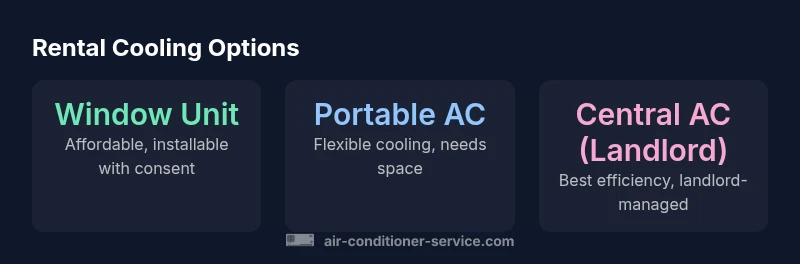
Rental properties vary in cooling approaches. Window units are common for smaller spaces and easier removal when moving. Portable air conditioners offer flexible cooling without structural changes but can be louder and less efficient. Some leases reference a central or split-system where the landlord maintains the equipment and controls access. Each option has energy-use implications, noise considerations, and space requirements. When evaluating options under the rent agreement, prioritize devices with energy-efficiency ratings and favorable long-term operating costs. Remember that the choice may influence your monthly electricity bill and the overall comfort level of your living space.
Lease language: who pays, who installs, and access
Lease language should spell out who pays for equipment, installation, and ongoing maintenance. Look for explicit clauses about tenant-installed cooling, required approvals, and responsibilities for repairs. Some leases allow portable units with written consent, while others require the landlord to fund or manage a central system. If the lease is silent on a specific scenario, request an addendum that outlines installation responsibilities, inspection access, and cost-sharing. Clear documentation helps reduce disputes and ensures everyone knows their duties. The goal is a mutually agreed-upon plan that preserves safety, energy efficiency, and tenant comfort.
Permits, codes, and safety considerations for rental AC
Permanent cooling installations may trigger building codes, electrical upgrades, or permit requirements. Always verify whether a new unit or system installation needs a permit, inspections, or electrical work by a licensed professional. Energy efficiency standards also play a role: units with proper SEER ratings and compliance with energy-efficient guidelines may qualify for incentives or lower operating costs. Both tenants and landlords benefit from adhering to manufacturer instructions and local ordinances to avoid safety issues and potential liability.
Cost considerations and energy efficiency in rentals
Costs in a rental scenario hinge on who pays for the device, installation, and ongoing energy use. Portable and window units are generally cheaper upfront but may raise monthly electricity costs if used extensively. In contrast, landlord-provided central air or professionally installed systems can offer better energy efficiency and predictable maintenance but involve higher upfront planning. When comparing options, evaluate energy ratings, climate needs, and long-term cost of ownership rather than upfront price alone. A well-sized, energy-efficient solution can reduce cooling costs and improve tenant comfort over time.
Portable vs window units vs built-in systems: pros and cons
Window units are affordable and easy to install but may be less efficient and obstructive. Portable units offer flexibility but take space and can be noisier. Built-in or central systems provide consistent cooling and energy efficiency but require landlord coordination and potential structural changes. Weighing pros and cons should consider the property layout, heat load, and your lease terms. If you value mobility, a portable unit with landlord consent may be ideal; if you require steady climate control, a professionally installed central system could be preferable.
Maintenance and service expectations in rental arrangements
Maintenance responsibility varies by arrangement. Landlord-maintained systems often include routine checks and repairs, while tenant-owned units require the tenant to handle cleaning, filter changes, and minor upkeep. Clarify who pays for service calls, parts, and emergency repairs in writing. Regular inspections and prompt reporting of issues like unusual noises, leaks, or reduced cooling can prevent larger, costlier problems later. Establish a simple contact process and a fixed schedule for maintenance tasks to keep the system reliable.
Negotiation tips and documenting agreements
To avoid disputes, negotiate cooling terms upfront and document them in writing. Include: equipment type, installation scope, access rights, maintenance responsibilities, and cost-sharing for electricity. Specify timelines for installation and what happens if the system fails during a lease. Use an addendum to modify the initial lease, and keep both landlord and tenant signatures. By putting these details in writing, you reduce the risk of misinterpretation and ensure both sides benefit from a comfortable, energy-conscious living space.
Quick-start checklist for renters: what to do this week
- Review your lease for cooling-related clauses and permitted device types.
- List preferred options (portable, window, or landlord-installed central AC) and prepare questions for your landlord.
- Check local codes and permit requirements for any permanent installation.
- Gather energy-efficiency information on potential devices and compare operating costs.
- Schedule a meeting with your landlord to discuss options and propose an addendum if needed.
Comparison of cooling options for rental properties
| Option | Installation/Access | Energy Use | Typical Cost to Tenant |
|---|---|---|---|
| Window unit | Tenant installs with landlord consent | Moderate energy use | One-time device cost: "$100-$300" |
| Portable AC | Tenant installs with landlord consent | Moderate to high | One-time device cost: "$150-$500" |
| Central AC (landlord-installed) | Landlord handles installation; tenant access to controls | Low to moderate energy use if sized well | Typically no direct device cost; installation funded by landlord |
| No dedicated AC (natural cooling) | No device installation required | Low energy use variability | No device cost; energy depends on building design |
Common Questions
Who typically pays for installation when air conditioning is needed in a rental?
Payment responsibility is defined in the lease. Many leases assign installation costs to the landlord for central systems or require tenants to cover hardware for portable units, while some agreements mix costs. Always confirm in writing and align with energy efficiency goals.
Typically, the lease specifies who pays for installation; central systems are often landlord-funded, while portable units may be tenant-funded with landlord consent.
Can I install a window unit without landlord permission?
Installing a window unit usually requires landlord permission due to security, building codes, and liability. If allowed, get written consent and note any limits on window obstruction or installation modifications.
Usually, you should get landlord written consent before installing a window unit.
Are there permits required for permanent AC in a rental?
Permanent AC installations can require electrical and structural permits. Check local codes and obtain the necessary approvals from the landlord and, if applicable, the building department to stay compliant.
Permits may be required for permanent installs; consult local codes and secure approvals.
How can I improve energy efficiency in a rental with limited options?
Prioritize energy-efficient devices, properly sized units, and smart usage habits. Sealing leaks, using programmable thermostats, and choosing high SEER-rated equipment can lower cooling costs.
Choose energy-efficient units and use smart habits to cut cooling costs.
What should I do if the cooling isn't working during a heatwave?
Notify the landlord in writing and document the issue. If safety is a concern, seek temporary remedies with landlord approval and maintain records of all communications and repairs.
Document the issue and inform your landlord promptly; use approved temporary remedies if available.
What is the best approach to negotiate cooling terms at renewal?
Bring a data-backed proposal showing energy costs, comfort needs, and maintenance responsibilities. Propose a reasonable addendum that clarifies who covers costs and how maintenance is handled.
Come prepared with a clear proposal and write it into an addendum.
“"Clear, written agreements on rental cooling prevent disputes and ensure safety, comfort, and energy efficiency for both tenants and landlords."”
The Essentials
- Review lease terms before choosing a cooling option
- Prefer landlord-approved solutions to avoid liability
- Consider energy efficiency when selecting a unit
- Document maintenance responsibilities in writing
- Know local codes and permit requirements