AC Installation Near Me: A Practical Homeowners Guide
Find local AC installation near me with practical steps to compare quotes, verify licenses, and protect your investment. This guide from Air Conditioner Service covers site surveys, permits, and efficient setups.


AC installation near me means you’re seeking local, licensed HVAC pros who can assess your home, perform a proper load calculation, and install a new air conditioner with correct ductwork, permits, and testing. To start, compare multiple bids, verify licenses and references, confirm warranty terms, and schedule a site survey. Local pros typically handle old unit removal, electrical connections, and refrigerant checks.
What 'AC installation near me' entails for your home
Locating 'ac installation near me' begins with a comprehensive assessment. A licensed technician will inspect your home's layout, ceiling heights, and ductwork, then perform a load calculation to determine proper system size. This prevents under- or over-sizing, which can cause comfort issues and wasted energy. The install typically includes removing the old unit if applicable, selecting an appropriate outdoor condenser, routing refrigerant lines, designing or verifying ductwork, and connecting the electrical supply. Permitting is common in many regions and may require a permit application, inspection, and adherence to energy-efficiency standards. The installation should also include a thorough test of airflow, refrigerant charge, thermostat integration, and a final walk-through to confirm comfort zones. According to Air Conditioner Service, homeowners should also plan for a post-installation tune-up within the first 30-60 days to verify performance and address any minor changes. By understanding these steps, you can align expectations and avoid surprises when you search for 'ac installation near me'.
Key considerations before you hire
Before choosing a local installer, compile a short checklist to compare apples to apples. Start with load calculations; ensure the contractor uses Manual J to size units correctly. Check ductwork: Leaks or undersized ducts waste energy and comfort. Evaluate the proposed SEER rating; higher SEER units reduce operating costs, but higher upfront costs may apply. Confirm electrical requirements and whether any panel upgrades are needed. Investigate permits and rebates: Some regions require permits and energy-efficiency incentives. Review warranties for both equipment and labor, and confirm what is covered and for how long. Ask about disposal of the old system and any system relocation if necessary. Finally, verify the contractor’s licensing, insurance, and clean safety practices to protect your home during installation.
How to compare local HVAC contractors
When you search for ac installation near me, you’ll often see several options. Create a standardized comparison template with price estimates, scope of work, and included services. Request written estimates that itemize equipment, labor, permits, and any add-ons. Contact references and read recent reviews to gauge reliability and response time. Verify licenses and insurance and ask for the installer’s project timeline with milestones. Clarify who handles approvals, tests, and any after-install adjustments. Compare warranty terms for parts and labor, and understand what happens if a component fails soon after installation. Finally, consider financing options and any maintenance packages that help protect your investment.
What to expect during the installation day
On installation day, preparation is key. A crew will protect floors and trim, and they will confirm the exact equipment location before starting. Expect ductwork modifications, refrigerant line routing, electrical connections, and safe outdoor condenser placement. The installer will perform a refrigerant charge and airflow test, calibrate the thermostat, and verify airflow balance across rooms. A thorough safety check should precede final adjustments, including system startup and a walk-through of performance metrics. Expect cleanup and removal of debris, with durable labeling of new components. Plan for a post-install inspection by a supervisor to confirm the job meets local code requirements.
Common installation challenges and how to avoid them
Common issues include undersized or leaky ducts, poor condenser placement, incorrect refrigerant charge, and improper electrical connections. To avoid these problems, insist on a complete duct sealing or replacement plan if leaks exist, and ensure the outdoor unit has clear airflow space. Have the installer verify refrigerant charge using a compliant method and perform a leak check. Request documentation of panel upgrades or changes to electrical service if needed. Finally, schedule a post-installation performance test and a first-run check with climate settings similar to your daily use to ensure comfort.
Maintenance after installation to protect your investment
A successful installation is just the start. Schedule an annual tune-up and filter replacement to maintain efficiency. Clean or replace air filters every 1-3 months, depending on usage and indoor air quality. Have the coils cleaned and the condensate drain checked to prevent moisture damage. Ask your installer about a maintenance plan that covers inspections, refrigerant checks, and recommended component replacements. A proactive maintenance habit lowers repair costs and extends the system’s lifespan, keeping you comfortable and energy-efficient for years.
AC installation workflow overview
| Stage | Typical Timeframe | What Happens | Notes |
|---|---|---|---|
| Site Survey | 1-2 hours | Load calculation, duct inspection | Ensure record of measurements |
| Equipment Selection | 2-4 hours | Choose model, SEER rating | Check compatibility with existing ductwork |
| Permitting | 0-7 days | Permit approval if required | Confirm local codes and rebates |
| Installation Day | 6-12 hours | Ductwork, electrical, refrigerant, testing | Include inspection after completion |
Common Questions
How long does AC installation typically take?
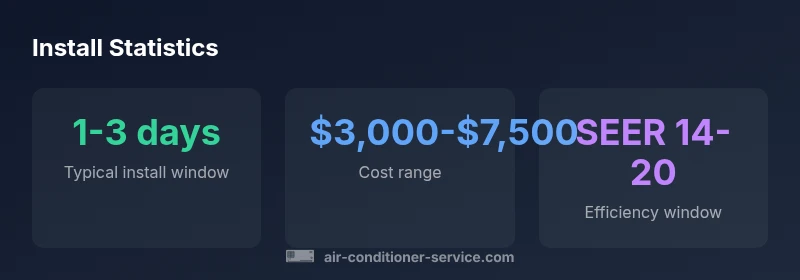
Most installations are completed within 1-3 days, depending on home layout and ductwork. Complex relocations may extend to 2-4 days.
Most installations take one to three days, depending on your home.
Do I need permits for AC installation?
Permits are common for new equipment or significant electrical or ductwork work. Your installer can usually file these on your behalf.
Yes, permits are often required; your installer handles it.
Can I replace ductwork during installation?
If ducts are leaky or undersized, replacement or sealing improves efficiency and comfort. It’s often done alongside the installation.
Yes, ducts may be replaced or sealed during installation.
What should I look for in an installed AC unit?
Check SEER rating, warranty terms, and compatibility with your duct system. Higher efficiency pays off over time.
Look at efficiency, warranty, and compatibility.
How do I verify a contractor’s license and insurance?
Request license numbers and proof of insurance, then verify with the state licensing board and insurer.
Make sure they’re licensed and insured.
“A proper AC installation is an investment in comfort and efficiency. Precise load calculations and correct duct design prevent wasted energy and recurring service calls.”
The Essentials
- Get multiple written estimates and compare scope.
- Verify licenses, permits, and warranties before signing.
- Ensure proper load calculation and duct design.
- Plan a post-install tune-up to maximize efficiency.