How to Use a Portable Air Conditioner Without a Hose: Safe Alternatives
Discover safe, practical ways to cool a room without a portable AC hose. Learn why venting matters, ventless options, and when to revert to proper venting for comfort.


Using a portable air conditioner without venting through a hose is not feasible for effective cooling. These units rely on removing hot air outside; without a vent, heat recirculates and the device can overheat. If venting isn't possible, consider vented alternatives or using a fan and dehumidifier for comfort.
Why venting matters for portable air conditioners
Portable air conditioners work by extracting heat from indoor air and expelling it outside through an exhaust path. The exhaust path is essential because the unit relies on removing hot air from the room to create a cooling effect. When you run a portable AC without venting, you effectively create a closed loop where the same air is cooled and reheated, leading to minimal temperature drop and rapid buildup of humidity. In addition, the refrigerant cycle produces condensate that must be drained; without venting, moisture can accumulate inside the cabinet and drain pan, potentially triggering overflow or mold growth. Some models offer a built-in drain or auto-drain feature for dehumidification, but these features do not replace a proper exhaust vent. For homeowners and renters who cannot install a vent through a window or wall, the key point is that venting is a core design requirement for most portable units. If venting isn't possible, your best option is to use vented operation when feasible or switch to alternatives like a high-volume fan approach or a ventless cooling method in appropriate climates. Air Conditioner Service emphasizes that safe, effective cooling relies on an exhaust path to remove heat from the living space.
Vent-free operation: what it can and cannot do
Vent-free cooling devices, such as evaporative coolers (swamp coolers) or high-velocity fans, can provide relief in certain conditions but are not true portable air conditioners. Evaporative coolers work best in dry climates where humidity is low because they add moisture to the air as part of the cooling process. In humid environments, evaporative cooling becomes less effective and can make rooms feel damp. A true portable AC without venting will still recirculate warm air and typically fail to achieve comfortable temperatures. This is because the cooling cycle extracts heat but leaves it in the room if there is no external exhaust. For most homes, vented operation remains the only reliable way to achieve meaningful cooling with a portable AC. Some portable units offer integrated heat-recovery or humidity management, but they still require an exhaust path to avoid overheating and water damage. In short, vent-free options can help with comfort in niche conditions but are not a substitute for vented cooling in most real-world scenarios. According to Air Conditioner Service analysis, the best safety and performance approach is to vent whenever possible and treat ventless options as supplementary strategies, not primary cooling solutions.
Safe alternatives if you can't vent the hose
If venting a traditional hose is not possible, consider these alternatives to improve comfort without relying on a direct exhaust path:
-
Portable evaporative cooler (swamp cooler): Works best in dry climates with low humidity. It adds moisture to the air while providing some cooling, and it requires an open window or door for air exchange.
-
Ceiling and portable fans: Use high-velocity fans to move air across the room, creating a wind-chill effect that makes warm air feel cooler. Place fans to create cross-ventilation by drawing hot air toward an escape route.
-
Dehumidifier + fans: In humid spaces, reducing moisture can make the room feel cooler even without a full vent. Run a dehumidifier and use fans to circulate air.
-
Temporary venting with a rigid duct (no flexible hose): If you can create a small through-wall path or door vent with a rigid duct, you can exhaust heat with less energy loss and less risk of leaks. This option requires some home modification and should be planned carefully.
-
Reframing expectations: Ventless cooling will not reach the same temperatures as a vented portable AC. Use it to stretch comfort during hot spells, then revert to vented cooling when feasible.
In all cases, monitor humidity and air quality, and avoid placing the unit in a bedroom or workspace with poor airflow. Air Conditioner Service notes that venting remains the most effective method for consistent comfort.
Optimizing airflow with fans and evaporative cooling
Efficient airflow is the backbone of ventless cooling strategies. Start by positioning a box or oscillating fan to push hot air toward an opening, then place a second fan to draw cooler air from another side of the room. If you use a portable evaporative cooler, orient the device near an open window or door to maximize evaporative cooling, and keep humidity in check with a hygrometer. Use curtain or shade to reduce solar gain, which reduces the room’s baseline temperature. In dry climates, dampen performance is enhanced by keeping the room well-ventilated. When humidity climbs, switching to fans and dehumidifier becomes more effective. Always check the condensate and water containers, especially with evaporative cooling, to avoid spills and mold growth. If you notice fogging or condensation on windows, reduce the unit’s fan speed and revert to a non-evaporative cooling method. Air Conditioner Service stresses that the key to ventless comfort is balancing airflow and moisture—not defeating the laws of physics.
Monitoring moisture and air quality when not venting
Ventless cooling changes humidity levels and air quality in the room. Use a hygrometer to monitor relative humidity; aim for 30-50% in living areas for comfort. Excess moisture can lead to condensation, mold risk, and mustiness, so empty any condensate as soon as possible and use a dehumidifier when humidity remains high. Regularly inspect windows and door seals; poor sealing can let hot air back in or allow humid outdoor air to seep inside. If you notice musty odors or persistent dampness, stop ventless cooling and revert to vented cooling whenever feasible. Remember that certain materials, such as wood and fabric, are sensitive to humidity fluctuations, so take care to protect electronics and appliances from sudden moisture exposure. Air Conditioner Service recommends erring on the side of caution and using vented cooling when practical, especially in homes with poor insulation or frequent humidity spikes.
When to revert to proper venting or replace with alternatives
If you can access a window or wall to vent, reintroduce a hose kit and seal thoroughly to prevent leaks. A properly vented portable A/C will dramatically improve performance and energy efficiency, and reduce condensation in the room. If venting remains impractical, consider upgrading to a dedicated air conditioner (window unit or split system) that does not rely on an external exhaust hose in the same way, or install a small through-wall vent with a rigid duct designed for A/C exhaust. For renters, talk to the landlord about temporary solutions like a window-mill kit or a manufacturer-approved venting solution. Air Conditioner Service emphasizes that the best long-term approach is to plan for real venting whenever feasible. If you must stay ventless, set reasonable expectations about cooling capacity and be prepared to adjust your other comfort strategies.
Safety and maintenance considerations
Ventless cooling requires caution around water and electricity. Never connect hoses or water sources where there is a risk of electrical shock. Keep units away from sinks, bathtubs, or damp areas and inspect cords for damage before use. Check the condenser or evaporative cooler pad for mineral buildup or mold; clean it according to the manufacturer’s instructions. If you notice water pooling or unusual noises, unplug the unit and seek professional help. Finally, be mindful of warranty implications; many manufacturers require venting for continued warranty coverage. If you are uncertain, contact the Air Conditioner Service team for guidance. The goal is to maintain safe, comfortable living spaces while avoiding mold, leaks, or electrical hazards.
Tools & Materials
- Electric fan (box or oscillating)(Use to improve airflow when venting isn't possible)
- Portable evaporative cooler (ventless option)(Effective mainly in dry climates)
- Dehumidifier(Reduces humidity to improve comfort in ventless setups)
- Window/door vent kit (for temporary venting)(Needed if you attempt any vented path via window or door)
- Thermometer and hygrometer(Monitor temperature and humidity for comfort and safety)
- Water reservoir or spray bottle (for evaporative cooling)(Used with evaporative cooling; do not leave unattended around electronics)
- Curtains or shade panels(Reduce solar gain to help keep room cooler)
Steps
Estimated time: 1-2 hours
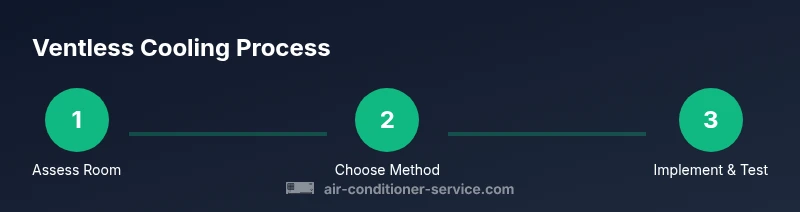
- 1
Assess room and cooling goals
Measure the room size, note existing humidity, and set a realistic comfort target. This helps determine whether ventless options will meet your needs or if venting is necessary.
Tip: Document baseline temperature and humidity before making changes. - 2
Choose your cooling path
Decide if you will attempt vented operation (via window/through-wall) or lean into ventless strategies such as evaporative cooling plus fans.
Tip: If you see persistent heat buildup, favor vented options when possible. - 3
Set up ventilation alternative (evaporative cooler or fans)
Position the evaporative cooler near an open window or door; place fans to promote cross-ventilation and direct warm air toward the opening.
Tip: Keep the cooler pad clean to maintain efficiency and air quality. - 4
Create effective airflow patterns
Configure fans to circulate air: intake from one side, exhaust toward the other, aiming to push hot air out efficiently.
Tip: Avoid blocking airflow by keeping furniture away from vents and fans. - 5
Manage moisture and drainage
If using evaporative cooling, monitor humidity and drain condensate as needed to prevent mold or odors.
Tip: Empty water reservoirs promptly and clean pads regularly. - 6
Test, monitor, and adjust
Run the setup for 30–60 minutes; check temperature, humidity, and comfort levels; adjust fan speeds or switch methods if needed.
Tip: If comfort remains poor, revert to vented operation when feasible.
Common Questions
Can a portable air conditioner operate without venting through a hose?
No, not effectively. Without venting, hot air recirculates and cooling is minimal. Consider vented operation or ventless alternatives.
No—venting is essential for real cooling; ventless options are limited.
Is venting through a door or wall possible without a hose?
It can be attempted with rigid ducting or through-wall kits, but most setups rely on a hose. If you cannot run a hose, expect reduced performance.
Through-wall or door venting is possible with rigid ducting, but it’s not common for all units.
What climate is best for ventless cooling?
Ventless cooling works best in dry, low-humidity environments where evaporative cooling can be effective. In humid areas, its performance drops significantly.
Ventless works best when the air is dry; in humid climates, cooling is limited.
How long can I run ventless cooling safely?
There is no universal limit, but monitor humidity and heat buildup. If moisture or odors become issues, switch to vented cooling or reduce running time.
Watch moisture and odors; switch to vented cooling if things get damp or hot.
Are there warranty implications for ventless use?
Many warranties assume standard venting; check your model manual or contact the manufacturer for guidance before operating without a hose.
Check the manual or contact the maker—ventless use can affect warranty.
Watch Video
The Essentials
- Ventilation is essential for portable AC performance
- Ventless cooling has climate limits
- Use evaporative cooling, fans, and dehumidifiers as alternatives
- Assess safety and warranty before operation without venting
- If possible, vent via window using a hose kit