Are Portable Air Conditioners Good? A Practical Review
Explore whether portable air conditioners are good for renters and homes. This analytical guide covers efficiency, noise, installation, costs, and best-use scenarios to help you decide if a portable AC is right for your space.


Are portable air conditioners good? They provide flexible, temporary cooling for small spaces and rental homes where permanent installation isn’t possible. With easy setup and mobility, they’re convenient for seasonal comfort. However, they’re generally less energy efficient and louder than fixed options, and venting can limit placement. If you only need cooling for a single room and can vent through a nearby window, a portable unit is worth considering.
Are portable air conditioners good for renters and small spaces?
Portable air conditioners (often called portable ACs) are freestanding units with a built-in exhaust that vents hot air outside through a window or an included vent kit. For many households, they strike a balance between comfort and feasibility: no permanent installation, can be moved to different rooms, and are particularly attractive in apartments, dorms, or rooms that don’t justify a permanent system. In this section, we outline who benefits most, typical limitations, and practical expectations for cooling performance, moisture removal, and energy use. While not a universal solution, portable units can fill the gap between a fan and a full air-conditioning system when the latter isn’t practical. According to Air Conditioner Service, the best results come when you size the unit to the space and pair it with sensible shading and airflow.
Placement matters: the unit should be near a window or vent, and you may need to balance airflow with door seals to prevent heat leakage. Real-world performance depends on climate, room size, insulation, and how well you seal the space from other heat sources. By understanding these factors, you can decide if a portable AC fits your space and budget.
How they compare to window units and ducted systems
Window air conditioners are fixed to a window frame and typically offer reliable cooling without external exhaust complications, but they require a window installation and occupy external space. Ducted or central systems deliver the most even cooling and higher overall efficiency in larger homes, but come with higher upfront costs and installation requirements. Portable ACs sit between these options: they require no permanent installation, can be moved between rooms, and are ideal for short-term comfort or spaces where structural changes aren’t possible. In practice, single-hose portable units pull in warm air to expel it, while dual-hose models can improve efficiency by reducing outdoor air leakage. If you value flexibility and speed of setup, a portable unit might be the right compromise; if you’re seeking maximum efficiency and minimal heat leakage, a window unit or a mini-split system could be better.
Energy efficiency and running costs
Energy efficiency in portable ACs varies widely and is influenced by the model, venting setup, and how well the unit is sized for the space. In general, you’ll see a trade-off between portability and energy use: smaller rooms and shorter runtimes keep operating costs reasonable, while larger spaces or continuous use raise energy consumption. Air Conditioner Service analysis shows that portable units can be cost-effective for short-term cooling in small rooms, but the running costs add up with frequent use. When shopping, look for an Energy Star label or an energy efficiency ratio (EER) that fits your needs, and remember that the effectiveness of a portable unit is highly dependent on proper sizing and good room insulation.
A practical rule of thumb is to choose a unit whose cooling capacity roughly matches the space and to avoid oversized units that cool too quickly and then shut off frequently, wasting dehumidification benefits. Pairing a portable unit with ceiling fans and smart shading can dramatically improve comfort without dramatically increasing energy bills.
Noise, vibration, and user experience
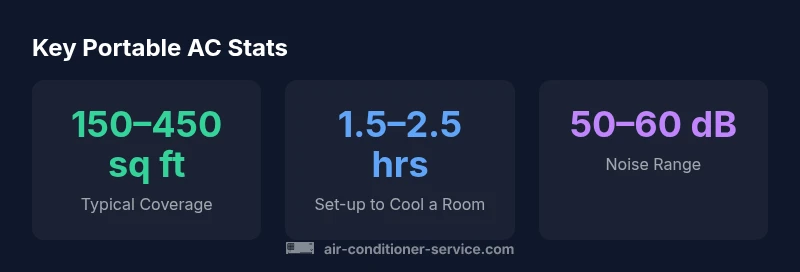
Noise levels in portable ACs vary by model and fan speed. In practice, you’ll encounter a spectrum from whisper-quiet settings suitable for bedrooms to louder modes that are more noticeable in living areas. Vibration can occur if the unit is placed on an uneven surface or not properly supported by its casters. A well-maintained portable unit with a clean filter and secure venting tends to deliver a more comfortable experience. If you’re sensitive to sound, prioritize models with low low-frequency noise and check user reviews for typical decibel ranges. The portable form factor also means you’ll hear the exhaust air and the fan simultaneously, which some users find distracting in quiet spaces.
Installation and venting considerations
Installing a portable AC is straightforward but hinges on proper venting. Most units come with a window vent kit; you’ll need a window that can accommodate the panel and a space to route the exhaust. If your window is unusually shaped or you’re in a rental with restricted windows, consider venting through a wall or using a flexible vent kit. Placement should minimize heat recapture from nearby walls and doors, and keep the unit away from direct sunlight to avoid unnecessary heat gain. Regular checks of the window seal and vent hose help prevent leaks and maintain efficiency. If you must vent through a sliding door or a non-standard opening, explore alternative venting options or a more permanent cooling solution.
Durability, maintenance, and service considerations
Durability for portable units depends on build quality, frequency of movement, and how well the unit is maintained. Regular maintenance includes cleaning or replacing filters, checking the exhaust hose for kinks, and ensuring the evaporator coil remains clean. Most units have washable filters and simple drain setups for dehumidification when not actively cooling. When a portable AC fails, troubleshooting common issues—such as poor airflow, frosting on the coil, or excessive noise—can save time and money. Routine maintenance not only extends lifespan but also keeps running costs lower, since a clogged filter or obstructed exhaust can dramatically reduce efficiency. For renters, check with your landlord about service options and warranty coverage before purchase.
Practical purchasing guidelines: what to look for
When shopping for a portable AC, start with a clear plan for the space you intend to cool. Determine the square footage and ceiling height to guide BTU capacity needs. Look for models with both single and dual-hose configurations and compare their energy efficiency ratings. A built-in dehumidifier can improve comfort in humid climates, and a programmable timer or smart control helps manage energy usage. Favor units with easy-to-clean filters and accessible maintenance panels. Read reviews focusing on reliability and venting ease, and verify warranty terms. Finally, consider the overall footprint, caster wheels, and portability features to ensure it fits your room layout and lifestyle.
Common pitfalls and how to avoid them
One of the most common mistakes is over- or under-sizing the unit for the space. An undersized unit will struggle to cool a room, while an oversized one will cool quickly and then shut off, failing to dehumidify effectively. Poor venting—like a long, kinked hose or venting through an unintended area—can dramatically reduce performance. Another pitfall is ignoring insulation and window sealing; heat transfer through gaps will undermine cooling. Finally, renters should verify that the unit does not violate lease terms or building policies and ensure that moving the unit won’t damage walls or windows. Planning ahead with a room-by-room cooling strategy can prevent these issues.
Scenarios where portable AC shines vs alternatives
Portable air conditioners excel in temporary cooling needs, especially in small bedrooms, dorm rooms, or studio apartments where permanent installation isn’t feasible. They’re also ideal for seasonal use, home offices, or spaces where you want to reserve a window for sunlight rather than heat exchange. For hotter climates or larger homes, a window unit or a mini-split system may offer better energy efficiency and more even cooling. If you expect to move the cooling load around often or require a flexible solution for a few months, a portable unit is a sensible choice.
A step-by-step quick-start for setup
- Choose the right location near a window and level surface. 2) Unpack and assemble the unit according to the manual. 3) Install the exhaust vent through the window and seal gaps to minimize warm air intrusion. 4) Plug in and select a comfortable temperature and fan speed. 5) Clean or replace the filter before the initial use and then every 2–3 weeks during heavy use. 6) Set a timer for energy-efficient operation and monitor performance for the first 24–48 hours.
Cleaning and maintenance routine
Create a simple weekly maintenance routine: inspect and clean the filter, wipe the exterior, and check the exhaust hose for kinks. Monthly, inspect the condensate tray or drain system and make sure the vent kit remains sealed. For humid climates, ensure the dehumidification mode is enabled when not cooling at full power to reduce moisture levels. Store the unit in a dry place during off-season and cover it to prevent dust ingress. Regular maintenance helps sustain efficiency and prolongs the life of the portable AC.
Strengths
- Flexible temporary cooling for renters and small spaces
- No permanent installation required
- Mobility allows cooling different rooms as needed
- Lower upfront cost compared to some fixed systems
The Bad
- Typically less energy efficient than fixed solutions
- Noise and heat from venting can be disruptive
- Vent placement limits where you can position the unit
- Requires regular maintenance to sustain efficiency
Best for renters and small-space cooling where quick, temporary relief is needed
Portable ACs offer unmatched flexibility with simple setup. They’re ideal for short-term use and spaces where installation is not feasible, though they come with compromises in efficiency and noise. For a temporary, movable solution, this approach often makes the most sense.
Common Questions
What is a portable air conditioner and how does it work?
A portable air conditioner is a freestanding unit that cools a room by extracting heat and moisture, then venting hot air outside through a window or vent kit. It includes an integrated compressor, evaporator, and exhaust hose. Efficiency varies by model and proper venting is essential for performance.
A portable AC is a freestanding unit that cools a room and vents hot air outside. It’s easy to move and install, but you want to vent correctly for best efficiency.
Are portable ACs energy efficient?
Energy efficiency varies by model. Look for a good energy efficiency ratio (EER) and consider dual-hose designs to reduce conditioned air leaks. In general, portable units are less efficient than window or mini-split systems when cooling larger spaces.
Energy efficiency varies by model; dual-hose designs tend to be better. They’re typically less efficient than fixed systems for larger rooms.
Which situations are Portable ACs best for?
Portable ACs excel in rentals, small bedrooms, dorm rooms, or temporary cooling needs where permanent installation is not allowed or practical. They’re also useful for spot-cooling unconditioned spaces or seasonal comfort in mixed-use rooms.
Best for renters or temporary cooling in small rooms. Great for spots that don’t justify a permanent system.
What maintenance does a portable AC require?
Regular maintenance includes cleaning or replacing filters, keeping the exhaust hose clear, and ensuring the vent kit is sealed. Periodic checks of the condensate tray and overall unit cleanliness help preserve efficiency.
Clean the filter regularly, check the exhaust hose, and seal the vent to keep it efficient.
Can a portable AC cool multiple rooms?
Most portable units are designed for single-room cooling. While some people move them between rooms, cooling multiple rooms effectively usually requires multiple units or a different cooling strategy such as a mini-split or central system.
Typically one room per portable unit; for multiple spaces, you may need more than one unit or a different system.
What should I consider when choosing BTU and size?
Avoid oversizing; oversize can lead to short cycling and poor dehumidification. Aim for a unit sized to your space and climate, and consider a model with adjustable airflow and humidity settings to maximize comfort.
Pick a unit that fits the room size and climate; avoid oversized units to ensure proper dehumidification.
The Essentials
- Choose portable ACs for flexibility and easy setup
- Ensure proper venting and room insulation for best results
- Consider dual-hose models for higher efficiency in small spaces
- Pair with fans and shading to maximize comfort
- Regular maintenance extends performance and life