14000 BTU Air Conditioners: Sizing, Installation & Maintenance
A practical guide to choosing, sizing, installing, and maintaining a 14000 BTU air conditioner for medium to large rooms. Learn about room fit, energy efficiency, installation options, and maintenance with guidance from Air Conditioner Service.


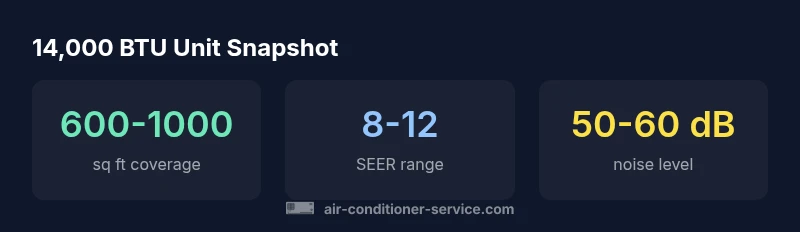
A 14000 btu air conditioner typically cools about 600–1,000 sq ft in moderate climates, depending on insulation and sun exposure. It’s important to verify room size, ceiling height, and window orientation to ensure proper performance and energy efficiency. In practice, climate zone and shading can shift the effective cooling area, so measure accurately and consider supplemental airflow like fans for even comfort.
Understanding the 14000 btu air conditioner
According to Air Conditioner Service, the 14000 btu air conditioner is a versatile option for medium-sized spaces. This size sits around the practical boundary between compact window units and larger through-the-wall models. A 14k unit is often chosen for living rooms, large bedrooms, and small open-plan areas where full-wall central systems aren’t present. The key to getting the most comfort is ensuring the unit size aligns with the room dimensions, insulation quality, and sun exposure. In addition, users should consider seasonal energy efficiency ratios and the unit’s airflow distribution to avoid cold spots and excessive cycling. The right installation environment can unlock meaningful comfort while keeping energy use reasonable.
Sizing considerations for a 14000 BTU unit
Sizing a 14000 BTU air conditioner requires more than looking at square footage. You should assess insulation quality, ceiling height, windows, and shading. Rooms with south-facing windows, high ceilings, or poor insulation may need a slightly different approach, while well-insulated, shaded spaces can benefit more readily from a 14k BTU unit. A practical rule of thumb is to measure the space in square feet, multiply by a climate factor, and compare against the manufacturer’s BTU rating. Professional assessments can refine this estimate and reduce the risk of short cycling or overcooling.
Energy efficiency and operating costs for 14k BTU models
Energy efficiency is critical for a 14k BTU unit’s long-term cost of operation. Look for models with high SEER and good EER ratings, and favor those with Energy Star certification when available. Although a 14k BTU unit provides robust cooling, it will consume more energy than smaller sizes in the same conditions. The efficiency gap between models can translate into noticeable annual energy savings, especially in climates with long cooling seasons. Routine maintenance, such as clean filters and unobstructed intake vents, also helps keep energy use down.
Installation options: window vs portable vs through-wall
A 14000 BTU unit typically comes in window-mounted, portable, or through-the-wall configurations. Window units are common for apartments and homes where a suitable window is available; they require mounting hardware and an interior clearance depth. Portable units offer flexibility but require venting through a window and can be less energy-efficient. Through-the-wall installations provide a more permanent, aesthetically integrated solution but demand professional installation and proper framing. Always verify clearance around the unit and ensure the exhaust is vented outdoors to prevent humidity buildup indoors.
Maintenance and troubleshooting for longevity
Regular maintenance is essential to sustain performance in a 14k BTU unit. Clean or replace the filter monthly during peak season, inspect the condensate drain, and keep outdoor coils free of debris. Check seals around the window or wall sleeve to prevent air leaks. If you notice short cycling, unusual noises, or signs of frost on the evaporator coil, address these issues promptly. A pro can diagnose refrigerant-related problems or airflow blockages that can degrade cooling efficiency.
Buying guide: comparing 14k BTU models and alternatives
When shopping, compare SEER/EER ratings, noise levels, fan speeds, and warranty terms across 14k BTU units. Compare against 12k BTU and 18k BTU options to understand how space, climate, and insulation influence cooling needs. Consider additional features such as programmable thermostats, remote controls, and smart home integration. Reading independent reviews and checking energy-use estimates can help you choose a well-matched model that balances comfort and cost.
Sizing comparison across common BTU sizes
| BTU Size | Typical Room Size | Estimated Power Use |
|---|---|---|
| 14000 BTU | 600-1000 sq ft | 1.3-1.6 kW |
| 12000 BTU | 450-800 sq ft | 1.0-1.3 kW |
| 18000 BTU | 900-1400 sq ft | 1.6-2.2 kW |
Common Questions
What room size is best for a 14000 BTU air conditioner?
Typically 600-1000 square feet, depending on climate, insulation, and sun exposure. Factors such as ceiling height and window orientation can shift this range.
A 14,000 BTU unit is generally suitable for spaces around six hundred to a thousand square feet, but climate, insulation, and sun exposure can change that.
How do I know if a 14k BTU is too big or too small for my space?
Short cycling indicates the unit is oversized; continuous running suggests it may be undersized. Use room measurements and climate data to refine the match.
If it turns on and off quickly, it's probably too big; if it runs constantly, it may be too small.
Are 14000 BTU units energy efficient?
Energy efficiency depends on SEER and EER ratings. Look for higher SEER ratings and, when possible, Energy Star certification.
Yes, efficiency depends on the model's SEER rating; aim for higher SEER and Energy Star labels when choosing a model.
What installation options exist for a 14000 BTU unit?
Window units, portable units, and through-the-wall installations are common. Each has different venting, clearance, and structural requirements.
Window units are common; portable units need window venting; through-the-wall can be neater but often needs professional help.
How should I maintain a 14000 BTU unit?
Regular filter cleaning, coil inspection, and drain checks extend life. Address unusual noises or frost promptly and keep the area around the unit clear.
Clean filters monthly, check drains, and keep the coils clean for best performance.
Can I install a 14000 BTU unit myself?
Window units are doable for many homeowners if installation instructions are followed precisely. For through-the-wall or complex setups, a professional installation is recommended.
You can install many window units yourself if you follow the directions; for more complex installs, a pro is safer.
“Sizing errors are a common cause of inefficient cooling and higher energy bills. Accurate room measurements and model matching help ensure comfort and efficiency.”
The Essentials
- Match BTU to room size and climate
- Consider insulation and sun exposure for accuracy
- Prioritize energy-efficient models (SEER 8–12)
- Choose installation type that fits your space
- Maintain filters and coils for longevity