Replacement Parts for Air Conditioners: Practical Guide
Learn how to source replacement parts for air conditioners, verify compatibility, compare costs, and avoid counterfeit components with practical guidance from Air Conditioner Service.


Replacement parts for air conditioners cover components like capacitors, contactors, fans, sensors, thermostats, and seals. To avoid problems, source OEM or reputable aftermarket parts that exactly match your model number, voltage, refrigerant type, and compressor type. Check warranty terms, accessibility, and return policies before buying. Air Conditioner Service recommends verifying part numbers against your service manual and the original equipment tag before purchase.
Understanding Replacement Parts for Air Conditioners
Replacement parts for air conditioners are the individual components that can be replaced without discarding the whole system. They include electrical components (capacitors, relays, contactors, fuses), control devices (thermostats, control boards), sensors (temperature and pressure sensors), mechanical parts (fans, blower wheels, motors), and seals or drainage hardware. When choosing parts, the critical factor is exact compatibility: model number, voltage, refrigerant type, connector type, and pin count must align with the original equipment tag. Air Conditioner Service notes that many failures are due to mismatched parts or incorrect refrigerant handling, which can void warranties and create safety risks. Always cross-check the part number printed on the current component with the service manual, and verify that the replacement matches all specifications before purchase.
Categories of Replacement Parts
Replacement parts can be broadly grouped into electrical components (relays, capacitors, contactors, fuses), mechanical parts (fans, blower wheels, motors), control and sensing devices (thermostats, control boards, pressure switches), and seals/drainage items (gaskets, drain pans, condensate lines). Electrical parts drive the system’s ability to start and run; mechanical parts affect airflow and efficiency; control/sensors ensure temperature and safety feedback; seals maintain refrigerant containment and drainage prevents water damage. Professionals emphasize matching the exact part family (OEM or verified aftermarket) to avoid misfit connectors or incorrect voltages. Always confirm part numbers align with your unit’s data plate and service manual.
How to Verify Compatibility Before Buying
Start by locating the unit’s data plate and noting the model number, serial number, and manufacturing year. Next, obtain the original part’s exact OEM number or the documented equivalent from the service manual. Compare electrical ratings (voltage, frequency, and amperage), refrigerant type, connector geometry, and pin configuration. Check that the replacement’s dimensions fit the enclosure and that the calibration range matches your system. Review warranty terms and the vendor’s return policy. Finally, if you’re uncertain, contact the manufacturer or a qualified technician for confirmation before purchase.
Sourcing Strategies: OEM, Aftermarket, and Used
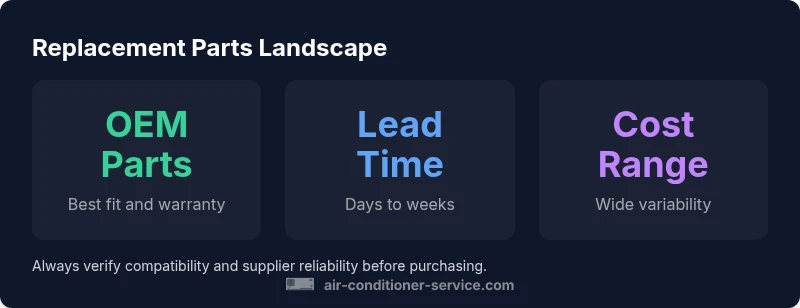
OEM parts offer the most straightforward path to guaranteed compatibility and warranty support, but they can be pricier. Reputable aftermarket parts provide a cost-efficient alternative if they carry the correct OEM cross-reference and a valid warranty. When considering used parts, ensure they come from trusted sources, are tested, and include some form of warranty. Always verify the part number, voltage, and refrigerant type, and beware counterfeit listings. Air Conditioner Service recommends sticking to reputable suppliers and documenting every purchase with your unit’s serial number and model information to simplify future maintenance.
Cost, Availability, and Lead Times
Prices for replacement parts vary widely depending on part type, brand, and whether the part is OEM or aftermarket. Availability can be affected by supply chain conditions, model age, and regional stock. Lead times range from immediate shipment for common items to several weeks for rare or discontinued parts. When planning a repair, factor in both part delivery time and any required labor window. The goal is to minimize system downtime while ensuring you receive a compatible, warrantied part that won’t compromise performance or safety.
Best Practices from the Air Conditioner Service Team
Air Conditioner Service emphasizes sourcing parts that match the exact model and voltage, and keeping a small stock of frequently replaced items such as capacitors and contactors. Always validate part numbers against the service manual and the unit’s data plate. Document all purchases for warranty and future maintenance, and favor suppliers who offer clear return policies and reliable customer support. When in doubt, reach out to a licensed technician for part verification and safe installation guidance.
Preservation and Replacement Part Maintenance
Proactive maintenance reduces the risk of unexpected failures and extends component life. Regularly inspect electrical connections, clean or replace air filters, and keep condensate drains clear to prevent water damage that can affect seals and sensors. If a replacement part is installed, test the system under both cooling modes and verify that safety switches and pressure sensors respond correctly. Maintaining an organized inventory and documenting part changes makes future repairs faster and safer.
Common replacement parts and typical availability
| Part Type | Typical Availability | Warranty | Notes |
|---|---|---|---|
| Contactor | 2-5 days | 1 year | Common failure point; check coil resistance |
| Capacitor | 3-7 days | 1-3 years | Key for starting motors; handle with care |
| Fan Motor | 5-14 days | 1-5 years | Lead times vary by model; check shaft size |
| Thermostat | 1-5 days | 1 year | Ensure compatibility with control board |
Common Questions
What are the most common replacement parts for air conditioners?
The most common parts include capacitors, contactors, fan motors, thermostats, and sensors. Replacing these with correctly matched parts minimizes downtime and protects other components.
Common parts are capacitors, contactors, fans, thermostats, and sensors.
How do I verify a replacement part matches my unit?
Check the OEM part number, compare electrical ratings, refrigerant type, and connector configuration against the service manual. Ensure the physical fit and verify returns and warranty.
Always verify the exact part number and specs before buying.
Are aftermarket parts reliable for AC repairs?
Reliable aftermarket parts from reputable brands can be cost-effective if they match OEM specifications and carry a warranty. OEM parts guarantee compatibility but cost more.
Good aftermarket parts can work, but verify compatibility and warranties.
What is the typical lead time for replacement parts?
Lead times depend on part and supplier; common parts often ship within a week, while rare parts may take longer. Plan repairs around availability.
Lead times vary; many parts ship within a week.
When should I call a professional instead of replacing parts myself?
If you’re unsure about electrical safety, refrigerant handling, or safely disposing of old parts, hire a licensed technician. Some replacements require specialized tools.
If you’re not sure, call a pro.
“Reliability comes from matching the exact part to your unit and honoring warranty terms; a small mismatch can cascade into bigger repairs.”
The Essentials
- Verify part numbers before purchasing.
- Prefer OEM or trusted aftermarket parts.
- Double-check voltage, refrigerant type, and connectors.
- Factor lead times into maintenance planning.
- Consult a licensed professional for complex replacements.