Furnace and Central AC Replacement Cost: A Practical Guide
Learn the true cost of furnace and central air conditioner replacement, what drives prices, realistic ranges, and tips to save without sacrificing comfort.


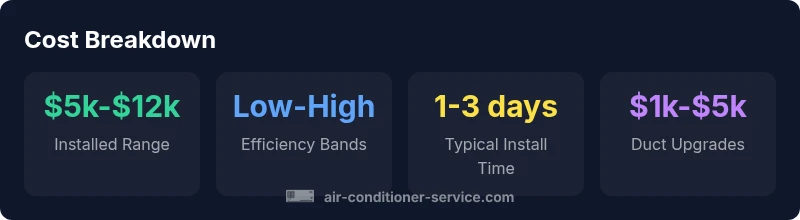
Furnace and central AC replacement typically costs between roughly $5,000 and $12,000 installed for most homes, with higher-end or larger systems reaching $15,000-$20,000. The final price depends on equipment efficiency, climate, ductwork, and installation complexity. When planning, budget for permits, disposal, and potential retrofits, and compare quotes that separate equipment from labor.
Understanding the scope of furnace + central AC replacement costs
Replacing both a furnace and a central air conditioner is a major home improvement that affects comfort, energy use, and long-term reliability. When you see a price tag, remember that most installers quote three discrete components: the equipment itself, the labor to install it, and any required building or safety upgrades. Permit fees, removal and disposal of old units, and potential ductwork changes can add to the total. For example, even a mid-range furnace paired with a mid-efficiency air conditioner can require additional work such as refrigerant line replacements, electrical upgrades, or minor duct remapping.
According to Air Conditioner Service, a thorough estimate should itemize parts, labor, and ancillary work so you can compare apples to apples. The Air Conditioner Service team also notes that many homeowners underestimate non-equipment costs, which can account for a sizable portion of the total. Regional climate influences the mix: in colder regions you’ll prioritize furnace capacity and reliability, while hot climates emphasize cooling performance, sometimes leading to distinct price bands.
Key cost drivers: equipment, efficiency, and installation complexity
Equipment type (gas vs. electric), furnace AFUE rating, and air conditioner SEER rating are the core price levers. High-efficiency models cost more upfront but can lower operating costs and reduce energy use over time. The system’s size must match your home’s heating and cooling load; oversizing or undersizing can drive up costs and shorten equipment life. Installation complexity—duct modifications, zoning upgrades, refrigerant piping, and electrical work—adds to labor charges. Local permitting, building codes, and accessibility (crawlspace, attic, or basement) also shape the final number. A straightforward install in a standard home is usually less expensive than a retrofit with major ductwork or asbestos remediation.
Typical cost ranges (by scenario) and how to read quotes
Most homes fall into three broad cost bands. A budget system typically runs around $4,000-$7,000 for a basic furnace and air conditioner with minimal ductwork changes. A mid-range configuration commonly lands in the $7,000-$12,000 range, with better efficiency and added comfort features. High-efficiency or larger homes can push total costs into the $12,000-$20,000 territory, especially if there are complications such as extensive ductwork or multi-zone controls. Air Conditioner Service analysis shows that planning for ductwork assessments and potential retrofit work can be a deciding factor in the final quote.
How to estimate costs: a practical step-by-step guide
- Get an on-site quote from multiple licensed contractors to compare equipment, efficiency, and installation scope. 2) Request a detailed line-item breakdown: equipment price, labor, permits, disposal, ductwork, and any required repairs. 3) Check whether quotes include tax, potential rebates, and financing options. 4) Compare apples-to-apples by ensuring similar SEER/AFUE ratings and identical duct/materials where possible. 5) Ask about future maintenance costs and warranty terms to evaluate long-term value.
Financing, warranties, and value considerations
Financing options, rebates, and extended warranties can significantly affect the perceived price. Many contractors offer in-house financing or partner with lenders; some manufacturers or utilities provide rebates for energy-efficient equipment. Warranties vary by manufacturer and installer, and an extended warranty may be worth it for premium systems or tight budgets. When evaluating value, consider not just the initial price but expected energy savings, comfort improvements, and potential future repair costs. A well-installed, high-efficiency system can pay for itself over time through lower utility bills and fewer outages.
When you should replace ducts or conduct a full system upgrade
If your existing ductwork is leaky, undersized, or poorly connected to the new equipment, upgrading ducts can improve performance and prevent energy waste. A professional should perform a blower-door test or duct leakage test to determine if significant leakage exists. In some cases, a full system upgrade (furnace, air conditioner, and ducts) may be the most economical long-term choice, especially if the current system is old or undersized for your home.
Red flags and key questions to ask contractors
Watch for unusually low bids, vague quotes, or estimates that omit labor or permit costs. Ask about the size and efficiency rating of the proposed equipment, ductwork status, warranty terms, and the installer’s license and references. Request a written, itemized proposal and a clear project timeline. Ensure the contractor tests carbon monoxide safety after installation and verifies refrigerant charge with a final performance check.
Practical maintenance after replacement to maximize ROI
Schedule regular maintenance, including furnace cleanings and AC coil inspections, to keep the system running efficiently. Change air filters every 1-3 months and consider a duct-cleaning schedule if there are signs of dust or reduced airflow. A properly maintained system will run more efficiently and last longer, protecting your initial investment and reducing the likelihood of unexpected repair costs.
Estimated installed costs for furnace + central AC replacement (typical scenario)
| Component | Average Cost | Notes |
|---|---|---|
| Furnace unit (gas) | $2,000-$5,000 | Excludes installation labor |
| Air conditioner (central) | $3,000-$7,000 | Plus duct work if needed |
| Labor & installation | $1,500-$4,000 | Professional install |
| Ductwork upgrades | $1,000-$5,000 | Only if required |
Common Questions
What factors influence furnace and central AC replacement costs?
Several factors determine cost: equipment type, AFUE/SEER ratings, home size, ductwork condition, permits, and labor. Site visits help ensure accuracy. Always compare itemized quotes to avoid hidden line items.
Costs depend on equipment type, efficiency, ductwork, and installation complexity. Get a detailed, itemized quote from each contractor.
Is it cheaper to replace both furnace and AC together rather than separately?
Often yes, because a joint replacement reduces scheduling overhead, duplicative labor, and potential compatibility issues. It also simplifies warranties and can lead to better coordinated ductwork.
Replacing both together can save time and money; it also ensures compatibility and simpler warranties.
What financing options exist for furnace/AC replacement?
Many contractors offer financing or payment plans, and some manufacturers or utilities provide rebates. Check with lenders, and review terms carefully to avoid high interest or penalties.
Look for contractor financing and available rebates; compare terms before you commit.
How long does replacement typically take?
Most projects take 1-3 days, depending on system size, ductwork, and weather. Scheduling and weather can introduce small delays, so plan a buffer.
Most installs take about a day or two, with a potential extra day for duct work.
Should I upgrade ducts at the same time?
If ducts are leaky or undersized, upgrading improves performance and efficiency. A test can reveal leakage and flow issues that justify replacement.
Duct upgrades are smart if leaks or mismatches are found during testing.
“Replacing both furnace and central AC can be a smart move for higher efficiency and comfort, but it's important to compare exact equipment specs and installation requirements to avoid surprises.”
The Essentials
- Get itemized quotes for apples-to-apples comparisons
- Expect a multi-part bill: equipment, labor, permits, and potential duct work
- High-efficiency systems cost more upfront but save energy over time
- Plan for duct assessments and possible upgrades to maximize ROI
- Explore financing and rebates to reduce out-of-pocket costs