Finance Air Conditioner: Navigating Financing for AC Purchases
Learn practical strategies to finance air conditioner purchases, compare loan options, factor energy efficiency incentives, and minimize total ownership costs for homeowners and renters.


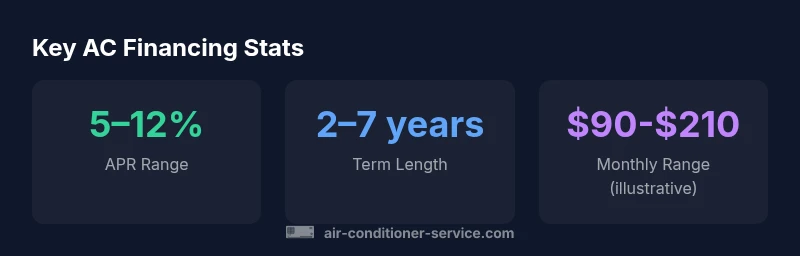
When financing an air conditioner, typical terms range from 2 to 7 years, and APRs commonly fall between 5% and 12%. These figures vary by credit, provider, and incentives. Shorter terms reduce total interest but raise monthly payments, while longer terms lower monthly costs at the expense of more interest over the life of the loan.
Why financing an air conditioner matters for households
For many households, money is the gating factor between upgrading to a more comfortable climate and staying with an aging unit. Financing options can turn a large upfront cost into affordable monthly payments, enabling improvements that yield energy savings. When you consider the phrase finance air conditioner, it helps to look beyond the sticker price and focus on long-term value. According to Air Conditioner Service, financing an air conditioner is most effective when you balance comfort with budget reality, and when you select a system that reduces energy use. This approach matters especially for renters or households facing large replacement costs after a breakdown. The goal is to maintain a comfortable home today while avoiding strain on cash flow tomorrow. Energy efficiency, reliability, and service options should be part of any financing decision, not afterthoughts. A well-structured financing plan can make a high-efficiency model affordable and practical in the long run.
How financing affects total ownership costs
Total ownership costs include purchase price, financing charges, energy usage, maintenance, and potential rebates. A higher upfront payment reduces loan size and interest, but longer terms can lower monthly payments at the expense of more interest over time. Financing can unlock energy-efficient models that otherwise would be out of reach, and rebates or incentives can improve the return on investment. When you plan to finance air conditioner purchases, it helps to estimate expected energy costs, maintenance needs, and the system’s lifespan. The central idea is to minimize the sum of upfront costs, financing charges, and ongoing energy bills. Air Conditioner Service analysis suggests that households that factor energy savings into their financing decisions often achieve lower lifetime costs, even if the initial monthly payments look higher.
Financing options: loans, leases, and promos
There are several paths to fund an air conditioner replacement. Personal loans offer flexible use and quick funding, retailer or store financing may present promotional terms, and in-house plans can provide deferred-interest periods. Leasing is less common for home cooling systems but appears in some commercial contexts. Compare APRs, promo details, and any deferred-interest clauses. Remember that a promotional 0% APR period can reduce early costs, but penalties or higher rates may apply after the promo ends. When finance air conditioner purchases, weigh the total loan cost against anticipated energy savings and the unit’s expected life. Always review the fine print for fees and prepayment options.
Store financing vs bank loans: which is better?
Store financing often provides convenient, fast approvals and in-house support, with promotional terms that can lower initial costs. Bank loans may offer lower base rates and more transparent fees but can involve stricter credit checks and longer processing times. The best choice depends on your credit profile, the total cost of ownership, and your ability to manage monthly payments. If you value speed and vendor support, store financing may fit; if you want broad options and potentially lower long-term costs, a bank loan can be preferable. For many homeowners, a hybrid approach—pre-approval from a lender and using store financing during a promo—delivers a balanced outcome.
How to compare financing offers: APR, fees, and terms
A systematic comparison helps avoid surprises. Create a side-by-side checklist that includes: APR, promotional periods, fees (origination, prepayment, late), term length, monthly payment, total cost, and any energy-efficiency rebates. Calculate the total cost over the life of the loan and compare it to the expected energy savings from a higher-efficiency model. Consider whether a shorter term with higher monthly payments reduces total cost, or whether a longer term improves cash flow at the expense of interest. Remember to factor in maintenance costs and potential warranty extensions that come with different financing options.
Practical steps to apply for financing
Before applying, confirm your credit standing, collect essential documents (identification, proof of income, employment history, and any existing debt information), and get pre-approval quotes from multiple lenders. Shop for an air conditioner with energy efficiency that aligns with your climate and energy goals. Once you choose a financing plan, read all terms carefully, especially about deferred-interest periods, penalties for early repayment, and any caps on rebates. If you can, pair financing with an energy audit or a performance guarantee to maximize long-term savings. After approval, coordinate delivery and installation to ensure the financing terms align with installation timing.
Budgeting for maintenance and repairs alongside financing
Financing an air conditioner should include a maintenance budget to protect performance and efficiency. Set aside funds for seasonal filter changes, coil cleaning, refrigerant checks, and potential repairs. A maintenance plan often lowers the risk of unexpected costs that could disrupt loan payments. Some financing packages include extended warranties or maintenance plans which can improve predictability in total costs. Integrating preventive care with financing helps ensure that the system remains efficient and comfortable throughout its lifespan.
Rebates, incentives, and energy savings that impact financing
Energy efficiency incentives can affect the affordability of financing. Rebates and incentives reduce the effective price, while energy savings lower operating costs. When you finance air conditioner purchases, look for programs that reward higher efficiency with lower financing rates or cashback options. Even small energy savings can compound over years, improving the overall value of the investment. Consulting trustworthy sources and your local utility programs can help identify current opportunities that apply to your situation.
Real-world scenarios and case studies
Scenario A: A homeowner upgrades to a SEER 16 model using store financing with a promotional 0% APR for 12 months. The short-term period reduces monthly costs and avoids immediate interest, while a regular rate applies afterward. The homeowner also saves on energy bills and enjoys better comfort. Scenario B: A renter finances a mid-range unit with a personal loan at a moderate APR over five years. The monthly payments are steady, and rebates from energy programs help offset the cost. Both cases illustrate how financing can make a more efficient system feasible while preserving monthly cash flow.
Comparison of common AC financing options
| Financing Option | APR Range | Term Range | Pros | Cons |
|---|---|---|---|---|
| Personal loan | 5%-15% | 2-7 years | Flexible use; quick funding | Higher interest for low credit |
| Store financing / in-house | 0%-15% (promo) | 6-36 months | Promotions; easier terms | Promotions can defer interest; limited vendors |
| Home equity loan | 4%-9% | 5-30 years | Lower rates; potential tax benefits | Risk to home; collateral |
Common Questions
What financing options are best for new AC purchases?
Options vary by credit and vendor. Personal loans, retailer financing with promos, and energy-efficient incentive programs are common. Compare terms, and ensure you can manage monthly payments without compromising essential expenses.
Choices include personal loans, retailer promos, and energy incentive programs. Compare terms to choose a payment plan you can manage.
Is it better to buy energy-efficient models with financing?
Energy-efficient models often reduce operating costs, which can offset financing charges over time. Look for rebates and incentives that apply to the financed purchase and factor energy savings into your decision.
Yes, energy-efficient models can pay off through energy savings and rebates when financed smartly.
What is the typical APR for AC financing?
APR varies by credit and lender. A typical range is roughly between 5% and 12%, with some promos lowering the rate during promotional periods.
APR varies; expect roughly 5 to 12 percent, with promos possible during special offers.
Can I use a home equity loan to finance an AC?
Yes, a home equity loan can be an option if you own your home and can handle the risk to your property. Rates may be favorable, but there are security implications to consider.
Yes, but think about putting your home at risk if you miss payments.
Should I finance maintenance and service plans?
Maintenance and service plans can be bundled with financing in some promos. They help protect performance and might lower long-term costs, but review terms to avoid unnecessary charges.
Maintenance plans can help, but read the fine print first.
How do rebates and tax credits affect financing?
Rebates reduce upfront costs, and energy-related tax credits or incentives can lower overall cost. Verify eligibility with the installer and local programs before committing.
Rebates cut upfront costs; credits may lower total expense if eligible.
“Financing an air conditioner should be viewed as part of total ownership costs, including energy use and maintenance.”
The Essentials
- Define your budget before shopping.
- Compare total cost, not just monthly payment.
- Consider energy-efficiency rebates to offset costs.
- The Air Conditioner Service team recommends evaluating total ownership costs.
- Shop multiple lenders for the best terms.