Carrier AC 2 Ton Price Guide 2026
Discover the true cost range for a Carrier 2-ton air conditioner, including installed prices, regional factors, and maintenance considerations. Air Conditioner Service analyzes typical price ranges and installation variables to help homeowners plan for 2026.


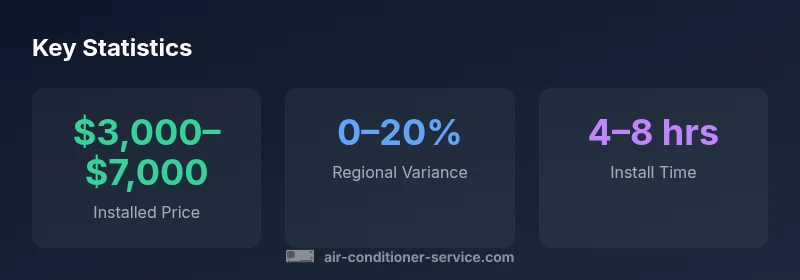
According to Air Conditioner Service, the carrier ac 2 ton price typically ranges from about $3,000 to $7,000 installed, depending on efficiency, ductwork, and local labor costs. Lower-SEER models and simpler installs tend toward the lower end, while high-efficiency units, added features, and challenging wiring can push totals toward $8,000 in expensive markets.
Understanding Carrier 2-Ton Systems and Why Size Matters
Choosing the right air conditioner starts with understanding what a 2-ton unit actually means for your home. A Carrier 2-ton system is designed to remove roughly 24,000 BTU per hour under typical conditions, but the real-world performance depends on insulation, window shading, and occupant load. When homeowners ask about the carrier ac 2 ton price, they are usually weighing upfront equipment costs against long-term operating savings. The size you pick should match your home's cooling load; oversize or undersize can lead to inefficiency, higher energy bills, and uneven comfort. In our experience at Air Conditioner Service, we see a wide range of installation scenarios that influence total cost more than brand label alone. The goal is a correctly sized, efficient system that keeps you comfortable without pressuring your wallet. In this guide we’ll break down what drives price, what to expect in typical markets, and practical steps to secure a fair deal.
This analysis also reflects how regional variables and contractor practices can tilt the price in either direction. Air Conditioner Service analysis shows that a fair estimate accounts for equipment, installation labor, and any ductwork or permitting needs. If you’re evaluating a Carrier setup, use this framework to compare apples to apples, not just sticker price. The carrier ac 2 ton price is a starting point, not a final verdict, and understanding the full cost picture helps you prioritize value over a single number.
What Drives the Price of a Carrier 2-Ton System
Prices for a Carrier 2-ton system are driven by multiple interrelated factors. The core component is the equipment price, which varies by model, compressor type, and SEER rating. The installation itself accounts for labor time, refrigerant handling, and hooking up electrical and ductwork. If your home requires duct modifications, zoning upgrades, or a new thermostat, those costs can add substantially to the final total. Permits, inspections, and warranty considerations also influence pricing. Finally, regional labor rates and travel charges from contractors contribute to the final out-the-door amount. Air Conditioner Service analysis shows that homeowners who plan for these variables tend to avoid surprising add-ons at the invoice. Expect a clearer estimate when contractors itemize equipment, labor, duct work, and any needed permits separately, rather than presenting a single lump sum.
In practice, carriers with higher efficiency and better performance often come with higher upfront costs, which is partly offset by reduced energy bills over time. The overall value should be assessed on expected annual energy savings, maintenance requirements, and the life expectancy of the equipment. As you compare quotes, focus on the total installed price rather than the unit price alone, and ask for a breakdown of any optional features that influence the bottom line.
Price Ranges: Installed vs Equipment-Only, and What Affects the Gap
Understanding the distinction between equipment cost and installed cost helps readers interpret price quotes accurately. Equipment-only prices for a Carrier 2-ton unit typically sit lower than fully installed totals, because installation includes labor, refrigerant, testing, duct connections, and sometimes minor modifications. A typical installed total may range from several thousand dollars to well over seven thousand, depending on the scope of work. In markets with older ductwork, you may see higher prices due to restoration or sealing requirements. Conversely, homes with well-matched duct systems and straightforward installs tend to land closer to the lower end of the spectrum. It’s essential to request an apples-to-apples comparison: a line-item breakdown that separates equipment, installation labor, ductwork, permits, and any refrigerant charges. This approach helps homeowners identify where costs come from and spot potential savings, such as selecting a mid-range SEER while avoiding unnecessary add-ons.
Air Conditioner Service emphasizes that the installed price is more informative than the sticker price. Contractors who provide detailed quotes that include all components and potential contingencies enable homeowners to make smarter decisions and avoid budget overruns. A careful review of quotes also highlights any regional price drivers, such as demand surges during peak cooling season or shortages of licensed technicians.
The Role of SEER Rating and Efficiency
SEER, or Seasonal Energy Efficiency Ratio, is a major cost driver for Carrier 2-ton systems. A higher SEER unit typically carries a higher upfront price, but it offers measurable energy savings over the unit’s life. In hotter climates or homes with large cooling loads, the long-term energy savings from a higher SEER unit can justify the larger initial outlay. Conversely, in milder regions or for homes that are well-insulated, upgrading to an extremely high-SEER model might yield diminishing returns. When evaluating the carrier ac 2 ton price, consider how much you expect to use the air conditioner, what electricity costs look like in your area, and how long you plan to stay in the home. The energy savings metric becomes even more meaningful when paired with proper sizing and quality installation. Our guidance at Air Conditioner Service is to compare SEER tiers within a realistic budget and to request a cost-benefit analysis from your installer that translates energy savings into dollars saved per year.
In short, higher SEER can reduce operating costs and environmental impact, but the upfront premium should be weighed against your climate, utility rates, and home efficiency. An informed choice balances cost with expected comfort and long-term value.
Ductwork, Permits, and Labor: Hidden Cost Factors
The hidden costs in Carrier 2-ton installations often come from duct modifications, sealing, and grilles, as well as the permit and inspection process required by local authorities. Ductwork can account for a significant portion of the total installed price if extensive re-routing, restoration, or insulation is needed. Poorly designed or leaky ducts undermine efficiency regardless of the unit’s SEER rating, so many homeowners invest in duct sealing or upgrades as part of the package. Permits may add a modest fee, and some jurisdictions require electrical upgrades to support higher-capacity equipment. Labor costs vary widely by region and contractor experience, with seasoned technicians sometimes commanding premium rates—but delivering faster, cleaner installs and better long-term results. At Air Conditioner Service, we recommend asking for a detailed labor breakdown and a scope of work that includes duct sealing, refrigerant charge, testing, and post-install performance verification. This clarity helps you predict the final price more accurately and reduces the chance of surprise adjustments later.
Duct and permit costs also influence warranty eligibility; some manufacturers require professional installation with proper documentation to validate warranty terms. If you anticipate future duct upgrades or home renovations, discuss these plans upfront so the installer can design a system that accommodates changes without major disruptions.
Regional Variations and Shopping Tips
Regional price differences are a perennial reality in home HVAC work. Regions with higher labor costs or greater demand for seasonal cooling typically show higher installed prices. Conversely, markets with ample competition and mature HVAC ecosystems may deliver more competitive quotes. To navigate this landscape, homeowners should collect at least three detailed quotes from licensed HVAC contractors, ensuring each quote covers equipment, labor, ductwork, permits, and a maintenance plan. Ask about seasonal promotions, discounts for bundled services, and any energy-efficiency programs offered by the utility provider that could offset upfront costs.
Air Conditioner Service recommends keeping a running comparison table that captures the unit type, SEER rating, warranty terms, and total installed price. This approach makes it easier to spot value versus price and to spot quotes that promise low upfront costs but lack critical components like duct sealing or system commissioning. Finally, be mindful of installation timing. Scheduling during shoulder seasons may yield lower labor rates and shorter wait times for service from qualified technicians.
Financing, Warranties, and Long-Term Value
Financing options can make Carrier 2-ton installations more affordable by spreading costs over time. Many contractors offer promotional financing or partner with lenders to provide low-interest periods, which can be a compelling path for homeowners balancing upfront cash flow with long-term energy savings. Warranties vary by model and installer, typically covering parts for a certain period and including limited labor coverage. Consider extended warranty options if your climate imposes frequent on-off cycles or if your installation involves higher upfront risk due to duct modifications or electrical work. When evaluating long-term value, calculate not only the purchase price but also expected energy bills, maintenance cycles, and the anticipated lifespan of the equipment. The joint impact of efficiency and reliability often yields a lower total cost of ownership over 10–15 years. Air Conditioner Service emphasizes reading the fine print on any warranty and confirming what is and isn’t covered, including refrigerant leaks and compressor failures, as well as service availability in your area.
How to Get an Accurate Estimate for Carrier 2-Ton
To obtain a precise estimate, start with a professional on-site evaluation. A technician should perform a load calculation (Manual J), inspect ductwork, test current refrigerant levels, and review insulation and shading. Request quotes that itemize: (1) equipment price by model and SEER, (2) installation labor, (3) ductwork or modifications, (4) permits and inspections, (5) new thermostats or zoning upgrades, and (6) post-installation commissioning. Encourage installers to provide a best, a worst, and a most likely scenario to help you understand the price range. Don’t rely on online calculators alone; actual site measurements matter for sizing accuracy and long-term comfort. Finally, verify licensing and insurance, request references, and check customer reviews to avoid overpromises or underperforming work. A well-documented quote helps you compare carriers beyond the headline price and choose a solution that aligns with your climate, budget, and lifestyle.
Maintenance and Longevity: ROI of a Carrier 2-Ton System
Maintenance is essential to preserve the efficiency and reliability of your Carrier 2-ton system. Routine tasks include filter replacement, coil cleaning, condensate drain checks, and annual professional tune-ups. While preventive maintenance has a cost, it typically yields a higher return by preventing costly repairs and preserving energy efficiency. A well-maintained unit often operates closer to its rated SEER, which translates into lower electricity use and smaller monthly bills. Over a typical 10–15 year lifespan, savings from higher efficiency can offset some of the upfront price premium. Air Conditioner Service encourages scheduling a maintenance plan when you sign the purchase, ensuring you receive timely service and discounted parts or labor if needed. Consider setting reminders for filter changes and annual inspections to maximize the value of your Carrier investment.
Estimated price breakdown for Carrier 2-Ton installed system
| Element | Estimated Price Range (installed) | Notes |
|---|---|---|
| Equipment (Carrier 2-Ton Unit) | $2,200-$4,000 | Model and SEER dependent |
| Labor & Installation | $1,200-$3,000 | Includes refrigerant, wiring, mounting |
| Total Installed (Carrier 2-Ton) | $3,500-$7,000 | Regional differences apply |
Common Questions
What factors influence the carrier ac 2 ton price?
Price is influenced by equipment cost, SEER rating, installation complexity, ductwork needs, permits, and regional labor rates. A detailed, line-item quote helps you understand where costs come from and identify potential savings.
The price depends on the unit, efficiency, and how complex the install is. Always ask for a line-item quote.
Is installation time different for Carrier compared to other brands?
Installation time depends on sizing accuracy, ductwork status, and electrical requirements rather than the brand alone. Carrier units share similar installation profiles with other major brands when the same conditions apply.
Install time varies by system complexity, not brand; expect several hours for most standard setups.
Should I finance a Carrier 2-ton installation?
Financing can spread the cost and improve cash flow. Many contractors offer financing or partner with lenders for favorable terms. Compare total costs and interest rates, and read the fine print on promotional offers.
Financing can help you manage upfront costs; compare terms carefully.
Do ductwork upgrades affect the overall cost?
Yes. If existing ducts need sealing, resizing, or replacement, costs rise. Better-sealed, properly sized ducts improve efficiency and comfort, and may reduce long-term energy use.
Duct work often adds to price but boosts efficiency and comfort.
What warranties come with Carrier 2-ton systems?
Warranty terms vary by model and installer. Typically, components have a parts warranty and some labor coverage. Always confirm coverage for compressor, refrigerant leaks, and service availability in your area.
Check the exact warranty terms and what they cover before buying.
“Correct sizing, quality installation, and an efficient model deliver ongoing energy savings and reliable comfort.”
The Essentials
- Expect installed price to vary by region and SEER rating
- Get at least 3 quotes from licensed HVAC pros
- High-efficiency models cost more upfront but save on energy
- Ensure ductwork and warranties are considered in the estimate