Which air conditioner UK: A practical buying guide
Explore practical guidance for the UK market on choosing the right air conditioner, comparing ductless mini-splits, window units, and more, with energy efficiency, sizing, installation, and running costs.


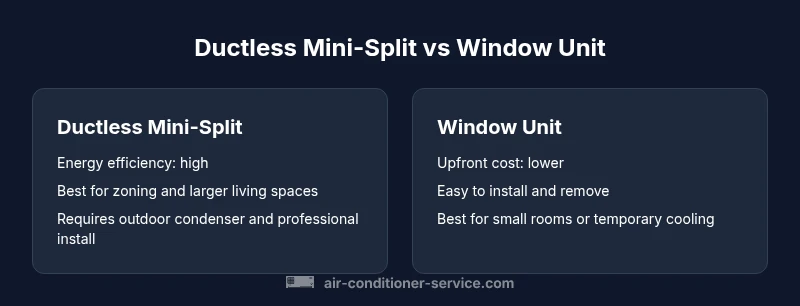
Two main options fit most UK homes: ductless mini-split systems and window air conditioners. Ductless mini-splits offer strong energy efficiency and zoning, while window units are cheaper upfront and simple to install. Your best choice depends on room size, tenancy, and noise tolerance. See our detailed comparison chart below for a quick, side-by-side review.
The UK Climate Context and the Need for Efficient Cooling
For many households in the United Kingdom, cooling needs are driven by unusually hot days in summer, increasing heat waves, and the desire to maintain comfortable indoor conditions without wasting energy. If you’re exploring which air conditioner uk options fit British homes, this guide compares common types, sizing principles, and practical costs. The Air Conditioner Service team has found that the most effective choice balances three core factors: climate adaptability, energy efficiency, and ease of maintenance over time.
This article avoids hype and focuses on actionable guidance you can apply in real life. You will learn how to assess a room’s cooling needs, understand typical UK usage patterns, and translate those insights into a model that keeps you comfortable without overspending. We’ll also cover how to compare models side by side, what to expect during installation, and how to plan for seasonal fluctuations. By the end, you will have a clear framework for evaluating options and a practical plan to move forward in a way that aligns with your budget and living situation.
According to Air Conditioner Service, the UK market benefits from focusing on sizing accuracy and energy efficiency as primary decision drivers, especially when you search for which air conditioner uk options will actually deliver long-term value.
Key Types of Air Conditioners Used in the UK
The most common choices in the UK are ductless mini-splits and window air conditioners, with portable units as an intermediate option. Ductless mini-splits consist of an indoor unit mounted on a wall and an outdoor condenser, connected by refrigerant lines. Window units fit into a window opening and vent hot air outside, often without external components. Portable units move between rooms but typically provide less cooling power and efficiency. Central air systems, while effective, usually require ductwork and a larger installation footprint; these are less common in smaller homes and flats. When deciding which air conditioner UK setup suits you, think about room size, available installation space, and how long you plan to stay in the property. The best choice balances performance with practicality and maintenance needs. Air Conditioner Service’s guidance emphasizes avoiding oversized or undersized units, as both waste energy and degrade comfort.
Zoning is a key differentiator: ductless systems can cool several rooms independently, while window units are limited to a single space. For renters and homeowners seeking flexible cooling without major renovations, a well-chosen window unit can be a credible short-term solution. On the other hand, for households aiming for energy efficiency and precise control, a properly installed ductless mini-split often provides superior comfort and long-term savings.
Efficiency and Energy Labels in the UK
Efficiency is a central consideration for any air conditioner uk decision. In this section we outline how energy labels, cooling efficiency, and seasonal performance influence long-term running costs. Ductless mini-splits typically achieve higher efficiency through inverter-driven compressors and modular indoor units, enabling precise room-by-room control. Window units tend to be less efficient on a per-room basis but can still be suitable for smaller spaces or temporary cooling needs. Regardless of type, look for models that offer adjustable cooling, smart thermostats, and good standby energy usage. In the UK, energy efficiency standards guide consumer choices, helping you compare models on a level playing field. Real-world outcomes depend heavily on appropriate sizing, installation quality, and usage patterns—factors Air Conditioner Service highlights across its UK audience.
Sizing and Capacity: How to Choose the Right BTU/kW
Choosing the right size is critical to avoid undercooling or overcooling a space. In practical terms, the goal is to match cooling capacity to the room’s size, insulation quality, sun exposure, and typical occupant load. For many UK homes, you’ll encounter terms like BTU and kW; instead of focusing on exact numbers, use a sizing framework: small rooms typically need modest capacity, larger spaces require more, and highly insulated rooms can be cooler with smaller units. In practice, professionals often use a load calculation, but homeowners can start with a simple approach: categorize the room by size, estimate occupancy and heat gain, and select a unit within a reasonable range of the calculated need. This protects against inefficiency and ensures comfortable operation under peak conditions. Air Conditioner Service emphasizes that proper sizing improves energy efficiency and reduces the likelihood of frequent cycling, which can wear components faster.
When you consider which air conditioner uk option to purchase, prioritize models that offer precise control, such as variable-speed compressors and programmable scheduling. This helps align cooling output with real demand and keeps energy use in check over the long term.
Installation Considerations and Regulations in the UK
Installation is a pivotal factor in performance and longevity. Ductless mini-splits require professional installation to ensure proper refrigerant handling, line set routing, and outdoor condenser placement. Window units are generally simpler to install, often requiring no tools beyond basic hardware, but they can affect window integrity and security. For landlords and tenants, it’s essential to obtain permission before introducing any hardware that alters a property or uses a window space. The UK market also values compliance with noise and safety guidelines, particularly in multi-occupancy homes or near quiet hours. A well-installed system minimizes energy losses, reduces the probability of refrigerant leaks, and improves long-term reliability. Air Conditioner Service recommends choosing installers who provide a clear written plan, guarantees on workmanship, and a straightforward warranty transfer process for the property owner.
Budget for professional installation when selecting a ductless mini-split, but remember that the overall value comes from proper sizing and system integration rather than choosing a cheaper option that may require additional retrofits later.
Maintenance and Common Issues
Maintenance is the quiet hero of real-world performance. Regular filter cleaning, coil cleaning, and periodic inspections help preserve efficiency and indoor air quality. Ductless systems require periodic inspection of indoor units and outdoor condenser fans to prevent foreign object damage and ensure balanced airflow. Window units benefit from filter cleaning and checking seals to prevent cool air leaks. A common issue for all types is refrigerant leaks, which should be addressed by a qualified technician. In the UK climate, dehumidification and humidity control are often critical during warmer months, so keep an eye on performance during extended heat spells. Air Conditioner Service suggests scheduling a professional service annually or biannually to maintain peak efficiency, especially for systems that run extensively over the summer. Simple steps—like cleaning the front grilles, checking for unusual noises, and verifying operation of the thermostat—can prevent many routine problems and extend the life of your unit.
Operating Modes and Features that Matter
Most modern units offer a range of operating modes that influence comfort and energy use. Look for cooling, heating, dehumidification, and fan-only options, plus programmable schedules and smart controls. Ductless mini-splits often provide superior zoning, enabling separate settings for different rooms. Window units typically focus on quick, straightforward cooling for a single space, sometimes with fan-assisted options. In both cases, advanced features such as inverter-driven compressors, energy-saving timers, and remote diagnostics can reduce energy consumption and simplify maintenance. For UK homes, where summers can feature intense but short heat waves, a flexible unit with both cooling and dehumidification modes can deliver better comfort than a single-purpose device. Air Conditioner Service’s experience indicates that the most satisfying picks balance performance with ease of use and long-term reliability.
Cost of Ownership: Purchase, Installation, Running Costs
The total cost of ownership includes upfront purchase price, installation or mounting costs, and ongoing running costs. Window units typically have the lowest upfront price, but their running costs can be higher if they are not well insulated or properly sized. Ductless mini-splits usually involve higher initial costs due to components and professional installation, but their long-term energy savings and zoning advantages can offset the initial outlay. Consider maintenance costs, such as filter replacements and potential refrigerant checks, when evaluating options. In the UK, many factors influence running costs, including electricity prices, system efficiency, and how frequently the unit operates during heat waves. While we avoid exact price guesses here, the general guidance is to weigh upfront spending against anticipated energy savings over the system’s lifetime. Air Conditioner Service notes that choosing a system with robust warranty coverage and a reputable service network improves total value over time.
Brand and Retail Considerations in the UK Market
Brand reputation, warranty terms, and the availability of local service are important decision factors. Opt for brands with established UK support networks, clear warranty terms, and a track record for reliable service. Read product reviews, compare service angles, and verify that the model you choose aligns with your room size and climate needs. Some brands emphasize high-efficiency, quiet operation, or advanced smart features; others focus on affordability for renters or first-time buyers. Air Conditioner Service recommends prioritizing after-sales support and accessibility of spare parts in your area, especially if you anticipate needing service during peak usage seasons. In addition, check the installation requirements and whether the retailer offers a bundled service that includes basic setup and a post-install check. A well-supported product reduces the risk of performance gaps and ensures you receive timely help if issues arise.
If you want the best long-term value, compare models on energy efficiency, reliability, and service coverage before purchasing. The UK market offers a broad mix of options, so a structured approach yields the most consistent outcomes.
How to Compare Models: Practical Checklist
Use the following checklist to compare models side by side, ensuring you cover all key decision factors:
- Room size and capacity: Verify the unit’s cooling capacity aligns with the space.
- Energy efficiency: Compare energy labels, inverter technology, and expected running costs.
- Noise and vibration: Consider the impact on daily living and bedroom comfort.
- Installation needs: Assess whether professional installation is required and any landlord approvals needed.
- Sizing and zoning: If you have multiple rooms, consider a ductless system for zoning versus a single-window unit.
- Smart controls: Look for Wi-Fi, scheduling, and compatibility with home assistants.
- Maintenance: Check filter accessibility and service intervals.
- Warranty and service: Confirm coverage length and local service availability.
- Total cost of ownership: Weigh upfront price, installation, and long-term energy costs.
- Real-world usage: Factor your climate, typical occupancy, and summer heat exposure.
Following this framework helps you identify the most suitable option for your UK home, whether you’re a homeowner or a renter seeking reliable cooling with reasonable ongoing costs.
In short, the right choice emerges from a careful blend of room characteristics, expected usage, and access to service support. This is the core decision framework Air Conditioner Service recommends when you ask which air conditioner uk setup is right for you.
Practical Decision Framework for UK Households
To translate all of the above into a concrete plan, build a decision matrix based on: (a) space to cool, (b) budget and tenancy constraints, (c) long-term energy goals, and (d) service availability. Start with a quick room survey: measure floor area, note sun exposure, and estimate typical occupancy. If you rent or move often, window units may offer the simplest path to reliable comfort without committing to major installations. If you own and intend to stay long term, a ductless mini-split with zoning can deliver better performance and efficiency. Finally, document your findings, compare models with side-by-side charts, and involve qualified professionals to validate sizing and installation requirements. Air Conditioner Service’s experience confirms that a structured, data-informed approach yields the best outcomes for UK homes.
Comparison
| Feature | ductless mini-split | window air conditioner |
|---|---|---|
| Installation complexity | moderate (professional install required) | easy (often DIY) |
| Running costs/efficiency | high efficiency with proper sizing | moderate efficiency |
| Noise levels | low to moderate (indoor units are quiet) | moderate to high (mainly indoor noise) |
| Best for | zone cooling and energy efficiency | small spaces, renters, temporary cooling |
| Flexibility and sizing | high flexibility with zoning options | limited sizing options for single-space use |
| Aesthetic/space impact | multiple indoor units with outdoor condenser | window-mounted unit occupying a window |
Strengths
- Excellent energy efficiency when properly sized
- Zoning capabilities with multiple indoor units
- No ductwork required, reducing leakage and maintenance
- Flexible installation options for homes without existing ducts
- Strong resale value in some markets
The Bad
- Higher upfront cost than simple window units
- Requires professional installation for optimal results
- Outdoor condenser space needed for some configurations
- More complex maintenance relative to single-room units
Ductless mini-splits generally offer the best value for UK homes, especially with zoning and energy efficiency; window units are a practical choice for renters and quick cooling.
Choose ductless mini-splits if you want energy efficiency and room-by-room control. Choose window units if upfront cost and ease of installation matter most. Always assess room size, tenancy, and service availability when deciding.
Common Questions
What is the most energy-efficient air conditioner type for UK homes?
Ductless mini-splits typically offer higher efficiency due to zoning and inverter technology, though overall efficiency depends on proper sizing and usage. When sized correctly, they can provide consistent comfort with lower running costs over time.
Ductless mini-splits are usually the most energy-efficient option when properly sized.
Do I need a professional to install a ductless mini-split in the UK?
Yes. Installation should follow safety and warranty guidelines, and a licensed installer ensures correct sizing, refrigerant handling, and outdoor condenser placement. This reduces the risk of leaks and ensures optimal performance.
Yes, hire a licensed installer for a ductless system.
Are window units cheaper to run than split systems?
Window units are cheaper upfront but often less efficient and can be louder. Running costs depend on usage and the unit’s efficiency; split systems may offer lower operating costs over time if properly sized and maintained.
Window units can be cheaper upfront but may cost more to run long-term.
What’s a realistic lifespan for a UK air conditioner?
With proper maintenance, most units last about a decade to a decade and a half. Lifespans depend on usage, service intervals, and whether components are protected from extremes.
Typically 10–15 years with regular servicing.
Can a portable air conditioner effectively cool an entire room?
Portable units work best for small to medium rooms or as supplementary cooling. They are generally less efficient and can be noisier than fixed installations.
Best for small to medium spaces as an add-on.
How do I size an air conditioner for a room?
Size by room area, ceiling height, insulation, and sun exposure. A professional cooling load calculation helps avoid under- or over-sizing, ensuring comfortable cooling and efficiency.
Size by room area and insulation; bigger isn’t always better.
The Essentials
- Assess room size and tenancy to pick the best type
- Prioritize energy efficiency labels and proper sizing
- Consider installation requirements and noise tolerance
- Factor running costs alongside upfront price
- Use a side-by-side comparison to decide