Best Energy-Efficient Air Conditioners: A Practical Guide
Identify the most energy-efficient air conditioner for your home. This guide explains key efficiency metrics, inverter technology, sizing, installation, and practical steps to lower cooling costs.


Which air conditioner is most energy efficient is not a single-model question; it depends on size, climate, and usage. Generally, inverter (variable-speed) units with high SEER ratings outperform fixed-speed models. According to Air Conditioner Service, the real wins come from proper sizing, efficient compressors, and quality installation.
Why energy efficiency matters for cooling costs and comfort
For homeowners, energy efficiency is not just a badge; it directly affects monthly costs and comfort. When asking which air conditioner is most energy efficient, the answer hinges on more than label grades. Proper sizing, climate, and daily usage patterns determine actual savings. According to Air Conditioner Service, a well-chosen system reduces simultaneous energy spikes and keeps temperatures steadier, which means fewer cycles and lower bills over time. In practice, you’ll notice smaller HVAC bills, less temperature fluctuation, and longer equipment life when efficiency is prioritized alongside reliability. This section lays the groundwork for understanding how to compare models beyond the sticker and select a unit that truly lowers operating costs while maintaining comfort.
Understanding efficiency metrics: SEER, EER, COP, and beyond
Efficiency ratings quantify how well an air conditioner converts power into cooling. The main metrics you’ll encounter are SEER (Seasonal Energy Efficiency Ratio), EER (Energy Efficiency Ratio), and COP (Coefficient of Performance). SEER captures performance across typical seasonal conditions, while EER reflects efficiency at a standardized, higher outdoor temperature. COP relates cooling output to energy input, often used in heat pumps and chillers. In practice, a higher SEER or COP indicates better efficiency, but these numbers don’t tell the whole story. Real-world efficiency also depends on ductwork, insulation, thermostat strategy, and maintenance. When comparing models, focus on both the numeric rating and how the unit responds to your daily schedule.
System types and where they shine: central, mini-split, and window units
Different system architectures offer distinct efficiency advantages. Central air with inverter technology can deliver uniform cooling across multiple rooms with high efficiency when properly charged and ducted. Mini-split systems with variable-speed compressors can achieve excellent efficiency in homes without ducts, and they excel in zoning and comfort. Window units are the most affordable entry point but generally lag behind central and mini-split systems in efficiency, insulation, and noise performance. The best choice depends on your home layout, renovation plans, and budget. In general, for energy efficiency, look for inverter-driven options in any of these configurations and prioritize those that allow precise zoning and good ducting or tight envelope design.
How inverter/variable-speed technology drives efficiency
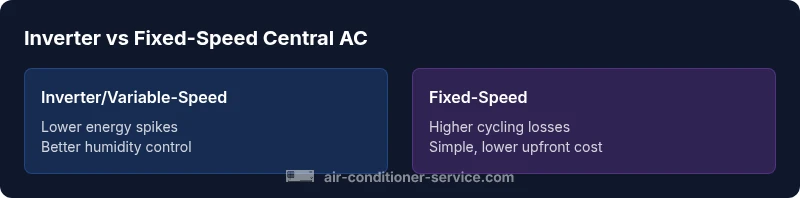
Inverter or variable-speed technology modulates compressor speed to match cooling demand rather than turning on and off at full power. This reduces energy spikes, lowers starting current, and maintains more stable indoor temperatures. The result is less electricity use for the same cooling effect, especially in climates with fluctuating temperatures. Inverter systems also offer better humidity control because they can run at lower speeds for longer periods. When you’re comparing models, prioritize units labeled as inverter-driven or variable-speed when energy efficiency is a primary goal. Pair these with smart thermostats to optimize runtime and avoid short cycling.
The importance of proper sizing and installation (AHRI/Manual J)
A critical driver of energy efficiency is how well the system is sized and installed. Even a highly efficient unit wastes energy if it’s oversized or undersized for the space. Manual J calculations, performed during home energy assessments, help determine the correct cooling load. AHRI certification indicates that a unit’s rated performance aligns with tested standards. Duct design matters too: leaky ducts can negate a high SEER rating by wasting conditioned air. Installation quality, refrigerant charge, and airflow all affect real-world efficiency. If you’re upgrading, request a professional load calculation, proper duct sealing, and a commissioning check after installation to ensure the system operates as designed.
How climate, occupancy, and behavior affect energy use
Climate conditions determine how aggressively an air conditioner must work. In hot, humid summers, units with advanced humidity management and high efficiency save more energy. Occupancy patterns—when people are home, thermostat setpoints, and window-opening habits—also shape energy use. Behavioral changes such as setting reasonable target temperatures, using programmable or smart thermostats, and leveraging fans for air distribution can noticeably reduce energy consumption. An efficient unit still depends on user habits, so combine a high-efficiency system with good daily practices to maximize savings.
How to read efficiency labels and compare models
Reading the label is only part of the equation. Look beyond the big number on the Energy Guide and examine SEER or EER ratings, as well as the unit’s compatibility with your climate zone. ENERGY STAR certifications can help identify models that meet higher efficiency thresholds, but real savings come when the chosen system integrates with your envelope, insulation, and thermostat strategy. Verify compressor type, refrigerant charge requirements, and whether the installation team conducts a system performance test post-install. A higher-rated unit only delivers its promised savings when installed correctly and operated with a well-programmed schedule.
Real-world cost considerations: upfront vs long-term savings
Higher efficiency often comes with a higher upfront price. The threshold for “worth it” depends on your local electricity rates, climate, and how long you stay in the home. In some cases, a higher SEER unit pays for itself within a few years through reduced energy bills; in others, the incremental savings may be modest if you’re in a mild climate or if you frequently run fans instead of the compressor. When evaluating price, consider not only the purchase price but also installation complexity, potential duct modifications, and the cost of maintenance. An efficient system can also affect resale value by improving comfort and reducing energy bills for potential buyers.
Case studies: scenarios for different homes
Case study A focuses on a compact apartment with limited ductwork. A ductless inverter system provides targeted cooling and can outperform a traditional central setup in this space, delivering noticeable energy savings while avoiding costly duct remodeling. Case study B examines a two-story home with a whole-house central system. An inverter-compressor unit, properly sized and installed, reduces cycling and improves humidity management, leading to steadier temperatures and lower energy use during peak cooling months. In both scenarios, the most important decision factors are proper sizing, installation quality, and choosing a model with an inverter or variable-speed compressor that suits the local climate and occupancy pattern.
Alternatives: when another technology makes sense (heat pumps, ductless options)
Heat pumps, including air-source versions with high SEER ratings, can outperform traditional air conditioners in moderate climates and during shoulder seasons, offering significant energy savings. Ductless mini-splits excel in homes without existing ducts and in retrofit projects where zoning is a priority. For renovations in older homes, a compact, well-insulated envelope and a ductless system may be the best path to energy savings. The key is to match the technology to the home’s thermal characteristics and to ensure a robust installation with minimal losses through ducts or leaks.
Authoritative sources and how to verify claims
To support energy-efficiency decisions, consult reputable sources. Look for guidance from national energy programs, university extensions, and industry associations to verify claims about SEER, EER, COP, and installation best practices. This section provides reputable anchors you can reference as you compare models and plan upgrades.
Practical steps to verify efficiency in your home
- Get a professional load calculation and insulation assessment.
- Compare inverter-type models with high SEER ratings across central, mini-split, and window configurations.
- Schedule a post-installation performance check to confirm proper refrigerant charge and airflow.
- Use a programmable thermostat and keep seal integrity in your envelope to maximize savings.
Comparison
| Feature | Inverter/Variable-Speed Central System | Fixed-Speed Central System |
|---|---|---|
| Energy efficiency profile | High efficiency with adaptive compressor speed | Moderate efficiency with on/off cycling |
| Humidity control | Consistent humidity with continuous low-speed operation | Less consistent humidity control |
| Comfort and temperature stability | Sharper, steadier temps with longer, slower cycles | More temperature swings due to cycling on/off |
| Installation considerations | Requires precise duct sealing and sizing | Simpler layout but potential duct losses |
| Initial cost vs long-term cost | Higher upfront cost; lower operating costs over time | Lower upfront cost; potentially higher operating costs |
| Best for | Homes with zoning needs or no ducts | Smaller spaces or retrofit with existing ducts |
Strengths
- Lower long-term energy bills with proper sizing and inverter tech
- Better comfort due to continuous operation
- Flexibility for zoned cooling in larger homes
- Potential for higher resale value due to efficiency
The Bad
- Higher upfront purchase and installation costs
- Requires professional sizing and proper installation
- Some models require more complex maintenance
Inverter/variable-speed central systems generally offer the best overall energy efficiency for most homes when properly sized and installed.
For long-term savings and comfort, prioritize inverter-driven options with accurate load calculations and quality installation. The right setup minimizes cycling losses and leverages high SEER performance; this combination typically yields the strongest energy efficiency gains.
Common Questions
What does SEER mean and why does it matter?
SEER stands for Seasonal Energy Efficiency Ratio. It measures average cooling output per unit of electricity over a typical cooling season. Higher SEER values indicate greater efficiency, which can lower operating costs over time when paired with proper installation and a good envelope.
SEER is about how efficiently a cooling system uses electricity over a season. Higher is better, especially if you run your AC a lot.
Does a higher SEER always mean lower energy costs?
Not always. While higher SEER generally lowers energy use, the actual savings depend on climate, usage patterns, and installation quality. A high-SEER unit installed poorly or used in a poorly insulated space may not deliver expected savings.
Higher SEER helps, but only when the installation and climate fit; bad installation can negate the gains.
Are mini-splits more energy-efficient than central systems?
Mini-splits can be highly efficient, especially in zones where only portions of a home need cooling. They avoid duct losses and offer precise zoning, which can boost perceived efficiency. Central systems can be more efficient when properly designed and ducted for an entire home.
Mini-splits are great for zoning and avoiding ducts, but central systems can be very efficient if well designed.
What maintenance helps maintain efficiency?
Regular filter changes, cleaning coils, sealing ducts, and ensuring proper refrigerant charge are essential. Poor maintenance increases energy use and reduces comfort. Scheduling annual professional checkups keeps the system operating near rated efficiency.
Keep filters clean, coils clean, and ducts sealed; regular checks help maintain efficiency.
How does climate affect which system is best?
Hot and humid climates may benefit more from high-SEER inverter systems and humidity control. In milder climates, the energy savings may be less dramatic, but efficiency and comfort still matter. Your local climate should guide the final choice.
Climate dictates how much you’ll save with a high-efficiency system; pick according to your summers.
Is ENERGY STAR certification a must-have?
ENERGY STAR is a helpful guideline indicating higher efficiency, but it’s not a guarantee of lower bills in every home. Always consider installation quality, climate, and usage alongside ENERGY STAR when choosing a unit.
ENERGY STAR helps identify efficient models, but install quality matters most.
The Essentials
- Prioritize inverter/variable-speed tech for energy efficiency
- Get a professional sizing assessment before purchase
- Ensure duct integrity and system commissioning after install
- Read efficiency labels; ENERGY STAR is a helpful benchmark
- Balance upfront cost with long-term energy savings