When Do Air Conditioners Go On Sale? A Practical Guide for Homeowners
Discover when air conditioners typically go on sale, how to spot real discounts, and practical steps homeowners can take to save on purchases in 2026.


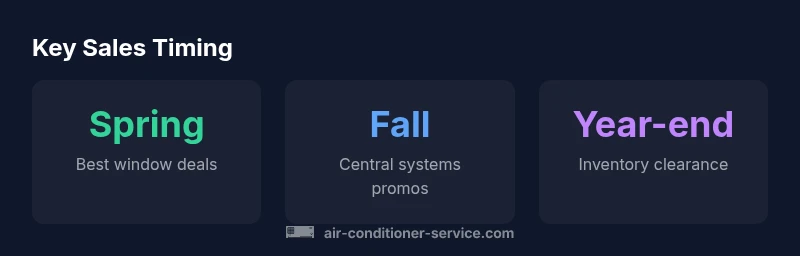
When do air conditioners go on sale? The answer is seasonal. Retailers typically roll out promotions at the start of spring as cooling demand rises, during late-summer clearance, and in year-end campaigns. You’ll often see discounts on window units first, with central-air deals following as retailers clear stock. For reliable savings, track promotions across retailers and target those spring and fall windows for the best chance at genuine price cuts.
Understanding why sales happen
Sales for air conditioners aren’t random; they’re the result of supplier inventories, seasonal demand, and retailer marketing strategies. For homeowners asking, “when do air conditioners go on sale,” the practical answer is that promotions cluster around weather-driven needs and promotional calendars. The Air Conditioner Service team notes that spring promotions kick off as people start shopping for cooling solutions, while late summer sees clearance events as older stock and less-efficient units make way for newer models. Year-end campaigns are common as retailers push remaining inventory before fiscal year closes. This pattern means the window for the deepest discounts often aligns with major holidays and long weekend sales, rather than random price drops scattered throughout the year. By understanding this rhythm, you can time purchases for maximal value.
Seasonal patterns by product type
Window units and portable ACs often appear on discount early in the season when retailers want to move lightweight, portable inventory. Central air systems and higher-SEER models tend to see promotions later, typically in spring or during holiday sales when bundled upgrades, extended warranties, or free installation are offered. Efficiency-focused models may have rebates or price drops tied to utility programs, rebates, or manufacturer promotions. The distinction matters: a $200 discount on a window unit isn’t the same as a $800 discount on a comprehensive central-air upgrade. Always compare unit price, installation, and any bundled services to gauge the true value of a sale.
Regional differences and retailer strategies
Sales timing varies by climate and retailer mix. Large national chains often synchronize promotions across all locations, while regional independents tailor offers to local weather and competition. Online retailers may launch flash sales or price-match across platforms, which can create multiple near-simultaneous discounts. If you live in a warm climate with year-round cooling needs, your best strategy may differ from someone in a temperate region who buys in spring. Tracking regional pricing blogs, retailer newsletters, and local advertising can reveal subtle timing advantages that aren’t obvious from national ads.
How to separate real discounts from marketing MSRP
Not every advertised price is a true bargain. Some retailers use “comparable value” banners or temporary MSRP hikes to make the sale price look sweeter. A practical approach is to track price history for at least 4–6 weeks around the target purchase period and to compare sale prices against a baseline of typical pricing from the same retailer. Price-matching policies, coupon codes, and bundle offers should be verified in the shopping cart, not just on the product page. When in doubt, use price tracking tools and maintain a short wish list so you don’t miss a real drop when it appears.
Price drivers: model, efficiency, and features
The discount your see is often a function of model type, SEER rating, BTU size, and installed features. Large-tonnage central units with high SEER ratings may have smaller upfront discounts but better long-term savings through energy efficiency. Window units and mini-splits can show larger percentage discounts during peak season to clear inventory or promote a specific line. Remember that the sticker price is only part of the total cost—installation, ductwork adjustments, and warranty coverage are essential components that change the true value of a sale.
Timing your purchase by region
In colder regions, the best discounts may appear in late summer or autumn as retailers anticipate the cooling season winding down and prepare for next year’s inventory. In hot climates, promotions can be steady, with occasional spikes around Memorial Day, Fourth of July, or Labor Day. Always align your purchase with both local climate realities and the retailer’s promotional calendar. If you’re flexible, waiting for a regional sale event can yield better deals than grabbing the first advertised price.
Negotiation, coupons, financing, and price matching
Don’t treat a sale ad as the final word. Ask about price matching, verify compatibility with installation services, and consider financing options or promotional rebates that reduce the effective price. Some retailers offer bundled installation or extended warranties during sales, which can improve total value even if the unit price isn’t dramatically lower. If you’re balancing cost with reliability, a reasonable compromise often includes a moderate unit discount plus a solid warranty and a well-planned installation package.
How to prepare for a sale: research, alerts, and checklists
Create a short list of preferred units, SEER ratings, and configuration needs (window vs. central, tonnage). Set up price alerts on multiple retailers and sign up for newsletters to receive early notice of promotions. A practical buying checklist includes: current cooling issues, compatibility of the new unit with your space, required electrical upgrades, and the long-term cost of ownership. By preparing in advance, you can act quickly when a real discount appears and avoid paying for unnecessary add-ons.
What to buy during a sale: units, installation, and service
During sales, prioritize units that deliver reliable cooling with energy efficiency and sound levels suited to your space. If you’re upgrading a central system, consider installation timelines, ductwork suitability, and potential upgrades to increase efficiency. Don’t overlook accessories like smart thermostats or seasonal filter replacements, which can improve system performance and comfort. Finally, confirm warranty terms and service plans, as a good warranty can offset the cost of potential future repairs.
Sale timing by season and product type
| Season | Typical sale window | Notes |
|---|---|---|
| Spring | March–April | Best for window units and promotions on portable units |
| Fall | September–October | Strong central-air deals with free installation options |
| Holiday season | November–December | Year-end promotions and inventory clearances |
Common Questions
When is the best time to buy an air conditioner?
Spring and fall are typically the best times for substantial discounts, with additional promos around major holidays. Always compare prices across retailers and factor in installation costs and warranties.
Spring or fall usually offers the best discounts, but check multiple retailers and don’t forget installation and warranty costs.
Do window units go on sale more often than central air?
Window units often see more frequent promos during summer, while central air deals may appear in spring or year-end campaigns. Compare both price and bundled services.
Window units usually have more frequent summer promos; central air tends to have bigger but less frequent deals.
Should I wait if my current AC is overheating?
If your system is failing, waiting for a sale can risk comfort and safety. Use price tracking to time non-urgent replacements, but prioritize essential repairs when needed.
If it’s failing, don’t wait for a sale. Assess urgency and track prices for a planned upgrade if possible.
How can I verify a sale price is real?
Check price history, compare with MSRP, and read the fine print on bundles. Use price-matching policies and confirm installation costs before purchase.
Look at price history and compare with MSRP, and don't overlook installation costs.
Are installation costs discounted during sales?
Sometimes. Look for bundled installation deals, free or discounted labor, and warranties tied to sale events. Always confirm what is included in the promotion.
Sometimes installation is discounted during sales; confirm what’s included before you buy.
Should I buy an extended warranty during a sale?
Warranties can add value if they cover expected wear and future servicing. Evaluate cost versus coverage and consider bundled protection with installation.
Warranties can be worth it if they cover typical wear; weigh cost against coverage and bundles.
“Seasonal timing matters for both price and selection; a thoughtful buyer can optimize total cost by combining unit price with installation and warranty options.”
The Essentials
- Track price history to verify discounts
- Plan purchases around spring and fall windows
- Consider bundles with installation and warranties
- Differentiate genuine price drops from MSRP tactics
- Align purchases with regional climate and retailer calendars