Why Is My Portable AC Overheating? Quick Troubleshoot
Urgent guide to diagnose and fix overheating portable air conditioners. Learn common causes, quick checks, and safe steps to restore cooling fast for homeowners.


The portable AC most likely overheats due to restricted airflow, blocked exhaust, or overuse in hot conditions. Start by cleaning or replacing the filter, ensuring the unit has proper clearance and a straight exhaust path. If temperatures stay high, relocate to a cooler room or call a pro.
Why is my portable air conditioner overheating?
Why is my portable air conditioner overheating? Portable units are designed to pull heat from a room and vent it outside. When overheating occurs, the cooling system has to work harder, which increases internal temperatures and can trigger the unit’s safety protections. According to Air Conditioner Service, the most common causes are airflow restrictions, venting problems, dirty filters, and a high heat load in the room. In hot weather or small, poorly ventilated spaces, these factors combine to overwhelm the system. The goal is steady air movement, unobstructed intake and exhaust paths, and regular maintenance. If you catch the issue early, you can restore cooling quickly and avoid costly repairs. Today’s troubleshooting focuses on quick checks you can perform before calling a technician, plus clear steps to correct the top offenders. Understanding these dynamics helps you act with confidence and reduce the risk of recurring overheating.
Check installation and ventilation setup
A portable AC must vent heat outside through an exhaust hose, with a window kit or venting option that seals gaps. If the exhaust hose is too long, has several bends, or sits on a soft surface, heat can bounce back into the room and raise cabinet temperatures. Ensure the window kit is snug, the hose is straight, and the unit has at least a few inches of clearance on all sides. Also verify the window/vent kit is rated for your model and that the vent opening isn’t blocked by curtains or furniture. Proper venting reduces the unit’s workload and helps prevent overheating.
Inspect and clean filters, coils, and condensate
Clogged air filters force the compressor to work harder and reduce cooling efficiency, which rises internal temperatures. Remove and clean the filter according to the manufacturer’s instructions, replacing it if it’s damaged or overly dirty. Next, check the condenser coils for dust and grime; a dirty coil acts like a radiator clogged with debris. If your unit uses a removable drain tray, ensure it’s draining correctly and that the condensate line isn’t kinked or blocked. Regular cleaning keeps airflow high and heat transfer efficient, which helps prevent overheating in the first place. Remember to power off and unplug before maintenance.
Electrical considerations and placement
Running a portable AC on an overloaded circuit or with a damaged cord increases safety risks and can lead to overheating. Plug the unit into a dedicated outlet that’s not shared with high-draw devices, and avoid extension cords that reduce current. Inspect the power cord for cracks or scorch marks, and replace it if damaged. Place the unit on a hard, level surface rather than carpet, and avoid blocking heat exhaust outlets with furniture. Adequate clearance around the unit improves airflow and dramatically lowers heat buildup.
Performance checks you can perform at home
If the room remains warm after an hour of operation, perform a quick at-home diagnostic: confirm filter cleanliness, verify venting integrity, and ensure the unit isn’t overheating due to ambient heat load. If you notice frost on the coils, that often signals a refrigerant balance issue or blocked airflow, which requires professional attention. Take notes on outdoor temperatures, room size, and whether the unit cycles on and off abnormally; this information helps a technician pinpoint the cause quickly and prevents unnecessary replacements. Safety tip: never bypass safety switches or disassemble sealed components.
Prevention and long-term maintenance
The best defense against overheating is a proactive maintenance routine. Clean or replace the air filter monthly during heavy use, check the exhaust hose for kinks every few weeks, and inspect the window vent for gaps. Clean the condenser coils every season and clear the condensate line if your model offers it. Store the unit with the hose detached during off-season in a cool, dry place to prevent seal damage. Regular checks reduce the likelihood of overheating and extend the life of your portable AC.
When to seek professional help
If you’ve completed these steps and the unit still overheats, or if you notice unusual noises, leaking refrigerant, or the compressor cycling rapidly, it’s time to contact a licensed technician. Prolonged overheating can indicate a refrigerant leak or internal component wear that requires specialized tools and knowledge. Air Conditioner Service recommends scheduling a professional assessment before attempting more invasive repairs. Timely service can prevent expensive damage and guarantee safe operation.
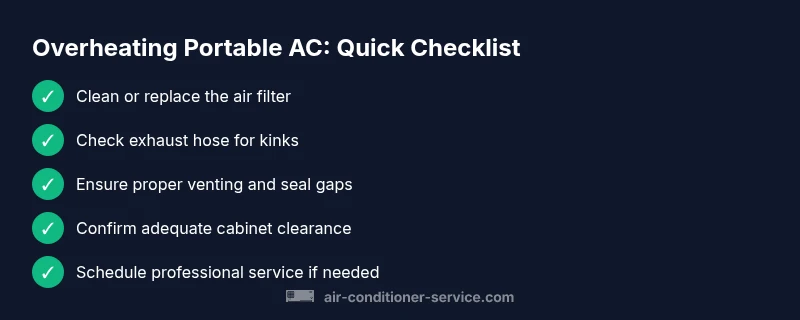
Quick-start checklist (lower risk, high impact)
- Clean or replace the filter
- Check exhaust hose for kinks and ensure proper venting
- Verify unit has clearances and isn’t on carpet
- Keep room temperature reasonable and use fans to assist cooling
- Power off before any maintenance and call a pro if uncertain
Steps
Estimated time: 45-60 minutes
- 1
Power down and prep the unit
Unplug the portable AC and move it away from walls. Visually inspect the power cord for damage. This prevents shocks and avoids creating an unsafe working area before you begin any maintenance.
Tip: Always unplug before touching internal components to stay safe. - 2
Check and clean the air filter
Remove the filter and inspect for dirt, dust, or clogging. Rinse with mild water if the design allows, or replace with a compatible filter. Let it dry completely before reinstallation.
Tip: Clean filters monthly during heavy use to maintain airflow. - 3
Inspect the exhaust hose and vent kit
Look for kinks, cracks, or bulges in the hose. Ensure the window vent is properly sealed and the hose runs in a straight path to the outside. Reattach securely to minimize leakage.
Tip: A straight hose path improves heat exhaust and cooling efficiency. - 4
Check cabinet clearance and surface
Move the unit so it isn’t tucked into a corner or against a wall. Place it on a hard, level surface and ensure at least a few inches of clearance all around for air intake and exhaust.
Tip: Avoid placing on carpet or soft surfaces that block airflow. - 5
Test run and monitor temperatures
Plug in, set a comfortable cooling mode, and monitor room temp for 15–30 minutes. Note any unusual sounds, error codes, or excessive warm air.
Tip: If temperatures stay high, don’t push the unit; proceed to professional evaluation. - 6
Call a professional if overheating persists
If the above steps don’t resolve the issue, a licensed technician can check refrigerant levels, coils, and electrical components. Document symptoms and timing to help the tech diagnose quickly.
Tip: Early professional help can prevent costly damage.
Diagnosis: Portable AC is running but the room remains warm and the unit overheats during operation.
Possible Causes
- highAirflow restriction from a dirty filter, blocked intake, or tight cabinet clearance
- highExhaust hose kinked, stretched, or too long, causing heat to reflect back
- mediumInadequate clearance or placement on carpet/soft surface blocking air intake/exhaust
- lowDirty condenser coils or refrigerant issues
Fixes
- easyClean or replace the air filter; ensure intake is clear
- easyStraighten or shorten the exhaust hose; reseal window kit and remove kinks
- easyMove unit to a location with more clearance and avoid placing on carpet
- mediumIf coils are dirty, gently clean them or schedule professional coil service/refrigerant check
- hardIf you suspect a refrigerant leak or serious electrical fault, contact a licensed technician
Common Questions
What are the most common causes of a portable AC overheating?
Most often it’s airflow restrictions, venting problems, or a high room load. A dirty filter or blocked intake keeps the unit from shedding heat efficiently, causing the cabinet to overheat. Addressing these basics usually resolves the issue.
Common causes are airflow and venting problems; cleaning the filter and fixing the vent usually helps.
Can running in fan-only mode cause overheating?
Running in fan-only mode does not cool but can still overheat if the unit’s components overcompensate for poor airflow or high ambient heat. Use cooling mode for proper heat exchange and limit fan-only operation to short durations.
Fan mode won’t cool effectively if airflow is blocked; use cooling mode for best results.
Is it safe to use an extension cord with a portable AC?
Most manufacturers warn against using extension cords due to current loss and heat buildup. If you must, use a heavy-duty, properly rated cord and keep it short. Prefer a dedicated outlet.
Extension cords can cause overheating—use a dedicated outlet when possible.
How often should I clean or replace the filter?
Check the filter monthly during heavy use. Clean or replace as needed; in high humidity or heavy dust, more frequent servicing helps maintain airflow and cooling.
Check monthly and clean or replace as needed to keep airflow strong.
When should I call a professional?
If overheating persists after basic maintenance, you notice refrigerant leaks, strange noises, or the compressor cycles abnormally, schedule a professional service to prevent further damage.
Call a technician if it keeps overheating after maintenance or you hear unusual sounds.
Can a refrigerant leak cause overheating?
Yes, a refrigerant leak reduces cooling efficiency and can cause the system to overheat. A trained tech should diagnose refrigerant balance and seal any leaks.
A refrigerant leak can cause overheating and needs a professional to fix.
Watch Video
The Essentials
- Clean/replace filters to restore airflow
- straighten vent hose and ensure proper venting
- give the unit ample clearance and avoid carpet surfaces
- regular maintenance prevents overheating and extends unit life