When Should You Not Run Your Air Conditioner: Practical Guidelines
A practical, safety-first guide on when not to run your air conditioner, how to spot warning signs, and steps to protect your unit while you arrange service.


Definition: You should not run your air conditioner when safety or efficiency risks are present. Avoid operation if you notice refrigerant leaks, ice forming on the coils, unusual noises, electrical smells, or obvious water pooling. In such cases shut the system off, unplug if safe, and contact a licensed HVAC technician for diagnostic and repair.
Why you should pause: understanding when should you not run your air conditioner
Anyone who owns an air conditioner should understand that not all times are suited for operation. when should you not run your air conditioner? The safe, energy-minded answer is: pause operation whenever safety, efficiency, or equipment health could be at risk. Running a unit under fault conditions can lead to more damage, higher energy bills, and reduced life expectancy. This guide outlines concrete signals that indicate it's best to shut down, how to verify issues safely, and practical steps you can take while you arrange professional help. By recognizing warning signs early, you protect both your home comfort system and your wallet. Air Conditioner Service recommends erring on the side of caution: when in doubt, turn it off and seek a diagnosis rather than continuing to run a potentially faulty system. In the following sections, you’ll learn how to spot issues, document symptoms, and communicate clearly with a technician so you can resume cooling quickly and safely after problems are resolved.
Common warning signs that you should pause operation
There are several red flags that tell you the system should not run. Refrigerant leaks often cause a sudden drop in cooling capacity and can be harmful to both people and property; if you smell a chemical or notice oily spots around joints, shut the unit down and call a pro. Ice or frost forming on evaporator coils is a clear sign the refrigerant cycle is out of balance or the blower isn't removing humidity properly. Unusual noises such as banging, grinding, or rattling can indicate loose components or compressor trouble. Electrical smells or hot surface components warn of faulty wiring or overloaded circuits. Water pooling around the outdoor unit or inside the ductwork points to drainage or condensation issues that should be inspected. If any of these signs appear, do not continue to run the system; power down safely and arrange professional service.
How to safely inspect without turning the unit back on
To avoid risks, start by turning off power at the breaker and at the thermostat. Use a non-contact voltage tester or a multimeter only if you have training; otherwise, rely on visual checks. Look for obvious signs of damage, such as cracks in the insulation, burnt wires, or ice buildup on the refrigerant lines when the system is idle. Check for smells that suggest burning or refrigerant release and ensure the condensate pan is dry. Never bypass safety guards or attempt to reseal refrigerant lines yourself. If you find issues, document them with photos and notes to share with the technician.
Temperature, humidity, and decision making
Humidity levels and outdoor temperature influence whether running the AC is appropriate. If indoor humidity remains high despite the unit running, or if outdoor conditions create excessive stress for the compressor, pausing may be wise until a technician confirms the cause. In some cases, adjusting fans or using a dehumidifier can provide temporary relief without stressing the cooling system. Remember: extreme conditions, especially heat and humidity, aren’t reasons to force the unit to run when it isn’t performing correctly.
Seasonal considerations and off-season storage
During shoulder seasons or while preparing a home for long absences, running the AC sparingly may be unnecessary and wasteful. If you’re winterizing or closing a vacation home, switch to standby mode or turn off the thermostat entirely, and use alternative cooling strategies if needed. Storing the equipment correctly—protecting the outdoor unit from debris, ensuring proper clearance around the condenser, and following manufacturer recommendations—helps prevent issues that would later require service before the next season.
Practical steps to minimize risk while awaiting service
First, document symptoms: when they occur, under what loads, and any noises or smells. Second, keep the area around the outdoor unit clear of debris and ensure adequate airflow. Third, check the air filter and ductwork for blockages that could cause poor performance even when the unit is healthy. Fourth, if you must cool a space, consider alternative methods like ceiling fans or portable dehumidifiers to maintain comfort without stressing the system. Finally, schedule a service visit promptly and share your notes with the technician.
Communicating with a technician: what to tell them
Provide a concise history of symptoms. Mention visible signs of damage, odors, ice on the coil, or water issues. Note the thermostat behavior, any breaker trips, and the last time the unit ran correctly. Share photos or videos to help the technician diagnose before arriving. Ask about estimated repair timelines and any safety precautions you should take at home.
Quick-start pause checklist
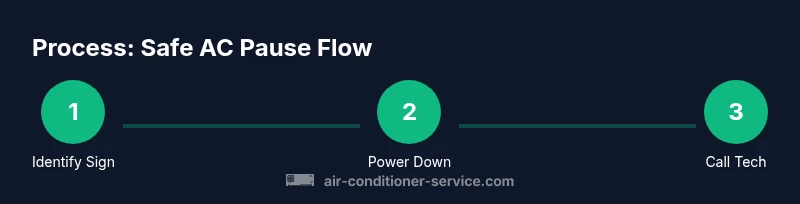
Use this 5-step checklist when you suspect a problem but need to pause operation: 1) Power off at the breaker; 2) Inspect for obvious hazards; 3) Document signs and gather photos; 4) Avoid attempts to recharge refrigerant or bypass safety features; 5) Contact a licensed HVAC professional.
Tools & Materials
- Digital multimeter(for electrical checks if trained; otherwise rely on visual inspection)
- Insulated screwdriver set(to open access panels safely)
- Safety goggles(eye protection during inspections)
- Work gloves(hand protection when handling panels or components)
- Flashlight or headlamp(improves visibility in dark outdoor or basement spaces)
- Owner’s manual for your unit(model-specific guidance and safety reminders)
Steps
Estimated time: 15-30 minutes
- 1
Power down safely
Shut off power at the thermostat and switch off the corresponding circuit breaker. If safe, unplug the unit from any accessible receptacle. This prevents electrical shocks and protects you while you inspect or wait for service.
Tip: Never bypass safety devices; always de-energize before touching internal components. - 2
Look for obvious hazards
With the power off, perform a visual scan for melted wiring, burnt smells, or exposed insulation. Note any oil or refrigerant stains around joints. Document findings with photos to share with your technician.
Tip: Use good lighting and a clean workspace to avoid missing subtle signs. - 3
Check for ice and drainage issues
Inspect the outdoor coil and lines for ice or frost buildup when the system is off. Check condensate pan and drainage lines for clogs or pooling. These issues indicate abnormal refrigerant pressure or airflow problems that require professional evaluation.
Tip: If you see ice, do not run the unit to melt it; wait for service. - 4
Assess thermostat and airflow
Ensure the thermostat is correctly set and communicating with the system. Verify that supply vents are not blocked and that air filter is clean. Poor airflow can mask other issues and may cause unnecessary runs.
Tip: Change or clean filters regularly to maintain safe airflow. - 5
Document and prepare for service
Record symptom patterns (time of day, loads, noises). Gather photos, and write a brief fault timeline. This helps the technician diagnose faster and reduces your wait time.
Tip: Create a simple heat map of symptoms to share with the tech. - 6
Decide and act
Based on your observations, decide whether to keep the space cooler by fans or dehumidifiers, or to pause cooling entirely until a professional confirms the issue. Safety comes first; if in doubt, pause and call for help.
Tip: If the unit is in a critical area (e.g., near water or electrical sources), err on the side of caution.
Common Questions
What are the most common signs that I should not run my air conditioner?
Key signals include refrigerant leaks, ice on coils, unusual noises, electrical smells, and water pooling near the unit. If you observe any of these, shut the system off and contact a licensed HVAC technician for diagnosis.
Look for leaks, ice, odd noises, smells, or water around the unit. If you notice these, turn off the system and call a pro.
Is it safe to operate the AC if there is a refrigerant leak?
No. Refrigerant leaks are hazardous to health and can cause improper cooling. Do not run the unit and contact a licensed technician to locate and repair the leak.
No. If you suspect a refrigerant leak, don’t run the AC and call a professional right away.
Should I run the AC during a power outage or frequent breaker trips?
No. If the breaker trips or there’s an unreliable power supply, pausing operation is safer. Have an electrician inspect your panel and the air conditioning circuit.
If the breaker trips or power is unstable, don’t run the AC until an electrician checks the circuit.
What should I do if I see ice on the evaporator coil while the system is off?
Ice on the coil indicates underlying problems; do not run the unit and arrange service. A technician will check refrigerant pressure and airflow to restore proper function.
If you see ice on the coil, don’t run the AC and contact a pro to diagnose.
How can I prevent needing to pause the AC in the future?
Regular maintenance, clean filters, proper airflow, and timely service can reduce the risk of faults that require pausing cooling. Schedule seasonal checkups and follow manufacturer guidelines.
Keep up with maintenance and filters, and schedule regular checkups to reduce pauses.
Watch Video
The Essentials
- Pause cooling when safety or performance signs appear.
- Document symptoms clearly before calling a pro.
- Never bypass safety features or attempt DIY refrigerant work.
- Use alternative cooling options while awaiting service.