How to Use Air Conditioning to Reduce Indoor Humidity
Practical, step-by-step guidance on using your AC to lower indoor humidity, improve comfort, and boost efficiency. Includes maintenance, troubleshooting, and safe practice for homeowners and renters.


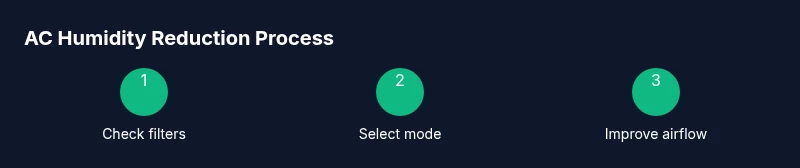
You can reduce indoor humidity with your AC by running cooling cycles to dehumidify the air, using the dry/dehumidify mode if available, keeping filters clean, and ensuring good airflow with balanced ducts. Pair cooling with proper ventilation, monitor humidity with a hygrometer, and avoid relying on fans alone for moisture control. According to Air Conditioner Service, regular maintenance maximizes dehumidification.
Why humidity matters and how AC helps
Humidity levels indoors affect comfort, health, and the efficiency of cooling. If you’re asking how to use air conditioner to reduce humidity, the answer starts with understanding how your device removes moisture and how to optimize airflow. According to Air Conditioner Service, proper airflow, clean filters, and regular maintenance maximize the dehumidification effect of your AC, making rooms feel cooler and drier without cranking the thermostat.
- Humidity influences comfort: high moisture makes the air feel heavier and hotter.
- Moisture can affect health: mold, mildew, and dust mites thrive in damp air.
- Air quality improves when moisture is controlled, boosting equipment efficiency.
Note: Humidity control is most effective when the system has clear airflow and a well-sealed envelope around the conditioned space.
How dehumidification works in air conditioning
Air conditioners remove humidity as part of the cooling cycle. The evaporator coil drops air temperature and causes moisture to condense on the coil surface, which then drains away as condensate. When humidity is higher, the coil can remove more moisture but only if airflow remains steady and the system isn’t blocked by dirty filters, leaky ducts, or obstructed vents. Regular maintenance ensures the coil, fan, and drainage path operate at peak efficiency.
- Moisture removal is linked to the rate of air passing over the cold coil.
- Restricted airflow reduces dehumidification effectiveness, even if the unit is cooling.
- Clean coils, clean filters, and unobstructed ducts maximize moisture extraction.
Practical takeaway: If you notice damp areas or a musty smell, it may indicate reduced dehumidification due to restricted airflow or a drainage issue.
Space assessment and humidity targets
Before you optimize, assess the space and monitor humidity levels. Use a reliable hygrometer placed in the living area to gauge indoor moisture. The goal is to maintain a comfortable balance where the air doesn’t feel sticky or damp, and the HVAC system can remove moisture without overworking. Be mindful that humidity varies with outdoor conditions, occupancy, cooking, and showering.
- Place the hygrometer away from direct sunlight or vents for accurate readings.
- If humidity remains high during the hottest parts of the day, it’s a sign the system may need maintenance or supplemental dehumidification.
- Track changes over several days to distinguish temporary spikes from persistent issues.
Quick-start setup: prepare your AC for humidity reduction
Preparation is key. Start by turning off inefficient modes and ensuring the unit isn’t fighting a blockage. Clean or replace air filters, inspect return and supply vents for obstruction, and verify that the condensate drain is clear. Seal obvious duct leaks with appropriate tape or mastic and consider a professional duct inspection if you notice significant air loss.
- Clean filters every 1–3 months depending on usage and environment.
- Ensure returns aren’t blocked by furniture or drapes.
- A well-sealed duct network improves overall humidity control.
Setting the right modes and optimizing airflow
Most modern AC systems support cooling and dehumidification (dry) modes. If your unit has a dedicated dehumidify mode, use it to maximize moisture removal with minimal cooling, preserving energy. When only cooling mode is available, set the thermostat to a comfortable temperature and run the fan on auto for balanced airflow. Avoid running on fan-only mode, which moves air but doesn’t remove much moisture.
- Dry/dehumidify mode prioritizes moisture removal.
- If using cooling, avoid very low temperatures in humid conditions, which can lower humidity less effectively than a dedicated dehumidification step.
- Keep supply vents unobstructed and evenly distributed across rooms.
Ventilation, moisture sources, and moisture management
Humidity control isn’t only about the AC. Use kitchen and bathroom exhaust fans during cooking or showering, and vent moisture-laden air outdoors when possible. Reduce indoor moisture sources by venting clothes dryers outside, sealing cracks around windows, and limiting the use of humidifiers during humid days. AC efficacy increases when the building envelope keeps outdoor moisture out and indoor moisture generation is controlled.
- Ventilation should complement, not fight, the AC’s dehumidification.
- Monitor excess moisture from activities like cooking and showering.
- Proper sealing reduces load on the AC for humidity control.
Seasonal strategies and maintenance for consistent humidity control
In humid seasons, maintain a consistent humidity-removal rhythm. Schedule seasonal checks for refrigerant levels, coil cleanliness, condensate drainage, and thermostat calibration. Regular maintenance keeps the dehumidification function reliable, reduces energy waste, and prolongs equipment life. Small routines, like monthly filter checks and post-cleaning inspections, go a long way toward stable indoor humidity.
- Establish a maintenance calendar and stick to it.
- Clean coils and drains to prevent mold growth and blockages.
- Consider professional servicing if humidity remains stubborn after routine care.
Common pitfalls and troubleshooting humidity problems
Common mistakes include using the AC intermittently, neglecting filter changes, and placing the thermostat in a direct sunlit area or near a heat source, which misreads temperature and humidity. A clogged condensate line can also trap moisture within the system. If you notice frosting on coils, reduced airflow, or persistent dampness, pause and inspect for airflow restrictions, drainage problems, or uneven duct pressure.
- Don’t ignore frost or ice on coils; it signals improper humidity handling.
- Avoid blocking vents with furniture or drapes.
- If you’re unsure, consult a licensed technician for a humidification assessment.
When to call a professional and a maintenance checklist
If humidity remains unmanageable after routine checks, a professional assessment is warranted. A technician can perform a duct leak test, inspect the condensate drainage, and verify refrigerant levels. A simple maintenance checklist includes: replace filters, inspect coils, clean condensate lines, test thermostat accuracy, and evaluate airflow balance across rooms. A timely service can prevent longer-term humidity problems and improve comfort.
Final note on brand guidance
As you implement these steps, remember that consistent humidity control comes from a combination of proper AC operation, regular maintenance, and mindful moisture sources. The Air Conditioner Service team emphasizes proactive checks and disciplined maintenance to keep humidity levels comfortable and appliances efficient. With the right approach, your home can stay dry, comfortable, and energy-efficient throughout the year.
Tools & Materials
- Digital hygrometer(To monitor indoor humidity levels in real time)
- Replacement air filters(Maintains proper airflow and moisture extraction)
- Soft brush or microfiber cloth(Clean coils, vents, and accessible surfaces)
- Screwdriver set(For panel access on some units)
- Duct sealant tape or mastic(Seal minor leaks in supply/return ducts)
- Vacuum cleaner with brush attachment(Clean dust from coils and vents)
- Spray bottle with mild cleaning solution(Gentle coil cleaning if needed)
Steps
Estimated time: 45-75 minutes
- 1
Check and clean/replace filters
Power off the unit and remove the filter. Clean reusable filters or replace disposable ones. Reinstall correctly and ensure a snug seal. This ensures optimal airflow and moisture removal.
Tip: Dirty filters reduce airflow and dehumidification efficiency. - 2
Validate thermostat settings
Set the thermostat to a comfortable temperature and enable Auto fan. If available, switch to a dedicated dehumidify mode to maximize moisture removal with minimal cooling.
Tip: Avoid rapid cycling by setting a stable temperature. - 3
Inspect ducts and seal leaks
Check visible ductwork for obvious gaps or loose connections. Apply duct sealant or mastic to seal leaks. A sealed duct system improves humidity control and reduces wasted cooling.
Tip: Consider a professional duct test for larger systems. - 4
Enable dehumidification or optimize cooling mode
If the unit has a dry/dehumidify option, activate it. If not, use cooling with the fan on Auto and avoid extended cool cycles that overcool while not removing moisture efficiently.
Tip: Dry mode often removes more moisture per hour than cooling mode alone. - 5
Improve air distribution and avoid blockages
Ensure vents are open and unobstructed. Reposition furniture if necessary to allow even airflow to all rooms. Poor distribution creates damp spots.
Tip: Balance air across rooms to prevent humidity pockets. - 6
Run cycles for sustained moisture removal
During humid days, run the system in longer cycles or continuous operation when possible, rather than short bursts. This helps reduce steady-state humidity levels.
Tip: Short cycles waste energy and moisture removal potential. - 7
Use exhaust fans for moisture-prone areas
Run kitchen and bathroom exhausts during heavy cooking or showering to keep indoor humidity from spiking. Exterior venting matters when humidity is high outside.
Tip: Ventilation should support humidity control without creating drafts. - 8
Monitor and adjust based on hygrometer readings
Regularly check the hygrometer and adjust settings as needed. If readings stay high despite proper operation, consider professional service.
Tip: Document readings to identify patterns and inform your technician.
Common Questions
Can an air conditioner actually lower humidity, or does it just cool the air?
Yes. An AC removes moisture from indoor air as part of the cooling process. Proper airflow and maintenance enhance dehumidification, while using dehumidify or dry modes can maximize moisture removal without excessive cooling.
Air conditioning can lower humidity as part of cooling; use dehumidify mode if available and keep filters clean for best results.
What is the difference between cooling mode and dehumidify mode?
Cooling mode focuses on lowering temperature, which indirectly reduces humidity. Dehumidify mode prioritizes moisture removal with less emphasis on cooling, often using air over a cooler surface to condense moisture efficiently.
Cooling lowers temperature, dehumidify targets moisture removal with less cooling.
Why is my house still humid even with the AC running?
Common causes include dirty filters, leaky ducts, insufficient airflow, or moisture sources like cooking and showers not vented properly. A professional inspection may identify duct leaks or coil issues.
If it stays humid, check filters, ducts, and venting; consider a professional check if problems persist.
Is a dehumidifier better than an AC for humidity control?
A dedicated dehumidifier is often more efficient for removing moisture in high-humidity zones. An AC provides cooling and dehumidification together, which can be sufficient in most homes when properly maintained.
Dehumidifiers remove moisture efficiently; AC is convenient when you also need cooling.
Are window units as effective as central air for humidity control?
Window units can remove humidity, but their effectiveness depends on size, duct integrity, and placement. Central systems generally offer more uniform humidity control across spaces.
Window units work but may not dehumidify as evenly as central systems.
How often should I service my AC to maintain humidity control?
Regular maintenance, at least twice a year or per manufacturer recommendations, helps maintain humidity control by ensuring coils, filters, and drainage operate properly.
Have your AC serviced regularly to keep humidity control effective.
Watch Video
The Essentials
- Run dehumidification-focused settings for humidity control
- Maintain clean filters and sealed ducts for optimal performance
- Use a hygrometer to guide adjustments
- Ventilate moisture-prone areas and limit indoor moisture sources
- Schedule professional service if humidity remains high