How to Use Air Conditioners for Heating
A practical, step-by-step guide to using your air conditioner for heating safely and efficiently, with tips on mode switching, thermostat settings, airflow, maintenance, and common issues.


You can heat your space by using your air conditioner’s heating mode, provided the unit supports heating (often as a heat pump or reverse-cycle system). Before you start, verify heating capability, clean or replace filters, and set a comfortable thermostat. This guide explains safe, energy-efficient heating with your AC in plain terms.
Understanding Heating with Air Conditioners: Heat Pumps vs Cooling-Only Units
Not all air conditioners heat the same way. A true heating-capable unit is usually a heat pump or a split system with a built-in reverse cycle. In heating mode, the refrigerant cycle moves heat from outdoors to indoors, effectively warming a room with less energy than traditional electric resistance heaters in moderate climates. The Air Conditioner Service team notes that when your system is designed for heating and is properly maintained, you can achieve comfortable temperatures with lower energy use compared to some resistance heat options. If you own a cooling-only unit, heating won’t be possible from the same thermostat control, and attempting to force heating can lead to damage or delivery of cold air. Always confirm model capabilities in the user manual or on the outdoor unit label.
Pro tip: If you’re unsure about your unit’s heating capability, schedule a quick diagnostic with a licensed technician before winter months start.
Preparing Your System for Heating: Compatibility, Safety, and Pre-Heat Checks
Start by confirming your AC’s heating capabilities (heat pump or dual-mode system) and the outdoor temperature range in which it can operate effectively. Inspect the air filter and replace if dirty, since a clogged filter reduces airflow and heating efficiency. Ensure all supply vents are open and unblocked, and check that the outdoor condenser (if accessible) is free of debris. Read the safety warnings in your manual, and disconnect power before any cleaning or inspection of electrical components. If you notice ice forming on the outdoor coil or if the unit seems to struggle to start, do not force it; contact a technician. These checks help you avoid inefficient operation or additional wear during the heating season.
Brand context note: The Air Conditioner Service team recommends a basic pre-heat checklist to set the stage for efficient heating and to prolong system life.
Safety, Energy Basics, and What to Expect in Different Weather
Heating with an AC is most efficient in moderate temperatures and good insulation. In very cold conditions, some heat pumps lose efficiency and may rely more on auxiliary heat sources. Make sure your thermostat is properly calibrated and that the system’s defrost cycle (for heat pumps) operates correctly to prevent compressor strain. Use energy-saving settings like lower fan speeds when the space is comfortable and avoid blasting heat for long stretches if you’re away from home. Prioritize insulation improvements (doors, windows, attic) to reduce heat loss, which can dramatically impact heating performance and costs.
Air Conditioner Service analysis suggests that maintaining airflow and minimizing heat loss are key drivers of effective heating when using air conditioning equipment. If your home isn’t well insulated, consider combining AC heating with supplemental sources to maintain comfort while keeping energy use reasonable.
How to Switch into Heating Mode: Step-by-Step Activation and Quick Checks
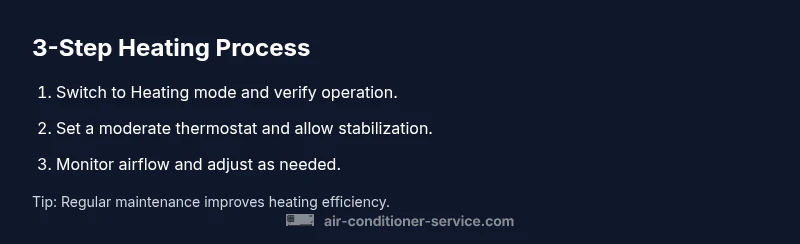
Most systems with heating support have a dedicated heat mode on the thermostat or remote. Begin by switching from Auto or Cool to Heat, ensuring the fan setting is on Auto (not On) to avoid blowing cool air when the compressor starts. If your system features a two-stage or variable-speed compressor, allow a few minutes for it to ramp up and stabilize. Confirm that the thermostat is allowing a temperature setpoint that reflects your comfort needs, and listen for any unusual noises or cycling patterns that may indicate a problem. A warm start should feel gradual, not abrupt.
Pro tip: If you hear unusual grinding or banging sounds, switch to fan-only mode and consult a technician—ignoring strange noises can signal a component issue.
Practical Thermostat Settings for Comfort and Efficiency
Set a reasonable baseline temperature for when you’re home and awake, then adjust for sleep and occupancy. Use the thermostat’s energy-saving features if available, such as adaptive recovery or smart scheduling, to avoid overheating rooms while you’re away. If you have zoning capability, heat only occupied areas to maximize efficiency. During shoulder seasons, you may be able to rely more on the AC’s heating mode and reduce use of auxiliary heating.
Tip: Keep doors and windows closed when heating is active to prevent heat from escaping and to avoid overworking the unit.
Airflow, Ducts, and Indoor Air Quality for Heating
Correct airflow matters for even heating. Ensure that vents are clear of furniture and drapes, and consider using ceiling fans on a low speed to circulate warm air that tends to rise. If you have ducted systems, inspect for leaks and seal ducts as needed to minimize energy waste. Combine heating with good filtration—clean filters improve airflow and indoor air quality, which contributes to a more comfortable environment. Monitoring humidity is also important; heating can dry the air, so a simple humidifier can help maintain comfort and reduce thermostat demands.
By focusing on airflow and duct integrity, you’ll notice faster warm-up and more even temperatures throughout living spaces.
Common Pitfalls: What Not to Do When Heating with an AC
Avoid using space heaters as the primary heat source in a space served by an AC; this creates safety risks and can overwhelm electrical circuits. Don’t block outdoor units or condenser intakes, which can dramatically reduce heat delivery. If your unit seems to frost over during milder days, it may be in a defrost cycle or experiencing refrigerant flow issues; contact a professional rather than attempting repairs yourself. Be mindful of temperature setpoints—setpoints that are too high can cause short cycling and amplified energy use. Regular professional maintenance helps prevent these issues.
Note: Regular service improves reliability and longevity of heating functionality.
Maintenance to Support Heating Performance: What to Do Regularly
Regular maintenance is essential for sustained heating performance. Clean or replace filters every 1–3 months during heavy use. Check the outdoor unit for leaves, snow, or debris that can block airflow. Schedule professional checks of electrical connections, refrigerant levels, and the thermostat calibration at least once a year. A preventive maintenance visit can catch issues that reduce heating efficiency or shorten equipment life. While many tasks are DIY-friendly, refrigerant handling and electrical work should be performed by qualified technicians.
Recommended practice: Align maintenance visits with seasonal transitions for best results.
Seasonal Considerations: Heating Demands in Winter and Shoulder Seasons
In winter, your heating needs rise and the system may run more frequently, so you’ll want to ensure insulation and weather sealing are optimal. Shoulder seasons (early autumn and late spring) are ideal times to test heating performance without the high energy demands of peak winter. If you notice inconsistent warmth or increased cycling, it may be a sign that ductwork, filters, or thermostat settings need adjustment. Use programmable schedules to align heat output with occupancy patterns and weather conditions. A well-tuned system in milder days can save energy and extend equipment life.
Air Conditioner Service emphasizes that proactive maintenance and proper usage habits help maximize heating efficiency across seasons.
Quick-Start Troubleshooting Checklist
- Check that the unit is in Heat mode and the thermostat is set correctly.
- Inspect and replace dirty air filters; ensure vents are open.
- Listen for unusual noises or ice on the outdoor coil; call a technician if observed.
- Confirm there are no blocked outdoor units, and that surrounding space is clear for airflow.
- Ensure humidity and temperature comfort by adjusting settings gradually and using smart scheduling where available.
Tools & Materials
- Heating-capable air conditioner (heat pump or dual-mode unit)(Confirm model supports heating via user manual or unit label.)
- Programmable thermostat or compatible remote control(Needed to switch modes and set temperatures.)
- Clean/replace air filters(Improves airflow and heating efficiency.)
- Remote or wall panel access(Used to switch modes and adjust settings.)
- Owner's manual (or online specs)(For model-specific heating guidance.)
- Basic safety gear (gloves, flashlight)(Useful for outdoor unit inspection.)
- Screwdriver set and soft cloth(For simple maintenance tasks if needed.)
Steps
Estimated time: 15-25 minutes
- 1
Verify heating capability
Check the model supports heating (look for heat pump or reverse-cycle indicator). Read the manual or check the outdoor unit label. If uncertain, contact a professional before using heating mode to avoid damage.
Tip: If unsure about your unit, schedule a quick diagnostic before cold weather arrives. - 2
Switch to heating mode
Use the thermostat or remote to select Heating or Heat mode. If your system has multiple stages, choose the appropriate stage for current comfort needs. Allow a few minutes for the system to respond and stabilize.
Tip: Avoid switching modes repeatedly in quick succession to prevent short cycling. - 3
Set baseline thermostat temperature
Set a comfortable baseline temperature and adjust gradually. Do not push the temperature too high; large swings increase energy use and strain equipment. Let the system reach the new setpoint before adjusting again.
Tip: Use a programmable schedule to match occupancy for efficiency. - 4
Optimize fan and airflow
Set the fan to Auto so the system manages airflow. Ensure vents are open and unblocked to reduce pressure build-up and improve heat distribution. Ceiling fans can help circulate warm air that rises to the ceiling.
Tip: A slow ceiling fan can help push warm air downward without creating a draft. - 5
Monitor performance and comfort
Wait 10–15 minutes to assess heat delivery and comfort. If rooms stay cold, check for blocked vents, dirty filters, or thermostat placement. If outdoor temperatures reduce heating efficiency, consider supplemental heat sources or insulation improvements.
Tip: Track rooms that take longer to warm and address airflow blockers first. - 6
Address issues promptly
If you hear unusual noises, notice ice on an outdoor coil, or the system short cycles, switch to Fan mode and seek professional help. Do not attempt refrigerant work yourself.
Tip: Regular maintenance minimizes the risk of refrigerant issues. - 7
Basic post-use maintenance
After heating, turn off Heating mode when not needed and clean or replace filters. Inspect exterior units for debris and ensure space around the outdoor unit remains clear. Document any performance concerns for your next service visit.
Tip: Scheduling annual maintenance reduces the chance of sudden failures.
Common Questions
Can any air conditioner be used for heating?
Not all units heat. Many are cooling-only or require a heat pump/dual-mode setup. Check the manual or model label to confirm heating capability before using heating mode.
Most air conditioners can't heat unless they are a heat pump or have a reverse-cycle feature. Always verify heating capability in the manual.
Is it safe to run an AC in heating mode?
Yes, when the system is designed for heating and operated within the manufacturer’s guidelines. If you notice ice, strange noises, or poor performance, stop and consult a technician.
Heating mode is safe when your unit supports it and you follow the manual. If anything sounds off, call a professional.
What temperature should I set for efficient heating?
Aim for a comfortable indoor temperature and avoid large swings. Use programmable settings to match occupancy and minimize energy use.
Set a comfortable temperature and avoid big jumps; use scheduling to save energy.
Why isn’t my space heating evenly?
Uneven heating often comes from blocked vents, leaky ducts, or poor insulation. Check airflow paths and seal ducts where needed.
If some rooms stay cooler, check vents and ducts and seal air leaks.
How often should I service heating functionality?
Plan at least one annual professional check, or per manufacturer guidelines, to ensure reliability and efficiency.
Annual professional checks help keep heating functioning well.
Watch Video
The Essentials
- Verify your unit can heat before using heating mode.
- Clean filters and clear vents to maximize airflow.
- Switch modes correctly and avoid extreme temperature changes.
- Maintain the system annually to protect efficiency.
- Consider insulation improvements to support heating performance.