How Much to Recharge Car A/C in 2026: Cost Guide
Learn how much it costs to recharge your car's air conditioning, what drives the price, and how to choose a reliable technician with our practical cost guide for 2026.


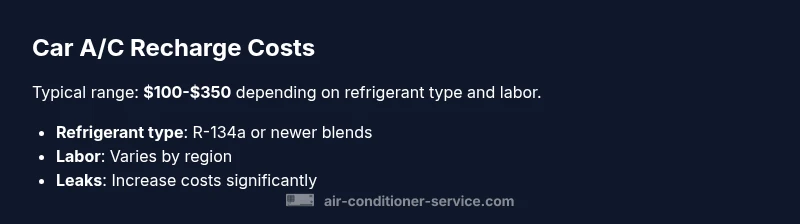
A car A/C recharge typically costs between $100 and $350, depending on refrigerant type, labor, and your location. You’ll pay more if a leak is found, if dye or diagnostic fees apply, or if an expanded service is required. Most technicians recommend repairing leaks before recharging to avoid repeat losses.
How Car A/C Refrigerant Recharge Works
How much to recharge air conditioner in car is not a single number; it depends on several components of the system and the refrigerant type your vehicle uses. According to Air Conditioner Service, a proper recharge begins with a diagnostic check, followed by evacuating the existing refrigerant, performing a leak test, and then refilling to the manufacturer-specified amount. Modern vehicles often use R-1234yf, while older cars may still run on R-134a; some specialty units require different blends. The technician uses a set of manifold gauges, a vacuum pump, and precise refrigerant charging scales to reach the exact pressure targets. Importantly, many shops will vacuum the system before charging to remove moisture, which can cause internal corrosion or ice formation. Cost is affected by refrigerant type, the vehicle’s capacity, and whether additional steps such as dye testing or a leak repair are needed. The aim is to restore cooling performance without introducing moisture or air into the loop.
What Drives the Price Range
Prices range because refrigerant cost is a factor, but the bigger drivers are labor time, diagnostic fees, and whether the system requires leak testing or repair. The exact refrigerant amount varies by vehicle and model year, and newer blends can be more expensive. Labor rates differ by region and shop; bigger metro areas generally charge more. If a shop tests for leaks and finds a tune-up is needed, the total bill grows accordingly. Always ask for a written estimate that breaks out parts, refrigerant, dye, and labor.
Common Price Scenarios and Examples
- No leak, standard refrigerant fill: In many cars, a straightforward recharge without leaks ranges from the mid-hundreds when labor is factored in, with a typical range of about $100 to $350. - Leak found but repair not performed during recharge: The price increases due to dye testing, leak checking, and potential replacement parts. - Newer refrigerants or additional services: If your vehicle uses a newer blend like R-1234yf, costs can be higher and equipment needs may lead to larger charges.
Step-by-Step: What a Recharge Visit Involves
A recharge visit typically follows a consistent sequence:
- Pre-check: verify symptoms, confirm refrigerant type, and check for leaks. 2) Pressure testing: evaluate system pressure with gauges to confirm vacuum readiness. 3) Evacuation and vacuum: remove air and moisture from the system. 4) Recharge: add the correct refrigerant, following precise weight and pressures. 5) Post-test: recheck pressures and cooling performance, and inspect for leaks. 6) Documentation: record the exact refrigerant type and quantity used for warranty purposes. 7) Safety and disposal: ensure proper handling and recycling of refrigerants.
Leaks: The Real Price Multiplier
Leaks dramatically affect both the cost and the outcome of a recharge. If leaks are suspected or found, many shops perform leak testing with dye or electronic detectors and may require repairs before refilling. Without fixing leaks, the refrigerant will escape again, and you’ll be back at the shop sooner than you think. Leak repair may involve replacing seals, hoses, or the compressor, which adds to the total.
The Risks of DIY Recharge
Recharging a car’s A/C is not a safe DIY project for most homeowners. Refrigerants are regulated chemical substances, and improper handling can cause medical or environmental harm and may violate local laws. Incorrect charging can raise pressures and damage components like the compressor. If you’re tempted to save money, know that the risk of costly repairs later often outweighs short-term savings.
Choosing the Right Technician
Look for ASE-certified technicians, EPA-approved refrigerant handling, and transparent pricing. Ask about the refrigerant type, the amount needed, the leak-detection method, warranty terms, and whether the price includes dye or diagnostic work. A reliable shop will perform a thorough leak check and provide a written estimate.
Maintenance to Minimize Future Recharges
Proactive maintenance helps avoid frequent recharges. Schedule seasonal inspections, replace cabin and system filters, and address any cooling performance issues promptly. Regular drive cycle checks and using the AC at least a few minutes weekly can keep lubricants distributed and prevent seals from drying out. If your car sits in hot climates, pre-season checks are especially beneficial.
Next Steps and When to Schedule
If you notice reduced cooling, unusual odors, or a hissing sound from the A/C, schedule a professional inspection promptly. The Air Conditioner Service team recommends scheduling a proactive recharge and leak test as part of seasonal maintenance to preserve system longevity.
Cost components for car A/C recharge
| Item | Typical Cost Range | Notes |
|---|---|---|
| Recharge price (parts and refrigerant) | $100-$350 | Dependent on refrigerant type and vehicle model |
| Labor charges | $60-$180 | Based on regional rates and shop policies |
| Leak repair impact | +-$50-$400 | Includes dye, inspection, and potential component replacement |
| Dye/diagnostic options | $20-$100 | Optional while testing for leaks |
Common Questions
What factors affect the cost to recharge a car's A/C?
Refrigerant type, required dye, leak repairs, labor rates, and accessibility all influence the final price. Each step adds a variable cost depending on your vehicle and location.
The cost is driven by refrigerant type, leaks, and labor, plus any diagnostic extras.
Is it better to fix leaks before recharging?
Yes. Leaks cause refrigerant loss; repairing them before charging reduces repeat visits and total expense. If a leak is found, many shops will quote the repair separately.
Yes—fix the leak first to avoid wasting the recharge.
How long does a recharge typically take?
Most recharge visits take about 60 to 120 minutes, depending on diagnostics, leak testing, and the vehicle's refrigerant capacity.
Usually an hour or two.
Can I recharge the A/C myself?
DIY recharge is not recommended. Refrigerants require proper handling, can be hazardous, and improper charging can damage the system.
It's not safe or recommended to do this yourself.
What should I ask a shop before service?
Ask about refrigerant type, required dye, leak-detection method, warranty coverage, and whether the price includes diagnostic work and parts.
Ask about refrigerant type, leaks, and warranty.
“A recharge without diagnosing leaks is a temporary fix; the real value comes from identifying the root cause and addressing it.”
The Essentials
- Expect a recharge price in the $100-$350 range for many cars
- Leaks dramatically increase total cost and require repair before recharge
- Always use a professional; refrigerants are regulated and improper charging can damage the system
- Request a written estimate breaking down parts, labor, and diagnostics
- Regular maintenance helps prevent frequent recharges