What Size Air Conditioner for 2000 Square Feet
Learn how to size an air conditioner for a 2,000-square-foot home with practical rules, a simple calculator, and expert tips from Air Conditioner Service to avoid over- or under-sizing.


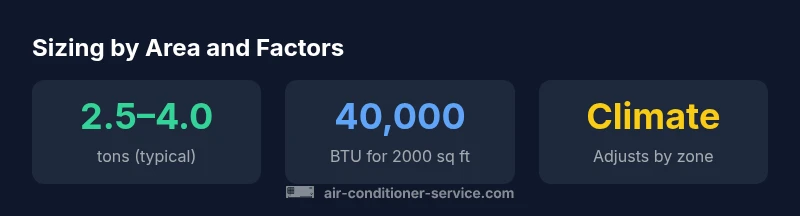
The calculator estimates cooling load in tons. For a typical 2000 square foot home, results usually fall in the 2.5–4.0 ton range, depending on climate, insulation, and ceiling height. You can customize by entering area, climate multiplier, ceiling height, and insulation quality. This helps avoid over- or under-sizing.
Why Sizing Matters for Comfort and Efficiency
Choosing the right size for your air conditioner affects more than just how cool a room gets. An oversized unit will cool the space quickly, then shut off, leading to short cycling, poor humidity control, and wasted energy. An undersized unit struggles to reach set temperatures on hot days, runs for long cycles, and may experience increased wear, higher energy bills, and reduced comfort. If you’ve ever asked, “what size air conditioner for 2000 square feet?” you’re balancing initial cost with long-term performance. In practice, many homes in this size range benefit from a carefully sized system that equals comfort with efficiency. The goal is a unit that runs smoothly, dehumidifies effectively, and maintains a steady indoor temperature without dramatic swings. The right size also lays the foundation for future savings: lower operating costs, less strain on components, and improved system longevity. According to Air Conditioner Service, sizing matters for both comfort and energy use, so a precise approach pays off over time.
Rough Guidelines for a 2000 Square Foot Home
As a starting point, many contractors use a rule of thumb around 20 BTU per square foot, which translates to roughly 40,000 BTU or about 3.0 tons for 2,000 square feet in a moderate climate. However, climate zones, solar exposure, attic insulation, and window efficiency can push that needed capacity up or down by about 1/2 to 1 ton. For single-story homes with good insulation, you might land closer to 2.5–3.5 tons; two-story layouts or homes with large sun exposure may require 3.5–4.5 tons. Keep in mind that this is a quick reference, not a substitute for a formal load calculation. Two homes with identical square footage can have very different cooling needs based on construction quality, ceiling height, and the presence of energy-efficient upgrades. If you’re planning a new installation in a 2000-square-foot home, consider these rough ranges as a baseline, then test with a professional load calculation. Air Conditioner Service emphasizes that individual factors can swing sizing by a full ton or more in many cases.
Climate and Home Factors That Change Sizing
Several factors influence the final size recommendation beyond area. Climate matters: hotter, more humid regions typically require higher cooling capacity. Ceiling height adds to the load; taller spaces mean more air to cool and dehumidify. Insulation quality and air sealing reduced heat gain; poorly insulated homes demand more cooling power. Window orientation and sun exposure can dramatically alter heat gain; south- and west-facing windows in hot climates increase the load. Home efficiency upgrades like reflective roofing, high-performance windows, and efficient doors reduce the needed size. Even occupancy patterns and appliance usage contribute: more people and heat-generating devices add to the cooling load. Finally, ductwork efficiency matters: leaky or poorly designed ducts can undermine a correctly sized system. In short, the “what size air conditioner for 2000 square feet” question can’t be answered by area alone; it requires a holistic look at climate, construction, and daily habits.
Load Calculations vs Rules of Thumb
A formal load calculation (Manual J) is the gold standard for sizing. It accounts for all heat gains and losses and provides results per room or zone. Without it, you risk selecting an appliance that is too large or too small, leading to inefficiency and comfort issues. If you don’t have access to a licensed HVAC professional, a reputable online calculator can help you estimate, but be prepared to adjust for local climate and home quality. Key inputs typically include area, climate factors, ceiling height, and insulation rating. The output is a recommended size, usually expressed in tons or BTU. Use this as a starting point and consult a pro when finalizing equipment choice, duct design, and zoning plans. Remember that a properly sized system is more important than a perfectly efficient model when your goal is steady comfort and low energy use.
System Options and Zoning Considerations
For 2000 sq ft homes, central air with properly sized ducts is common, but size is not the only variable. If your home is open-plan with many large windows, you may need more capacity, or you could opt for zoning that divides the space into comfort-controlled zones. Ductless mini-split systems are an alternative when retrofitting or when ductwork is prohibitive; they can be sized per zone, which often makes sense for older homes or additions. If you’re facing an upgrade, consider future plans: a two-stage compressor or a variable-speed system can adjust output to meet changing loads without oversizing. Energy efficiency matters too: high SEER units deliver better performance per BTU, but equipment cost and installation complexity rise. In any case, the ultimate goal is a system that matches the home’s cooling load without wasted capacity.
Real-World Scenarios: What People Often Do
Take a two-story home with a lot of sun exposure and poor attic insulation. A quick rule might suggest 3.5–4.5 tons, but a formal load calculation could reveal you actually need closer to 3.0–3.5 tons if attic insulation and duct sealing are upgraded. Conversely, a single-story home with excellent windows and attic insulation may perform well with 2.5–3.0 tons, especially if ceiling heights are standard. In apartments or splits, you may offload heat via partitioned zones and use smaller units strategically. The key takeaway from real-world scenarios is that the best approach combines a reliable sizing method with a practical installation plan and consideration of long-term energy costs. Remember that oversizing wastes energy and increases upfront costs, while undersizing can drive up operating time and reduce comfort.
Maintenance Tips to Ensure Your Size Stays Efficient
After installation, regular maintenance helps the system deliver the promised sized cooling. Change or clean filters every 1–3 months, seal ductwork to prevent leaks, and keep outdoor units clear of debris. Schedule annual professional inspections to verify refrigerant charge, compressor operation, and airflow. Use programmable thermostats and zoned cooling to keep space comfortable without stressing the system. In hot climates, perform mid-season checks and consider additional insulation or shading for windows that receive intense sun. A well-maintained, properly sized system will run more efficiently and last longer. For homeowners and renters, simple steps—like keeping blinds closed on sunny days and reducing interior heat gains—can make the installed size work harder for you.
Sample sizing reference by area and rough BTU range
| Area (sq ft) | Estimated BTU | Recommended Size (tons) |
|---|---|---|
| 1500-1800 | 30,000-36,000 | 2.5-3.0 |
| 1800-2200 | 36,000-44,000 | 3.0-3.5 |
| 2000 | 40,000 | 3.0-3.5 |
Estimate the cooling load using a simple, transparent formula and see the recommended size in tons.
Calculates cooling load using area, climate factor, height, and insulation quality. The final value is a starting point for selecting equipment.
Estimates are starting points; for accuracy, a Manual J load calculation and professional consultation are recommended.
Common Questions
What size of air conditioner is needed for 2000 square feet?
A rough starting point is around 2.5–4.0 tons, but exact sizing depends on climate, insulation, and ceiling height. A formal load calculation will give a precise recommendation.
For 2000 square feet, expect about 2.5 to 4 tons after a proper load calculation; climate and insulation can shift that range.
Should I use a professional load calculation or a quick online tool?
A professional load calculation (Manual J) is the most reliable. An online tool can give a good starting point, but it should be verified with a pro.
A professional load calculation is best, but online tools can help start the planning process.
What factors besides area affect sizing?
Climate, insulation, ceiling height, window orientation, sun exposure, occupancy, and duct efficiency all influence final size.
Besides area, climate, insulation, ceiling height, windows, and ducts matter for the final size.
Can oversizing damage my system?
Yes. Oversized systems cycle on and off quickly, reducing humidity control and efficiency, and increasing wear.
Oversizing causes short cycling and lower efficiency, so it’s important to size correctly.
Is zoning worth it for a 2,000 sq ft home?
Zoning can improve comfort and efficiency, especially in open-plan or sun-exposed homes where loads vary by area.
Zoning can help, particularly in larger or sun-heavy homes where rooms have different cooling needs.
What are common sizing mistakes to avoid?
Avoid relying on square footage alone, ignore duct leakage, and skip professional evaluation. Incorrect sizing leads to comfort and energy problems.
Don’t size by area alone or skip duct checks; they can lead to comfort and energy issues.
The Essentials
- Start with a load calculation, not guesswork
- Climate, insulation, and daylight heat affect sizing
- Oversized or undersized units reduce comfort and efficiency
- Professional Manual J sizing yields the best long-term results