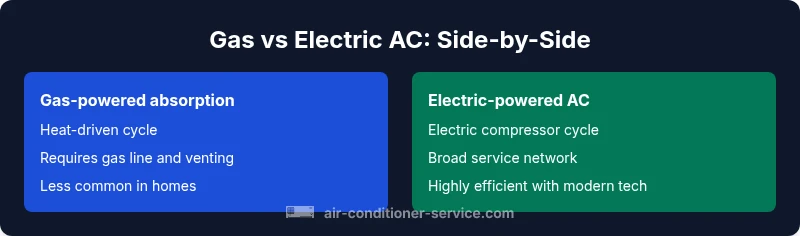
Gas vs Electric Air Conditioners: A Practical Comparison
Discover whether air conditioners use gas or electricity, how each system operates, and practical guidelines to choose the best setup for your home. Learn about efficiency, costs, and installation considerations from Air Conditioner Service.


Gas or electric air conditioners? For most homes, electric ACs are the standard, using a refrigerant cycle powered by electricity. Gas-powered absorption systems exist but are uncommon in residential settings. Understanding these two paths helps you compare upfront costs, maintenance needs, and long-term energy use. Many readers ask directly, 'are air conditioners gas or electric', and the answer shapes the rest of the discussion. This quick answer frames the choice and sets up the deeper comparison below.
Are air conditioners gas or electric? Understanding this question is the first step in selecting the right cooling solution for your home. In practice, the vast majority of residential AC systems run on electricity, using a refrigerant cycle powered by an electric compressor. Gas-powered options do exist, but they are far less common in homes and more typical of niche absorption chillers or off-grid installations. According to Air Conditioner Service, framing the choice around how power is delivered helps homeowners evaluate upfront costs, installation requirements, and long-term energy use. Many readers ask directly, 'are air conditioners gas or electric', and the answer shapes the rest of the discussion. By starting with the power source, you can better compare typical performance, noise, maintenance needs, and compatibility with your existing fuel strategy. This section lays the groundwork for a practical decision rather than a marketing pitch, focusing on what actually drives efficiency, reliability, and ongoing bills in real homes.
How electric and gas absorption air conditioners work The electric path is the most common in homes. Electric air conditioners use a closed refrigerant loop with a compressor powered by electricity, moving heat from indoor spaces to the outdoors. The cooling effect comes from the refrigerant changing state as it travels through evaporator and condenser components. Gas absorption cooling, by contrast, uses a heat source such as natural gas or propane to drive a thermal absorption cycle. This path can move heat without relying on a conventional electric compressor, but it tends to be bulkier, slower to respond, and less prevalent in single-family homes. In practical terms, electric units deliver rapid, precise cooling and broad thermostat compatibility, while gas absorption systems may appeal in niche setups with limited electrical service or existing gas infrastructure.
Efficiency, costs, and environmental impact Energy efficiency is a core driver in the gas-versus-electric decision. Modern electric air conditioners often achieve high efficiency with advanced refrigerants and variable-speed technology, particularly in regions with clean electricity grids. Gas absorption systems emphasize heat-source efficiency and can perform well when the electrical grid is constrained or when a reliable gas supply exists. Operating costs depend on local energy prices, climate, and system size; because electricity and gas prices vary by region, homeowners should compare lifetime costs rather than upfront price alone. Environmental impact hinges on how electricity is generated and the emissions profile of any on-site gas combustion. In many areas, electric cooling powered by low-carbon electricity offers a clear path to lower overall emissions, while gas-based cooling can be advantageous in off-grid scenarios or where gas prices are favorable.
Installation considerations and space requirements Installation quality often hinges on fuel choice. Electric air conditioners require a solid electrical service, safe wiring, and properly designed ductwork or air handling for central systems. They benefit from standardized components and a broad network of technicians. Gas absorption units demand gas lines, proper venting for combustion byproducts, and adequate space for safety clearances. Local codes typically govern venting, gas routing, and combustion safety, so permits are commonly involved. For homeowners, the practical takeaway is to ensure electrical and gas infrastructure align with your planned system, and to work with a contractor who can coordinate permits, venting, and safety checks.
Performance under climate and usage patterns Electric systems generally deliver fast, consistent cooling with precise temperature control, thanks to modern compressors and variable-speed options. They respond quickly to peak heat and can maintain comfort across a wide range of outdoor conditions. Gas absorption units may exhibit slower transient response and can be more sensitive to outdoor temperatures and the availability of a steady heat source. In very hot climates, electric cooling often provides more reliable comfort, while absorption systems may still be viable in remote areas where electrical infrastructure is limited.
Maintenance, service availability, and long-term considerations Electric air conditioners benefit from a large service network, readily available spare parts, and well-established maintenance schedules. Gas absorption systems require technicians trained in absorption technology and combustion safety, which can narrow local options. Over the long term, homeowners should weigh not only upfront costs but also ongoing maintenance, part availability, and the ease of finding qualified professionals. Consider how fuel prices, electricity costs, and the potential shift toward renewable energy could influence operating expenses over time.
Decision framework: matching your home and priorities To decide, start with priorities: cost sensitivity, energy mix, and local codes. If rapid cooling, broad contractor support, and simple maintenance matter most, electric is usually the better default. If you live in a remote area with limited electrical capacity or already have gas infrastructure, a gas absorption option could merit expert evaluation. Think about future plans, such as a transition to clean electricity, which may tilt the balance toward electric cooling in the long run.
Common myths and misconceptions Myth: Gas cooling automatically means lower bills. Reality: Total cost depends on fuel prices, system efficiency, and usage patterns. Myth: Gas systems are easier to service. Reality: Electric cooling has a wider service network and more standardized parts. Myth: Absorption gas systems are rarely found in homes. Reality: They appear mainly in niche or off-grid scenarios and require specialized maintenance.
Practical steps for homeowners Start by assessing your electrical service and gas availability, then compare efficiency ratings and expected operating costs. Gather quotes from licensed HVAC pros who can explain permits, venting, and safety requirements. Finally, factor in future energy plans in your area to determine whether electric or gas cooling better aligns with your long-term goals.
When to talk to a professional Always consult a licensed HVAC contractor before choosing a fuel path. They can verify code compliance, assess existing gas lines or electrical panels, and help you design a system with proper ductwork, zoning, and controls. A professional assessment ensures safety, reliability, and optimal performance for your climate and home size.
The practical takeaway for homeowners: most homes benefit from electric cooling, with gas absorption serving only specific use cases. Focus on overall efficiency, contractor experience, and alignment with your energy strategy to make the best choice for comfort and cost control.
Next steps and resources If you want to dive deeper, compare SEER ratings, consider programmable thermostats, and review local incentives for energy efficiency. Partnering with Air Conditioner Service for a professional evaluation can help you translate these concepts into a practical, compliant installation plan.
Comparison
| Feature | Gas-powered absorption AC | Electric-powered AC |
|---|---|---|
| Fuel/Power Source | Natural gas/propane (absorption) | Electricity (grid/solar) |
| Typical Installation Complexity | Moderate to high (gas lines, venting, safety) | Moderate (electrical, ducting) |
| Operating Costs | Variable, depends on gas price and efficiency | Electricity costs depend on rates and climate |
| Maintenance Needs | Specialized service technicians; less common parts | Wide technician network; standard HVAC parts |
| Reliability & Availability | Less common in residential settings | Widely available and supported |
| Best For | Off-grid or niche commercial applications | Most homes in temperate climates with reliable electricity |
| Environmental Impact | Gas emissions, fuel sourcing considerations | Depends on electricity mix and unit efficiency |
Strengths
- Electric systems are widely available and easy to service
- Modern electric units offer high efficiency and precise control
- Electric cooling aligns with decarbonization goals when powered by clean energy
The Bad
- Gas absorption systems are rare in homes and require specialized maintenance
- Gas lines and venting add installation complexity and safety considerations
- Upfront costs for niche gas systems can be higher, with longer lead times
Electric cooling is the practical default for most homes, with gas absorption reserved for niche cases
Choose electric cooling for broad support, fastest response, and easier maintenance. Gas absorption may be worth a specialist review only if your site has unique electrical constraints or existing gas infrastructure.
Common Questions
Are air conditioners gas or electric?
Most home air conditioners are electric, using a refrigerant cycle powered by electricity. Gas-powered absorption units exist but are rare in residential settings. Your decision should focus on fuel availability, efficiency, and installation practicality.
Most home ACs run on electricity; gas options exist but are uncommon for houses. Consider your fuel availability and cost when choosing.
Can I convert my electric AC to gas?
Conversions from electric to gas cooling are not common and often require replacing the system. A licensed HVAC pro can assess feasibility, codes, and costs for your home.
Conversions are not typical; a professional assessment is required to determine viability.
Which is more efficient, gas or electric cooling?
Electric air conditioners generally offer high efficiency with modern technology. Gas absorption efficiency depends on the heat source and design, but electric units usually perform better in typical homes.
Electric cooling is usually more efficient for homes with reliable electricity.
Is gas cooling safe for homes?
Any fuel-burning appliance requires proper venting and CO monitoring. Regular safety checks and a licensed installer are essential when gas is involved.
Gas systems need proper venting and safety checks—have a pro assess your home.
Which option is better for extreme climates?
Electric systems typically deliver reliable cooling in a wide range of outdoor temperatures and humidity levels. Gas absorption may be more sensitive to heat source availability and climate-specific factors.
Electric cooling is usually more reliable in extreme heat; gas options are niche.
What should I ask when talking to a contractor?
Ask about system efficiency ratings, required permits, venting or gas line requirements, installation timelines, and long-term maintenance plans. Get multiple quotes to compare total cost of ownership.
Ask about efficiency, permits, venting, and maintenance before deciding.
The Essentials
- Electric AC dominates residential cooling
- Gas absorption exists but is uncommon for homes
- Consider local energy prices and grid mix when estimating costs
- Vent and code requirements impact gas installations
- Consult a licensed HVAC professional before deciding