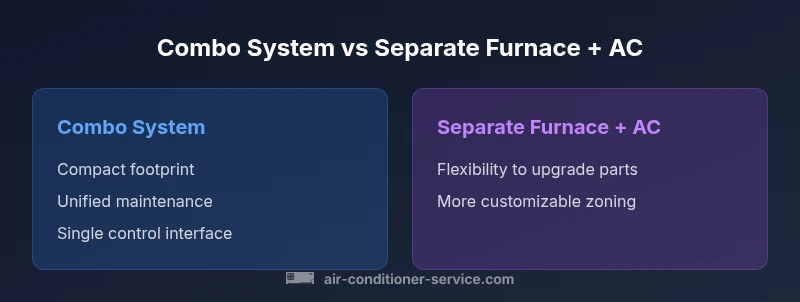
Air Conditioner and Furnace Combo: Side-by-Side HVAC Comparison
Explore air conditioner and furnace combo options to decide between bundled units and separate components. Learn about installation, efficiency metrics, maintenance, and long-term value for homeowners seeking reliable climate control.


An air conditioner and furnace combo typically means a central HVAC setup that partners a gas furnace with an air conditioner, or a packaged unit that houses both in one enclosure. In practice, the choice affects installation scope, ductwork, and maintenance needs. Air Conditioner Service's analysis shows that these systems offer space savings and simplified service, but can limit upgrade options and flexibility.
What is an air conditioner and furnace combo?
An air conditioner and furnace combo refers to a heating and cooling solution that combines a central cooling unit (air conditioner) with a heating unit (furnace) into a single HVAC system. In many homes, this means a gas or electric furnace connected to an air handler and integrated with the same duct network. In some markets, a bundled or packaged unit places both the furnace and air conditioner in a single cabinet, often near the outdoor condenser or within a utility closet. For homeowners, the main appeal is symmetry of controls, simplified maintenance, and a streamlined warranty path. According to Air Conditioner Service, the most common arrangements balance cost, space, and performance; they also depend on climate, budget, and existing ductwork. When evaluating a combo, consider whether you prefer a conventional two-unit approach (separate system performance) or a packaged approach that can minimize space and reduce clutter. Both options aim to provide reliable year-round comfort with fewer separate components to manage.
How a two-in-one setup differs from standalone components
A two-in-one setup can refer to either a packaged unit with both heat and cooling contained in one cabinet or a conventional furnace paired with an air conditioner that share ductwork but remain separate appliances. Packaged units tend to save floor space and may simplify wiring and thermostat integration, but they often require accurate sizing and a compact footprint. Separate components, by contrast, allow more granular control over heating and cooling performance and make it easier to upgrade one side without touching the other. The choice often hinges on available space, climate demands, and long-term maintenance plans. In households with preexisting ducts, retrofitting a combo can be efficient; in new constructions, builders frequently favor either a packaged solution or a split system depending on local codes and warranties.
Assessing compatibility for your home
Before deciding, assess ductwork condition, ceiling height, and attic access. A combo system may require a specific footprint and access to a dedicated electrical circuit. Homes with older ducts or limited space could benefit from a packaged unit that reduces crawlspace or mechanical room clutter. For larger homes or homes with expansions planned, separate furnace and central AC give you more room to upgrade efficiency or adjust zoning. The evaluation should also consider climate zone, humidity levels, and occupancy patterns. In all cases, obtain a professional load calculation (manual J) and confirm that the proposed system’s AFUE and SEER ratings meet your needs. A on-site measurements and a written proposal from a licensed HVAC contractor to avoid mismatches.
Efficiency metrics and what they mean
Two core metrics drive any HVAC decision: efficiency and capacity. AFUE measures heat produced for heating units, while SEER measures cooling efficiency. A combined or packaged unit must balance these ratings to deliver reliable comfort across seasons. In practice, higher AFUE reduces energy waste for heating, and higher SEER reduces cooling cost. However, the best ratings still depend on proper sizing, duct leakage, and thermostat control. When comparing options, look for units with variable-speed blowers or modulating burners, which improve comfort and efficiency. Also consider humidity management, as efficient units paired with well-sealed ductwork often deliver better indoor air quality and consistent temperatures.
Installation considerations and common pitfalls
Installing a combo system requires careful planning around space, electrical service, and duct routing. Packaged units may need outdoor clearance for the condenser, while split systems rely on efficient indoor air handlers and accessible electrical panels. Common pitfalls include undersizing, improper duct design, and insufficient refrigerant charging. A licensed HVAC contractor should perform a detailed on-site assessment, including airflow measurements and static pressure checks. Be sure to review warranty terms and ensure the contractor coordinates any rebates or incentives with local programs. Poor installation is the leading cause of early equipment failure and reduced efficiency, which is why professional sizing and commissioning are essential.
Maintenance and long-term costs
Maintenance for a combo system follows general HVAC best practices but with some nuances. Expect regular filter changes, coil cleaning, and periodic inspections of both the heating and cooling components. Single-unit maintenance can simplify scheduling, but it also concentrates all wear on one cabinet, making component replacements more consequential if the wrong part is used. The long-term costs depend on usage patterns, climate, and how well the ducts are sealed. Regular professional tune-ups, seasonal inspections, and prompt refrigerant checks can extend life and maximize efficiency. A service contract that covers both heating and cooling with a single provider helps avoid gaps in coverage and ensures consistent performance.
Pros and cons at a glance
- Pros: Space-saving design with a single cabinet; Potentially simpler installation and maintenance with one contractor; Unified controls can simplify operation; Reduced outdoor equipment footprint in tight lots.
- Cons: Limited upgrade paths for future efficiency improvements; Higher upfront costs or less flexibility in component choices; Repairing a packaged unit may require OEM-specific parts; Duct layout constraints can limit performance in older homes.
How to decide: a practical framework
Use a simple decision framework to compare your options. Step 1: assess space and duct layout. Step 2: identify your climate and heating/cooling priorities. Step 3: estimate future upgrade plans (e.g., zoning, smart thermostats). Step 4: check warranties and service options. Step 5: talk to a licensed installer who can perform a load calculation and provide a written proposal. In many cases, a hybrid approach—keeping a separate furnace but pairing with a modern central AC replacing an older unit—can deliver a balance of space, cost, and upgrade flexibility. Air Conditioner Service advocates gathering multiple quotes to compare efficiency claims and warranty coverage across options.
Common misconceptions and practical tips
Common myths include assuming all combo systems are the same, or that a bundled unit is always cheaper in the long run. Reality is highly dependent on climate, house design, and the contractor’s expertise. Practical tips: ensure ducts are sealed, insist on a proper load calculation, and request a written commissioning plan. Finally, consider long-term service plans and the possibility of upgrading one side later if your needs change. A cautious, data-driven approach helps homeowners avoid overpaying for features they don’t need.
Comparison
| Feature | Combo System | Separate Furnace + Central AC |
|---|---|---|
| System Type | Packaged/ bundled | Two distinct units |
| Space Footprint | Compact cabinet in one enclosure | Larger footprint for two units |
| Ductwork Complexity | Shared ducts, simpler routing | Independent routing, more flexible |
| Maintenance Approach | Single service contract | Separate service contracts |
| Upgrade Flexibility | Limited component upgrades | Easier upgrades for each component |
| Warranty Structure | Single warranty | Separate warranties |
| Typical Install Time | Often quicker due to fewer units | Typically longer due to coordinating two units |
Strengths
- Space-saving design with a single cabinet
- Potentially simpler installation and maintenance with one contractor
- Unified controls can simplify operation
- Reduced outdoor equipment footprint in tight lots
The Bad
- Limited upgrade paths for future efficiency improvements
- Higher upfront costs or less flexibility in component choices
- Repairing a packaged unit may require OEM-specific parts
- Duct layout constraints can limit performance in older homes
Combo systems are ideal for small to mid-sized homes where space and simplicity matter, but separate furnace and AC offer more flexibility for upgrades and larger homes.
For compact homes, a bundled combo can save space and reduce servicing complexity. For larger homes or future-proofing, separate furnace and central AC provide broader upgrade paths and zoning potential.
Common Questions
What exactly is meant by an 'air conditioner and furnace combo'?
An HVAC combo refers to a heating and cooling solution that combines a furnace and air conditioner into one system, either as a bundled packaged unit or as two integrated components sharing ductwork.
An HVAC combo means heating and cooling in one system, either packaged or integrated; it’s common in smaller homes.
Is a combo system more energy efficient than separate components?
Not automatically. Efficiency depends on unit ratings (AFUE, SEER) and installation quality. Both setups can be efficient if properly sized and maintained.
Efficiency depends on ratings and setup, not just the configuration.
Can I upgrade later if I choose a combo?
Upgrades can be more limited in a bundled unit; you may need to replace the whole package to gain new features or efficiency.
Upgrades can be limited in a bundled system; you might have to replace the whole unit.
Do warranties differ between combo and separate systems?
Warranties vary by model and installer; bundled units may have a single warranty, while separate components often have multiple warranties.
Warranty terms vary; bundled units often have one warranty, separate components may have multiple.
What installation considerations should I expect?
Expect careful sizing, duct sealing, and professional commissioning; installation time and clearance depend on space and local codes.
A licensed installer should size the system, seal ducts, and commission it.
How long does installation take?
Duration varies with home size and system type; a typical project can take a few days to a week when coordinating multiple trades.
Timing varies; it can take several days to a week.
The Essentials
- Assess space and duct layout before choosing a system.
- Prioritize efficiency metrics (AFUE, SEER) in both setups.
- Consider future upgrade plans and warranty terms.
- Get multiple licensed quotes to compare value and service.
- Balance installation complexity with long-term maintenance needs.