Is AC Condensate Water Good for Plants? A Practical Guide
Learn whether AC condensate water is safe for plants, how to use it, and best practices for garden irrigation with this practical guide from Air Conditioner Service.


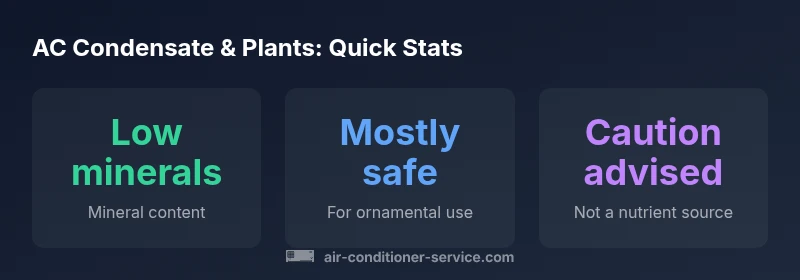
AC condensate water can be a supplementary irrigation source for many plants when clean and used correctly, but it is not a nutrient replacement. It’s typically low in minerals and may be slightly acidic, depending on the system. Use it sparingly and avoid relying on condensate as the sole water source for edible crops.
Is air conditioner water good for plants: what it is and why it matters
Is air conditioner water good for plants? The short answer is: it can be a helpful supplemental source of moisture in dry periods, but it is not a nutrient source or a universal solution for every plant. According to Air Conditioner Service, AC condensate water forms when humidity is condensed on the cooling coil and drips into a drain pan. The resulting water is basically purified water that has picked up small amounts of minerals from the surrounding air and materials inside the unit. The key practical implication for gardeners is that this water is often very low in minerals, which means it won’t contribute significant fertilizer to soils. If your goal is to support healthy growth, you should still rely primarily on traditional irrigation and soil amendments. However, when used carefully, condensate can top up moisture between watering events, particularly for potted plants in dry indoor environments. The water quality can vary by climate, system age, maintenance, and local water hardness, so treat condensate as a supplemental tool rather than a standalone solution.
Safety and suitability: is this water safe for all plant types?
For most ornamental and houseplants, AC condensate water is safe in moderation, but there are caveats. It is not treated water in the same way as municipal supply, and occasional contaminants can enter through the drain line or from the air around the unit. It is not a substitute for nutrient-rich irrigation; you still need to supply nitrogen, potassium, and trace minerals through soil or fertilizer. Some plant species prefer slightly acidic conditions and can tolerate condensate better; others, especially calcareous plants that prefer higher pH, may not respond as well if the condensate slightly acidifies the soil. Use condensate primarily for non-edible container plants or as an occasional top-up for outdoor beds where soil has good drainage. If you plan to water edible crops, rely on standard irrigation water and treat condensate as a backup only after testing soil pH and moisture.
How condensate interacts with soil, nutrients, and plant roots
In soil, water movement and nutrient availability depend on pH, salinity, and microbial activity. Condensate water’s low mineral load can dilute soil nutrients if used excessively, temporarily reducing the concentration of essential ions near roots. This isn’t inherently dangerous, but it means you should not rely on condensate to supply trace minerals. For most plants, a balanced fertilizer program remains essential. If your irrigation water is already mineral-rich, condensate can help prevent overwatering while you maintain appropriate drainage. Gardeners often mix condensate with regular water in a ratio that maintains consistent soil moisture without increasing salt buildup. Remember, is air conditioner water good for plants only when used as a supplement, not as the main water source.
Collecting condensate safely: setup, storage, and handling
Start by placing a clean, food-grade container under the condensate drain line. If you can, tilt the container slightly toward the outlet to prevent standing water. Empty and rinse containers regularly to prevent algae or bacterial growth. If you’re storing condensate for later use, consider a simple filtration method or a pH check to avoid soil pH drift. Because condensate is not a calibrated nutrient solution, you should treat it as a moisture supplement rather than a fertilizer. For readers of Air Conditioner Service, this aligns with best practices in home maintenance while exploring gentle irrigation options for houseplants.
Plant-specific use cases: ornamentals vs edible crops
Ornamental houseplants and container arrangements often tolerate condensate well when used sparingly. It can be a convenient way to keep soil consistently moist on hot days. For edible crops, such as leafy greens or herbs, rely primarily on conventional irrigation and ensure your soil supports adequate mineral availability. If you choose to experiment with condensate for edibles, do so only after you’ve tested soil pH, moisture, and nutrient levels and kept the use minimal. In professional settings, a garden’s irrigation plan should clearly separate condensate from nutrient-rich water streams to avoid nutrient imbalance.
Best practices to maximize safety and results
- Start small: use condensate on a few potted plants before scaling up.
- Combine with regular irrigation and fertilizer as needed.
- Monitor soil moisture and plant response; adjust watering frequency accordingly.
- Clean and protect the condensate collection system to prevent contamination.
- Never use condensate water that has been sitting in an open container for days; it can harbor bacteria.
Practical integration: a step-by-step plan for beginners
- Collect condensate from a clean drain line into a dedicated container. 2) Test soil moisture baseline and, if possible, a quick pH reading on your soil. 3) Start with a small batch on a few pots; observe for 1–2 weeks. 4) If all looks stable, gradually expand to more containers. 5) Reassess monthly and adjust based on plant health and soil tests.
Common myths and practical realities
- Myth: Condensate water is pesticide-free and safe for all plants. Reality: It can carry trace contaminants from the air, unit materials, or mold in a stagnant pan; use with caution and filter as needed.
- Myth: It can replace fertilizer. Reality: It lacks minerals essential for growth; use along with a fertilizer program tailored to plant needs.
- Myth: It’s perfect for edible crops. Reality: For edibles, rely on tested irrigation water and soil amendments; condensate is best used as a supplementary moisture source rather than a primary input.
- Practical tip: Start with a handful of pots and monitor growth, soil pH, and moisture; adjust your approach based on plant responses.
Comparison of water sources for plants
| Water Source | Typical pH | Mineral Content (ppm) | Plant Use |
|---|---|---|---|
| AC condensate | 5.0–6.5 (varies) | Low (often tens of ppm) | Supplementary moisture only |
| Rainwater | 6.0–7.0 | Low | Generally safe for most plants |
Common Questions
Is condensate water safe for all plants?
In most cases, ornamental plants tolerate condensate water when used sparingly. For edible crops, test soil and use cautiously.
Generally safe for many ornamental plants if used in moderation; for edible crops, test soil first.
Can I use condensate water as my only irrigation source?
No; condensate lacks essential nutrients and minerals. Use as a supplement, not the sole source.
No—use it as a supplement, not the main source.
Does condensate water contain harmful chemicals or bacteria?
Generally safe if the system is clean and drain-line is well-maintained. Avoid long-term storage of condensate.
Usually safe, but keep it clean and don’t store for long.
How should I collect condensate water safely?
Use a clean container under the drain line, cover to keep debris out, and empty regularly. Consider pH testing if used regularly.
Use a clean container and empty it regularly.
Should I test pH or minerals before using condensate for plants?
Yes; starting with a soil test helps determine whether condensate will shift pH or dilute nutrients; adjust irrigation accordingly.
Yes—test soil first and monitor; adjust as needed.
“AC condensate water can help with moisture management, but it cannot replace regular irrigation or fertilizers. Use it as a supplementary resource and monitor plant response.”
The Essentials
- Treat condensate as supplementary irrigation, not nutrient replacement
- Test soil moisture and pH before extensive use
- Avoid relying on condensate for edible crops
- Keep condensate collection equipment clean and well-maintained