How Long Can an AC Stay On: Safe Run Time and Practical Tips
Explore how long your air conditioner can stay on, what limits apply, and how to run it safely during heat waves. Practical tips, maintenance guidelines, and expert insight from Air Conditioner Service.


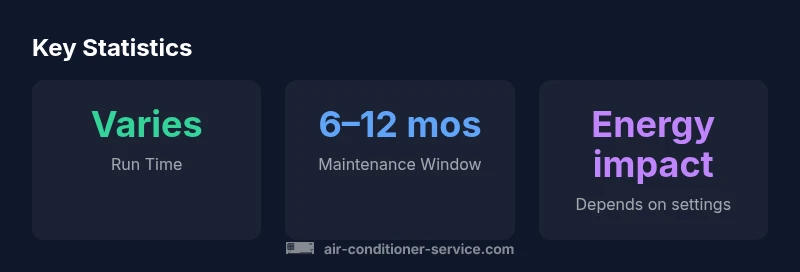
There is no universal fixed maximum for how long an air conditioner can stay on. Modern residential systems are designed for extended or continuous operation during hot spells, especially when properly sized and well maintained. However, safe long-run operation depends on factors like airflow, refrigerant charge, filter cleanliness, thermostat settings, and outdoor conditions. If you notice ice forming on coils, unusual noises, burning smells, or a drastic drop in cooling performance, turn off the unit and schedule service. According to Air Conditioner Service, a well-maintained system can handle long runs, but regular checks help prevent problems during peak heat.
Understanding Continuous Operation and What It Means for Your Home
When people ask, "how long can an AC stay on?" they’re often concerned about safety, efficiency, and system wear. There isn’t a universal clock that caps run time for every unit. In practice, most residential systems are built to operate for extended periods during heat waves, especially when the equipment is properly sized, installed, and maintained. The Air Conditioner Service team emphasizes that continuous operation is not inherently unsafe; the risk comes from poor maintenance, improper airflow, and uncontrolled humidity. A well-tuned system will keep indoor temperatures comfortable while keeping wear and tear within expected ranges. Consider your climate, your home’s insulation, and the unit’s design when assessing run time. A well-maintained system is the foundation of safe, extended operation, not a timer on the thermostat.
How Modern AC Design Supports Long Run Times
Most homes use air conditioning systems that are engineered for durability under peak loads. Compressors, heat exchangers, and fans are designed to cycle as part of normal operation, but they can also operate for prolonged periods if the airflow remains adequate and the refrigerant is properly charged. Energy efficiency standards (SEER) influence how efficiently a unit runs over long periods, but do not impose a strict limit on total run time. When the system is correctly sized for the home and climate, and when filters and coils are clean, long runs are more about keeping temperature comfortable and humidity controlled than about hitting a hard cap. This is why professional sizing and regular maintenance matter.
Key Factors That Determine Safe Run Time
- System sizing and load: An oversized or undersized system affects how often the compressor runs and how long it stays active per cycle.
- Airflow and filtration: Dirty filters or blocked outdoor coils reduce cooling efficiency and can force longer run times to reach the setpoint.
- Refrigerant charge: A correct charge ensures efficient heat transfer; low charge or leaks can cause the system to run longer and work harder.
- Thermostat settings and humidity: Low setpoints or humidity levels can lengthen or shorten run times depending on the equipment and insulation.
- Outdoor conditions: High ambient temperatures reduce heat rejection efficiency and can drive longer operation during heat waves.
- Maintenance history: Regular servicing minimizes the risk of refrigerant leaks, coil ice, and motor strain that shorten the safe window for continuous operation.
Practical Guidelines for Safe Long Runs
- Keep the air filter clean and replace it as recommended (typically every 1–3 months during heavy use).
- Ensure adequate clearance around the outdoor unit and remove debris that can impede airflow.
- Use programmable thermostats to avoid unnecessary cooling when occupants are away, while still allowing extended runs during the evening heat.
- Check for ice on the evaporator coil. If ice forms, shut the system off and let it thaw before diagnosing the cause.
- Listen for unusual noises or smells that could indicate worn bearings, electrical issues, or refrigerant problems.
- Schedule preventive maintenance twice a year; a serviced system is more reliable for long-duration operation.
Real-World Scenarios: Heatwaves, Vacations, and Service Windows
During a heatwave, long run times are common. In such cases, program the thermostat to a comfortable but efficient setpoint (e.g., 74–78°F depending on humidity and occupancy). If you’re leaving for several days, set a reasonable temperature, ensuring humidity control to protect valuables and furniture. If you notice that long runs are necessary to maintain comfort, prepare for a service check to verify refrigerant levels, duct integrity, and electrical connections. Proactive maintenance often translates to fewer surprises when you need cooling most.
Maintenance Practices That Support Long Runs
- Replace air filters regularly and clean return ducts to maintain adequate airflow.
- Clean the outdoor coil and ensure the condenser unit is free of leaves and debris.
- Inspect electrical components and connections for signs of wear or overheating.
- Verify refrigerant levels with a professional and fix leaks promptly if detected.
- Use a smart thermostat to optimize operation and reduce unnecessary cycling.
- Schedule professional tune-ups before the hottest months to maximize reliability during extended use.
When to Call a Pro: Indicators of a Problem During Long Runs
If you notice ice formation on the refrigerant line, a sudden drop in airflow, foul odors, buzzing noises, or unusual high energy bills, these are signs something may be wrong. Do not ignore these symptoms—continuous operation without addressing underlying issues can lead to compressor damage, refrigerant leaks, or electrical failures. A quick diagnostic visit from an HVAC technician can identify leaks, refrigerant imbalances, or airflow restrictions before a major breakdown.
Debunking Myths About Running An AC Continuously
Myth: Running the AC constantly wears it out faster. Reality: If the system is properly sized and maintained, long operation is not inherently more damaging than short cycles. Myth: A higher thermostat setting negates wear. Reality: The wear rate depends on load, airflow, and maintenance more than the thermostat setting alone. Myth: All units are the same; bigger is always better for run time. Reality: Proper sizing matters more than sheer capacity when it comes to efficient, safe long runs.
Quick Safety Reminders for Prolonged Use
- Never ignore warning signs like burning smells, burning odors, or persistent overheating.
- Keep children and pets away from the outdoor unit during maintenance work.
- Do not attempt refrigerant handling yourself; refrigerants require licensed technicians.
- If in doubt, schedule an inspection before running the system for extended periods.
How operational factors influence run time and maintenance needs
| Aspect | Impact on Run Time | Maintenance Considerations |
|---|---|---|
| Compressor Duty Cycle | High load → longer run times | Ensure refrigerant charge and airflow are correct |
| Airflow & Filter Condition | Blocked airflow increases run time | Replace filters regularly; clean ducts/coils |
| Thermostat & Setpoints | Lower setpoints extend run time in some homes | Use programmable thermostat and maintain consistent humidity |
Common Questions
Is it safe to run my AC non-stop during a heatwave?
Yes, it can be safe if the system is properly sized and well maintained. Regular checks for airflow, refrigerant levels, and electrical components are essential. If you notice ice, unusual noises, or smells, shut down and contact a technician.
Yes, you can run it non-stop in a heatwave if it’s properly sized and well maintained. Watch for ice, noises, or smells and have a professional check if you notice any warning signs.
What signs indicate my AC can't stay on for long?
Look for reduced airflow, ice on the evaporator coil, unusual noises, increased energy bills, or refrigerant odors. These can signal low refrigerant, dirty components, or electrical problems requiring service.
If you notice weak airflow, ice on coils, strange noises, or smells, get a professional check.
How often should I service my system if I run it a lot?
Schedule preventive maintenance twice a year in most climates, with additional checks during peak cooling periods. Regular service helps ensure refrigerant balance, coil cleanliness, and electrical safety.
Aim for two yearly tune-ups, plus seasonal checks during hot months.
Do long run times always mean higher energy costs?
Longer operation can raise energy usage, especially if the setpoint is low or the home is poorly insulated. Efficiently sized systems and proper insulation help keep costs down even during extended use.
Yes, longer runs can raise costs, but efficiency and insulation matter a lot.
Should I turn the AC off when I’m away for a day?
If temperature and humidity aren’t critical, you can adjust the thermostat to save energy. For longer absences, consider a programmable schedule and higher setpoints to limit unnecessary cooling while preserving comfort.
You can adjust settings for a day away with a smart thermostat.
“Long-run operation is safe and effective when the system is correctly sized, well maintained, and operating within normal airflow and refrigerant parameters.”
The Essentials
- Understand there is no universal run-time limit; it depends on your system and maintenance.
- Regular maintenance and proper sizing are the best safeguards for long, safe run times.
- Monitor for ice, odd noises, and odors; address issues promptly to prevent compressor damage.
- Optimize thermostat settings and airflow to balance comfort with energy use.
- When in doubt, call a professional before running extended periods during extreme heat.