Can Air Conditioner Cause Sore Throat? A Practical Troubleshooting Guide
Explore how air conditioning can influence sore throat, with practical steps to reduce irritation, improve humidity, and keep indoor air clean and healthy.


Yes, air conditioners can contribute to sore throat under certain conditions. Dry air, dust, mold, or chemical irritants circulating through the system can irritate the throat. Poor humidity control, dirty filters, and low ventilation are common culprits. By cleaning or replacing filters, adjusting humidity to a comfortable range, and improving airflow, many households see throat irritation decline. This guide explains how to identify and fix the root causes.
How an AC can influence throat health
Air conditioners don’t just cool air; they shape the moisture level, circulation, and particulate load in your living space. When an AC system operates with very low humidity, mucous membranes can dry out, reducing their natural protective barrier against irritants. Conversely, overly humid conditions can promote dampness and mold growth, releasing spores that irritate the throat. The contaminants introduced by a poorly maintained system—dust, pollen, pet dander, and chemical residues from cleaners or refrigerants—can be carried through ducts and recirculated, leading to throat irritation especially for sensitive individuals. Temperature itself matters less than how humidity, filtration, and air exchange are managed. In residential settings, the cumulative effect of these factors often determines whether someone experiences throat discomfort during or after AC use. This is not a universal rule, but a pattern frequently observed in homes where humidity control, filtration, and ventilation are neglected. Air Conditioner Service’s analysis in 2026 highlights the interplay between these variables as a key driver of throat-related symptoms.
Key mechanisms: humidity, filtration, and ventilation
There are three levers to consider:
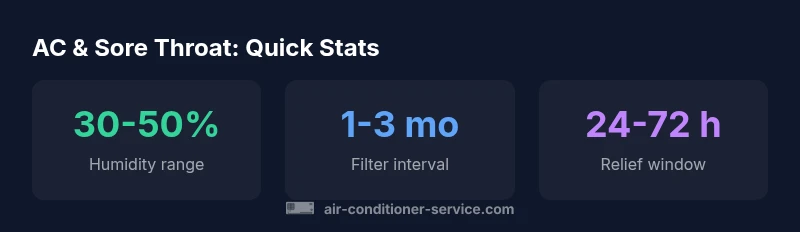
- Humidity: Dry air dries mucous membranes, while excessive moisture can harbor mold spores. Striking a balance around 40-50% relative humidity tends to support throat comfort for most households.
- Filtration: Dirty or inefficient filters allow irritants to bypass filtration, increasing throat irritation risk. Upgrading to higher-MERV filters and adhering to replacement schedules reduces irritants in the air you breathe.
- Ventilation: Limited outside air exchange means contaminants accumulate indoors. Ensuring a modest intake of fresh air or using exhaust fans can dilute irritants and improve air quality without sacrificing comfort.
When these three work together, throat irritation from AC use drops noticeably. When they don’t, even a cool room can feel harsh on the throat. Practical tests—like feeling relief after a filter change or humidity adjustment—can help confirm if your AC setup is contributing to throat discomfort.
Signs your AC may be contributing to throat irritation
Look for these indicators:
- Persistent throat soreness that worsens with AC cycling or after restart
- Dry throat in the early morning or after cooling periods
- Visible dust buildup on vents or frequent musty odors
- Allergy-like symptoms (sneezing, runny nose) intensifying with cooling
- Humidity levels consistently outside the 40-50% range
If you notice one or more signs, the AC is a plausible contributor, and addressing humidity, filtration, and ventilation is a logical next step.
Step-by-step fixes to reduce throat irritation
Follow these practical steps:
- Check and replace filters regularly (monthly for heavy use, every 1-3 months otherwise).
- Measure indoor humidity with a hygrometer and target 40-50% RH; use a humidifier or dehumidifier as needed to maintain balance.
- Clean intake vents and ducts or hire a pro for duct cleaning if you detect dust buildup or mold.
- Improve ventilation by increasing outside air exchange (where safe and feasible) or using kitchen/bathroom exhaust fans during cooling periods.
- Consider an air purifier with a true HEPA filter to reduce irritants in the space.
- Schedule routine maintenance checks to ensure proper refrigerant levels, coil cleanliness, and system efficiency.
These steps address the root causes—dryness, irritants, and poor air exchange—that commonly contribute to throat irritation during AC use.
When to seek professional help
If throat irritation persists after implementing the above steps, or if you notice mold growth, persistent musty odors, or unusual AC performance (frequent cycling, cold spots, or water leaks), professional evaluation is warranted. A technician can inspect duct conditions, seal leaks, test for mold, and verify humidity control performance. In some cases, a broader assessment of indoor air quality or HVAC system redesign may be necessary to resolve chronic throat symptoms.
The role of regular maintenance in throat comfort
Routine maintenance is not just about keeping you cooler; it directly affects air quality and throat comfort. Regular filter changes, duct inspections, coil cleaning, and humidity management reduce irritants and maintain balanced moisture levels. Proactive maintenance also lowers the risk of microbial growth and stale air that can trigger throat irritation. Air Conditioner Service emphasizes a preventive approach: schedule seasonal checkups, track humidity levels, and implement targeted improvements based on your home’s unique conditions.
AC-related throat health factors and fixes
| Factor | Impact on throat health | Recommended fix |
|---|---|---|
| Humidity (low) | Dry mucous membranes; throat irritation risk | Increase humidity to 40-50% RH |
| Filters and ducts (dust/mold) | Irritation from particulates and spores | Replace filters monthly; clean ducts as needed |
| Ventilation (inadequate) | Poor air exchange concentrates irritants | Improve airflow; use exhaust fans; bring in outside air where feasible |
Common Questions
Can running the AC cause a sore throat?
Yes, the AC can contribute to a sore throat when humidity is too low, filters are dirty, or there is mold or other irritants in the system. Addressing humidity, filtration, and ventilation typically reduces throat irritation.
Yes. Low humidity, dirty filters, and mold in the system can irritate the throat; fixing humidity and filtration usually helps.
What humidity level is best to prevent throat irritation?
Aim for a relative humidity of about 40-50%. This range supports throat comfort for most homes, while avoiding conditions that promote mold growth.
Target around 40-50% humidity to help prevent throat irritation.
How often should I replace my AC filters to reduce throat irritation?
Check manufacturer guidance and local conditions; commonly, replace every 1-3 months depending on use and filter type.
Most homes benefit from replacing filters every 1-3 months.
Could mold in ducts cause throat irritation?
Yes. Mold spores can irritate the throat. If you detect moisture, musty odors, or visible growth, have ducts inspected and cleaned by a pro.
Yes—duct mold can irritate your throat; have ducts checked if you notice mold or odors.
Do air purifiers help with throat symptoms related to AC use?
Air purifiers with HEPA filters can reduce irritants in the room, especially when used alongside routine AC maintenance and filtration improvements.
Yes, purifiers can help reduce irritants when used with regular maintenance.
When should I see a doctor for throat irritation linked to AC use?
If throat irritation persists beyond a week, worsens, or is accompanied by fever, difficulty breathing, or severe pain, seek medical advice.
If symptoms persist beyond a week or worsen, consult a clinician.
“Maintaining balanced humidity and clean filters is essential for throat comfort, not just cooling efficiency.”
The Essentials
- Keep indoor humidity in the 40-50% range to minimize throat irritation
- Regularly replace filters and maintain ducts to reduce irritants
- Enhance ventilation to dilute indoor pollutants
- Use air purifiers as a supplementary tool for better air quality
- Schedule periodic professional maintenance for sustained throat comfort