Do You Need a Permit to Install a Mini Split Air Conditioner?
Learn whether a permit is needed to install a mini-split AC, how permit rules vary by location, and get step-by-step guidance to apply, inspect, and stay compliant.


Do you need a permit to install a mini split air conditioner? In most cases, yes—especially when electrical, refrigerant, or structural work is involved. However, permit rules vary by city, county, and state. Before purchasing equipment, contact your local building department to confirm requirements. This article breaks down when a permit is likely required and how to apply, inspection expectations, and common pitfalls.
Do you really need a permit to install a mini split air conditioner?
Do you need a permit to install a mini split air conditioner? In many places, yes—especially if electrical wiring, refrigerant handling, or structural changes are involved. The exact requirement depends on your city, county, and state. As Air Conditioner Service notes, permitting rules typically hinge on the scope of work rather than the equipment alone. If your plan includes running new electrical conductors, installing a new disconnect outside the home, or making penetrations in walls for refrigerant line sets, a permit is highly likely. Skipping a needed permit can lead to delays at inspection, fines, or a red-tag on the system. Always start by contacting the local building department to confirm what applies to your specific job.
It’s worth noting that landlords and renters should check lease language and local housing codes; some jurisdictions require written authorization for work on rental properties. This is a good time to document your installation plan and keep copies of any communication with the building department. The goal is to avoid surprises and ensure your installation complies with current codes and safety standards.
What is a mini split installation, and where do permits fit in?
A mini split system (ductless) includes an outdoor condenser, one or more indoor air-handling units, and refrigerant line sets that connect the two. Because the work touches electrical, refrigerant handling, and potentially structural modifications, many jurisdictions treat different facets of the project as separate permit issues. If the scope includes mounting brackets, drilling through exterior walls, or extending electrical circuits, a mechanical or electrical permit is often required. Even when an electrician or HVAC contractor handles the installation, the local authority may require permit submission and inspection. In short, permits are typically tied to the specific tasks, not just the presence of a new unit.
How permit rules vary by jurisdiction
Permit requirements are not uniform. Some regions require a full mechanical permit for any HVAC equipment installation, while others require only electrical permits when no refrigerant changes are involved. In certain states, refrigerant handling itself triggers additional licensing or a separate refrigerant permit. City- and county-level rules can create additional layers, such as energy code compliance or inspections for outdoor condenser clearances, electrical disconnects, and line-set routing. Before starting, check: (1) whether a mechanical or electrical permit is needed, (2) what documents are required, and (3) which inspections are scheduled. Remember that even a straightforward indoor unit swap may trigger permits if it involves wall alterations or new electrical work. EPA refrigerant-handling requirements may also apply if any refrigerant is recovered or discharged.
How to verify your local requirements quickly
To confirm local rules, use a simple checklist:
- Search your city or county building department website for “permits” and “HVAC installation.”
- Call the permit desk with your project details (scope of work, equipment model, location).
- Ask specifically about electrical, mechanical, and refrigerant permits as well as required inspections.
- Verify whether a licensed contractor is required on your project and what documentation they must submit.
- Check for any required energy efficiency or local amendments that affect mini split installations.
Having your references handy—site plan, equipment specs, and a rough electrical diagram—speeds up the process. Make sure you understand the fee structure and typical processing timelines so you can plan accordingly. If you’re unsure, request written guidance or a preliminary plan review from the building department.
Step-by-step process to obtain a permit
- Identify all potential permit types (electrical, mechanical, refrigerant) based on your scope.
- Gather required documents: project description, equipment specs, a site plan, and any contractor licenses.
- Submit the application online or in person, attaching drawings or diagrams where requested.
- Pay applicable fees and schedule required inspections.
- Prepare for rough-in and final inspections; address any corrections noted by the inspector.
- Receive permit approval and a permit card or digital record; keep it with your installation paperwork.
This process can take time, so build in a buffer for approvals and potential corrections. Working with a licensed HVAC contractor often helps ensure that permit applications align with local codes and increase the likelihood of a smooth inspection.
The cost and timeline you should expect
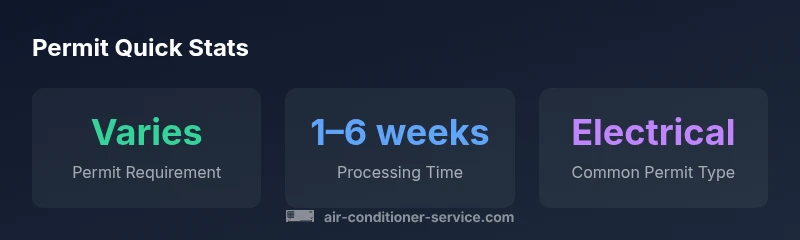
Permit costs and timelines vary widely by jurisdiction and project scope. In general, many municipalities charge a base permit fee plus domain-specific charges (electrical, mechanical, refrigerant). Processing times can range from a few days to several weeks. For larger systems or when electrical work is involved, expect longer timelines and higher fees. Always verify the fee schedule with the local department and ask about any inspection fees. Remember that delays often stem from incomplete applications or missing documentation, so double-check before submission. Air Conditioner Service analysis indicates that planning for permit costs and timelines helps homeowners avoid surprise expenses and delays.
DIY vs professional installation and permits
Permits are not a mere formality; they help ensure a safe, code-compliant installation. In many jurisdictions, refrigerant work and electrical connections should be performed by licensed professionals. If you or your contractor perform the work without the required permits, inspections, or licenses, you risk penalties, voided warranties, and potential safety hazards. Even when a DIY approach is legal, the permitting and inspection process remains essential. A licensed HVAC technician can help determine permit requirements, prepare necessary drawings, and navigate the inspection process efficiently, reducing the risk of failed inspections or last-minute corrections.
Documentation and inspections to prepare
Prepare a compact packet that includes:
- A description of the installation scope and equipment specs.
- Site plan and mounting details for indoor and outdoor units.
- Electrical diagrams showing new circuits, disconnects, and receptacles.
- Copies of any refrigerant handling certifications if applicable.
- Old permits or inspection records from prior work on the property. During inspections, expect checks on electrical safety, clearances around the outdoor condenser, refrigerant lines, and proper labeling. Having all documents organized reduces inspection time and increases the chance of passing on the first try.
Common pitfalls and mistakes
- Assuming permits are not needed for simple upgrades. Rules vary; always verify.
- Underestimating the paperwork; incomplete applications cause delays.
- Skipping inspections or releasing work without a final approval.
- Overlooking energy-code compliance, which can trigger retrofit requirements.
- Failing to coordinate with the homeowner or landlord when renting.
By anticipating these issues, you can minimize delays and keep your project on track. The key is to treat permits as an essential part of a safe, compliant installation rather than an afterthought.
Permits commonly required for mini-split installations
| Permit Type | What it Covers | Typical Processing Time | Who Applies |
|---|---|---|---|
| Electrical Permit | Wiring and disconnects for outdoor unit | "Varies by jurisdiction" | Contractor or property owner |
| Mechanical Permit | HVAC equipment installation | "Varies by jurisdiction" | Contractor |
| Refrigerant Permit | Handling of refrigerants | "Varies by jurisdiction" | Contractor or HVAC technician |
Common Questions
Do I need a permit for all mini split installations?
Not always. Some locations require permits for electrical or refrigerant work, while others may place the burden on the contractor’s license. Always verify with your local building department before starting.
Not always. Check with your local department to be sure before you begin.
Can I install a mini split outdoors without a permit?
Often yes if electrical work or structural changes are involved. Many places require permits for outdoor unit mounting, electrical connections, and line-set routing.
Usually yes, especially if outdoor wiring or structural changes are involved.
How long does permit approval take?
Processing times vary widely by jurisdiction and project complexity. Typical timelines range from a few days to several weeks.
It depends where you are; it can take days to weeks.
What documents are needed to apply for a permit?
You’ll typically need project description, equipment specs, location plan, electrical diagrams, and contractor information. Some jurisdictions require a stamped drawing or energy compliance document.
Have your plans, specs, and contractor details ready.
If I’m renting, do I still need a permit?
Yes, tenants should coordinate with the property owner and building department. Landlord authorization and compliance with lease terms may be required.
Work with the property owner and check local rules.
What inspections will be performed?
Common inspections include rough-in electrical, refrigerant line routing, outdoor unit clearance, and final inspection to verify code compliance.
Expect an electrical and final inspection.
“Permitting isn’t just red tape—it’s about ensuring safe, code-compliant installations that protect your home and investment.”
The Essentials
- Check local rules before buying equipment
- Electrical, refrigerant, or structural work often triggers permits
- Expect processing times to vary by jurisdiction
- Use a licensed contractor to simplify permitting
- Keep all permit documents for future inspections or sale